Israeli wildlife authorities struggle to contain an outbreak of an avian flu that has killed an estimated 5,000 cranes and led to the death of perhaps 500,000 chickens, according to news reports. Meanwhile, legislators are considering a law to punish people poisoning birds and other wildlife.
Photo by Anna Tarazevich on Pexels.com Israel is fighting a bird flu outbreak that has killed 5000 gray cranes. here two unidentified cranes share a moment
An estimated half million gray cranes pass through Israel each winter on their way to Africa, but some 30,000 or so remain in the country. These birds have been hard hit by the virus, but there are signs the viral attack is weakening. Israelis feed migratory birds to discourage them from eating crops and a number of birds remain.
The outbreak occurred in the Hula Valley Nature reserve in northern Israel and is attributed to the H5n 1 virus. The H5n1 virus is commonly called bird flu and it causes severe respiratory disease in many varieties of birds. It can infect humans, almost always from handling dead or diseased birds, but is otherwise rarely transmitted to people. If transmitted to humans it is serious, however, as mortality can reach 60 percent.
Photo by cottonbro on Pexels.com The death of up to a half million chickens in Israel may lead to an egg shortage
Sadly, because the cranes probably got the virus from domestic fowl, about 500,000 chickens were slaughtered to contain the virus which also killed numbers of egrets and pelicans The death of so many chickens has raised fears of an egg shortage and eggs are being imported to make up the loss.
There have not been any reported cases among humans so far.
Birds in Israel also face human threats. A bill has been introduced in the Israeli Knesset (parliament) to stiffen penalties for wildlife poisoning. The impetus for the bill was the poisoning of 9-12 vultures, up to six percent of the entire population in the country. Poisoners use illegal pesticides to kill wildlife including the vultures and endangered white tailed eagles. The proposed bill would stiffen penalties and give authorities greater power to search out lawbreakers.
Israel is not the only nation fighting wildlife poisoners. Legally used pesticides are killing American wildlife and Oregon authorities are seeking to arrest the poisoners of a ranging pack.
Zookeepers in southwest France recently shot four members of a 9 member wolf pack because the wolves left their enclosure. The wolves, recent arrivals at the zoo, exhibited “dangerous behavior,” zoo officials said, leading to the shootings. As a result, the zoo is now closed until late January. The exact nature of the dangerous behavior was not released
The wolves damaged the locks in the enclosure and climbed a fence to escape. The incident occurred during business hours. No injuries were reported. As a result, officials closed the zoo immediately and it remains shut. The animals never left the zoo property. The five remaining animals were returned to their enclosure and anesthetized.
Photo by patrice schoefolt on Pexels.com Wolves such as these group together in families called packs which consist usually of a breeding pair and their offspring.
The shooting occurred at the Trois Vallees zoo in Montredon-Labessonnie. The zoo houses some 600 animals. Montredon-Labessonnie is a commune in the mountainous Tarn department and home to about 2,000 people. The zoo sits on about 150 acres of land and houses about 70 species of animals. The zoo was recently ordered shut by the French Ministry of Ecological Transition citing safety and security concerns. A French court overturned the order, ruling the closure had been improperly imposed and illegally impacted the rights of the owners. The ministry, less formally known as the ministry of ecology, was formed about 16 months ago and implements French policy on biodiversity, climate, sustainable development and energy transition.
The zoo is located in Montredon Labessonnie a commune in Tarn in Southern France
Meanwhile, in California wolves returning to repopulate the state face an uncertain future and someone has been poisoning Oregon wolves.
Humans, monkeys and dogs are involved in a deadly battle that has killed an estimated 250 dogs and may threaten human lives as well in and around the town of Majalgaon, India. The town of about 50,000 is located in the Beed district of the state of Maharashtra in the west central part of the nation.
More than 150 species of langur exist. Most eat only vegetable matter and can be attracted to human grain and vegetable garbage Photo by Manish yogi on Pexels.com
According to news reports coming out of the area the trouble began when some dogs killed young monkeys, causing the monkeys to become angry and attack dogs. The monkeys were described as langurs which would make the animals involved one of about 150 different members of the langur family. Six species live in India including gray langurs and the larger Hannuman. Most langurs are arboreal (tree dwelling) and subsist on leaves and fruit. They are attracted to villages beause they will eat vegetable matter garbage.
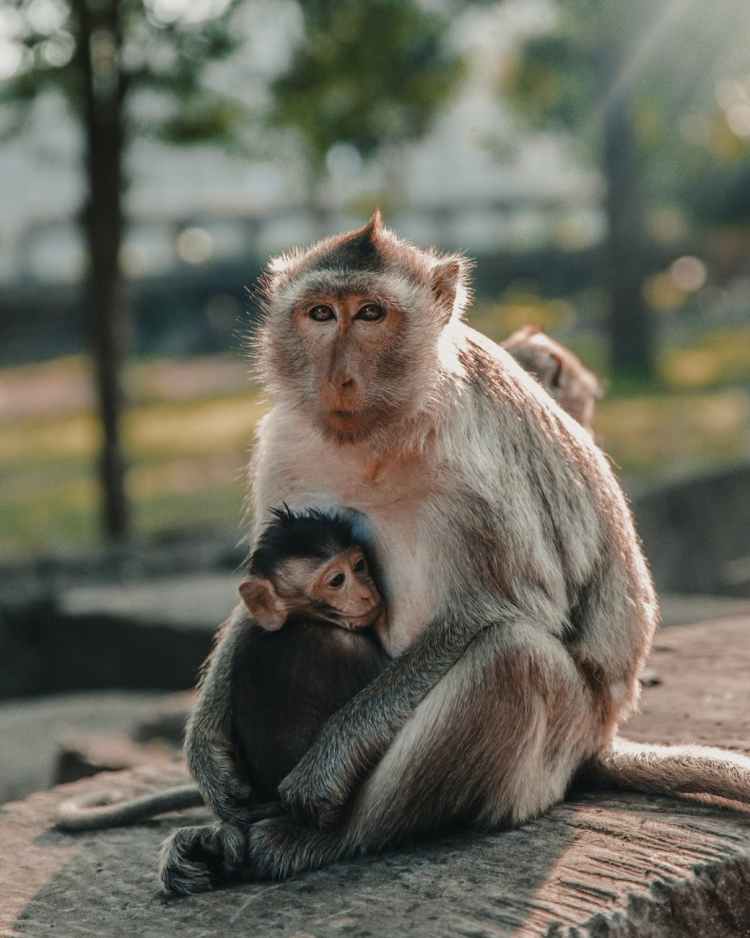
Macacques are also implicated in crop raiding and other human-animal conflict. Photo by Chris Economou on Pexels.com
The angry monkeys reportedly began capturing dogs, taking them to the tops of buildings or high into trees and hurling them to the ground. The death of an estimated 250 dogs has nearly eliminated dogs from the area, reports say, and residents became alarmed when the langurs began to stalk children and chase and attack villagers. State forestry officials were called in. Initital efforts were fruitless but later reports say officials believe they captured two of the monkeys involved. The monkeys were scheduled to be released in another location.
Human conflict with langurs is not new and has been reported in a number of countries besides India. Langurs and other monkeys raid crops and conservation groups have worked to try to reduce conflict. Long term solutions are difficult, however, as the hungry monkeys can consume so much foodstuff that people go hungry and seek revenge themselves. In India they have resorted to “monkey catchers” some of whom operate illegally and end up killing the animals. Critics of relocation efforts say that moving problem monkey to another area only spreads the problem.
Dogs face challenges in India beyond angry monkeys. Most are not pets but street dogs haggling out a living on the crowded streets. For a veterinarian’s view on the life of an Indian street dog click here.
The surviving pair of cougar kittens spotted under a bench in Thousand Oaks are doing very well, playing a lot and eating five times a day. according to news reports.
The girls were found November 29 under a picnic bench in Thousand Oaks, but the mother of the two girls, and two that did not survive, was nowhere to be found. Workers at an office building near the picnic bench notified state wildlife authorities, who partnered with the National Park Service to monitor the kittens. Biologists tracked the kittens, built a makeshift den and set up a trail camera in a vain hope that the mother would return and the kittens would grow up as wild animals.
By December 2 the kittens, who had been judged alert and basically healthy despite being skinny and a little dehydrated, were not doing very well and one showed signs of serious illness. Authorities then took them to a vet hospital, where two of them died, and then on to the Orange County Zoo where they will be housed in a new large mammal enclosure under construction.
At the zoo they are eating a smoothie 5 times a day described as kitten milk and chicken. They play with toys and each other and spend a lot of time together.
Because Covid-19 is a threat to wild cats the veterinarian staff takes special precautions and they will eventually be given shots of a wild feline specific Covid vaccine.
Rarely Seen Deep Sea Fish With Transparent Head Caught on Film
The barreleye, a fish with a transparent forehead, is usually found abut 2,000 feet deep but divers with the Monterey Bay Aquarium recently filmed one far closer to the surface as they were undertaking a research filming project. The aquarium has been open since 1984 and focuses on marine life in Monterey Bay. The barreleye is a small fish, about 6 inches long.
Photo Courtesy Monterey Bay Aquarium Research Institute
Singapore Authorities Sedate Lions In Airport
Two zoo lions traveling via Singapore Airlines decided to stretch their legs Dec. 12 and escaped their confinement, wandering around a section of Changi Airport’ before being sedated and held under observation. They are under the care of the Mandai Wildlife Group, owners of Singapore Zoo. The zoo claims to be the world’s premier rainforest zoo. The pair were part of a group of 8 big cats under the care of the airline. Singapore Airlines declined comment on the animal’s destination.
Pennsylvania Man Spots Rare Piebald Deer in Poconos Mountains
Piebald deer have a rare genetic deformity that leaves them with a splotchy coat that can vary in colors and sometimes is almost all white. If the deer in question has brown eyes and black hooves, however, it is not a true albino and is a piebald.
Marine Researchers Spot a Chunky Great White Shark
A “very chunky Great White Shark was recently spotted by researchers who speculated that the tubby titan terror had recently eaten a big meal. The expansive belly on the beast reportedly caused the marine researchers to do a double take and left them in awe. Great Whites are fearsome predators but not alone at the top of the food chain. A recent study has shown the sharks depart the area when killer whales arrive. Another study says the whales target the sharks and rip them open for their livers and other internal organs.
The two surviving cougar kittens found under a picnic bench near a Thousand Oaks office building remain under the care of veterinarians at the Orange County Zoo and will probably remain there in a new enclosure that is nearing completion, according to news reports,
The two female kittens were half of a litter of four girls found Nov. 29 under a picnic table near a Thousand Oaks office building that abuts open land. A worker at the building contacted state wildlife authorities who cooperated with federal authorities in trying to locate the mother, who never reappeared. Because she was likely dead or had abandoned her litter the biologists moved in December 2 as the kittens, believed to be about 6 weeks old, were weakening. Two of the girls died overnight and their sisters were taken to the Orange County Zoo.
Photo of two cougar kittens found in Thousand Oaks under care at Orange County Zoo. KTLA photo credited to Orange County Supervisor Don Wagner.
Their soon-to-be home is part of a zoo improvement package approved by Orange County supervisors in 2019. The new enclosure is a two acre space in the zoo that is expected to be a state-of-the-art living space that will seek to provide the animals with as natural an environment as possible.
In a statement County Supervisor Donald P. Wagner said:
“OC Parks and I are thrilled to welcome these newest residents of our zoo,” said Supervisor Wagner after meeting the two cats. “They’re a great present to the people of Orange County this holiday season.” Wagner continued, “Once they’re a bit more comfortable in their new home, and our large mammal enclosure is ready for them early next year, we’ll introduce Orange County’s newest stars to what I am sure will be their adoring public.”
No formal date for the opening was given, but it was said to be “early next year.” The Orange County Zoo may be a good fit for the orphans because, according to county officials:
“The OC Zoo, inside Irvine Regional Park, focuses on animals native to the southwestern U.S., including black bear, mountain lion, eagle, beaver, porcupine, bobcat and more. Many are injured, orphaned, confiscated or not releasable into the wild.”
The zoo occupies about eight acres of the nearly 500 acre wilderness park.
The Orange County Zoo, home to the kittens rescued from Thousand Oaks, sits on eight acres in the 500 acre wilderness park., Here are some trails within the park.
The up and down saga of local mountain lions continues as four kittens were found under a picnic table in Thousand Oaks. Two of the four female kittens, died and the others are under veterinary care while authorities try to find them a home.
The story highlights cooperation between the public and local wildlife agencies and spotlights many of the uncertainties surrounding the adaptable and resourceful cats as they struggle to survive in an urban environment.
The four girls were spotted November 29 by an office worker under a picnic table adjacent to an office building which abuts open space. California wild life biologists hoped to reunite the kittens with their mother and told the worker not to disturb the animals, thought to be about 6 weeks old. When first spotted the kittens were thin but active and appeared healthy. The mother was nowhere to be found and is not part of the National Park Service (NPS) Study which has been ongoing for about 20 years. The NPS and the California Department of Fish and Wildlife (CDFW) partnered in the caring for the kittens. NPS is currently monitoring about a dozen collared cats in the area.
A National Park Service photo of the four kittens recently found in Thousand Oaks. Mountain lion kittens are spotted at birth,. Only two survived.
NPS has studied 104 mountain lions, including these four since the study began. Their fragmented urban home means they face danger from each other due to crowding; traffic hazards from thousands of cars in the area; the risk of poisoning from rodent bait used to control rats; and the increasingly real threat of inbreeding. Kinked tails and undescended testicles are cropping up in cats being studied. A freeway overcrossing planned to break ground early next year is expected to help alleviate some of these issues.
Despite all the tracking efforts of the biologists there seem to be mountain lions out there unknown to researchers, including the mother of this litter.
Biologists decided to monitor the kittens in hopes the mother would return, as females sometimes stay away from the den for extended periods searching for food. The kittens moved around a bit so biologists moved in and gave them a workup and fitted them with kitten size expandable collars so they could be tracked and captured as biologists were worried the mother had either died or abandoned the litter.
Biologists hoped to reunite the four girls with their mother and set up a trail camera to see if she came back. By December 2 the trail camera had shown no results and the kittens appeared to be in declining health, one unable to follow as the four moved around in the area near where they had been found. Biologists then decided to rescue the four cats and take them to a veterinary hospital. The kittens were numbered P 100 through P104. P100 and P102 succumbed and the other two are under veterinary care awaiting test results. They will be placed in the Orange County Zoo until a permanent home can be found. They cannot be returned to the wild as they are too young to fend for themselves. They may spend their lives at one of a number of wildlife shelters in California or around the nation.
Caretakers of the more than 5,000 bison, commonly called buffalo, which are living in Yellowstone National Park, have reached an agreement to reduce the herd by up to 900 animals in a wildlife management move designed to lower the risk of spreading brucellosis to cattle. It is a destructive and dangerous bacterial disease according to the Centers for Disease Control and the US Department of Agriculture.
Photo by Chait Goli on Pexels.com. Bison graze the plains and become enormous. Males can weigh 2,000 pound and stand 6 feet tall. The smaller females top out at about 1,000 pounds and 5 feet tall.
Although the spread from bison to cattle has not been documented, authorities are concerned because the disease can spread to other animals, wild and domestic including elk and dogs. Fewer than 1,000 people a year get brucellosis (called undulant fever when it strikes people) but it can be contracted by eating undercooked meat, consuming unpasteurized dairy products, contact with skin lesions and even, very rarely, by breathing in the germs. In humans, the disease can cause fever, muscle fatigue, joint pain and other symptoms which may linger and recur. In cattle it is a great concern because it causes abortions and other negative health outcomes.
Photo by Aenic Visuals on Pexels.com Both male and female bison have horns, which can reach two feet in length Bison can run up to 35 miles per hour are agile, good jumpers and can swim well
The agreement calls for the slaughter, hunting or quarantine of 600 to 900 animals. The move should reduce the herd slightly but it is expected to recover during calving season. Culling herds is common and is practiced by many private herd owners and some Native American tribes.
Federal, state and tribal authorities have all signed off on the deal, which is part of an ongoing drive to expand the bison population after its brush with extinction at the end of the 19th century. At one point bison numbered an estimated 60 million and roamed as far east as Pennsylvania and north into Canada. There are two closely related types of bison, plains bison and wood bison. Very closely related, the plains bison inhabited the Great Plains and their cousins were mostly found in Canada. Both types of bison were hunted to near extinction by the 1880’s with about 1,000 animals left out of the millions alive a few decades before. Since 1900 the numbers have increased greatly. About 20,000 wild plains bison exist today and about 11,000 wood bison. In total there as many as 500,000 bison scattered across the western United States and Canada. Most are in private hands and many show some genetic crossbreeding with domestic cattle. A number of the herds are owned by native tribes including the Crow, the Blackfeet and the Sioux. The Rosebud Sioux are developing a herd they wish to be the largest of all the Native American herds in existence.
The Yellowstone herd is of particular importance because it is descended directly from bison who have never left the park area. They are genetically purebred and have not crossed with cattle.
Culling is part of the herd management strategy as bison can overpopulate the land they live on. Bison meat was a mainstay of Native American diets and has gained popularity with other diners because it is low fat and grass fed.
Yes, it is large, aggressive and dangerous but it wasn’t quite deserving of the feverish coverage it received. A larger than normal Australian funnel web spider was discovered and has made it way into a forever terrarium. But the media over reacted with head lines about fangs that can pierce fingernails, etc. For a more balanced view of the danger of spiders click here. For a list of the most dangerous click here.
Mother Chases Leopard to Rescue Child
The cliche that a mother’s love knows no limits saved the life of an Indian child named Rahul when a leopard snatched the young boy and carried him off. News reports say the mother chased the cat for up to a kilometer armed with a stick which she hit the cat with. Mother and child suffered injuries but survived the encounter.
Man Punches Cougar to Save Dog
Taking a risk for man’s best friend proves that some people feel the same way about their dogs. This Canadian man defended his dachshund with his fists a few years ago.
Bees Make Distinctive Sounds When Attacked by Murder Hornets
The now famous giant hornets from Asia, which the state of Washington is trying to eradicate, attack honey bees. The bees emit sounds that are described as “screams” or warning cries according to researchers. The hornets have recently been spotted in the Pacific Northwest and efforts are underway to try and prevent them from thriving.
Oregon state police are searching for whoever poisoned eight of the state’s wild wolves and a coalition of citizens and wildlife groups has announced $26,000 in reward money to help capture the killers of the wolves slain earlier this year. Police have asked for the public’s aid in the search.
Oregon State Police fish and wildlife division troopers were called to a scene in Union County in early February, according to a release from the law agency, and found three dead males and two dead females. The wolves were believed to be the entirety of the Catherine Pack, one of about 20 known packs in the state, which is believed to be home for less than 200 wolves.
Union County was home of the slain Catherine Pack
The location was near Union City in the vicinity of Mount Harris. The wolves were necropsied and evidence of poisoning was found. State police said crime scene investigations were hampered by snow and inclement weather. In April a male from the Five Points Pack was found dead west of Elgin. That pack had numbered seven individuals and had been active since 2018. In July a female from the Clark Creek Pack was found dead as well..
Photo by patrice schoefolt on Pexels.com Gray wolves come in a variety of colors and are highly social animals
In addition to the $26,000 reward offered recently the Oregon Hunter’s Association has a standing TIP program aimed at reporting illegal wildlife activity. The program rewards tipsters with points towards game hunting or cash rewards as an effort to encourage conservation and responsible hunting. The organization offers $300 for information about illegal hunting of wolves. The death of the wolves is a reminder that reintroduction of wolves remains controversial, Wolves were not intentionally brought back to Oregon but migrated into the state following reintroduction into Yellowstone National Park in the 1990’s. Oregon wolves allegedly killed 242 livestock and domestic animals between the late 1990’s and December 31 ,2020. The state has killed or permitted the killing of 16 wolves for livestock depredation after what could be called conflict resolution efforts failed. Supporters of wolves insist the numbers of animals killed by wolves are small in comparison to the number of domestic animals which die annually, an argument that may not sit well with someone who loses livestock. The state has a number of protocols livestock owners can follow if wolves are considered a problem. The actual number of animals killed by predators is debated. The United States Department of Agriculture (USDA) estimates that 3.9 million calves and cattle were lost to all causes in 2015. Their estimate also says that losses due to all predators has risen from 3.5 percent of the total in 1995 to about 11 percent in 2015. Coyotes were responsible for a large number of the killings as were domestic dogs. Some agencies, including the Humane Society of the United States, take issue with the USDA numbers and the methodology used to derive them and suggest the actual loss to predators is much lower. The totals listed by the state of Oregon seem to suggest a lower figure. The USDA itself cautions its numbers are estimates.
“The numbers provided in this report are based on a sample of operations and are thus estimates of the true numbers. There is variability associated with each estimate, although the measures of variability (such as the standard error) are not always shown.” The report said.
Photo by Chris LeBoutillier on Pexels.com Smaller and less social than gray wolves coyotes are active predators and are responsible for livestock losses too
In addition to the 20-22 known packs there are an estimated 10 lone wolves, pairs or groups just short of a pack in Oregon. Packs are counted annually based on evidence such as visual sightings and trail cameras. A pack essentially is a family of wolves, a mated pair and their offspring traveling together.
The poisoners face penalties under Oregon law. According to the Oregon Department of Fish and Wildlife
“Except in defense of human life, or in certain circumstances when a wolf is attacking livestock, it is unlawful to shoot a wolf. Doing so is a violation of Oregon state game law, with fines and penalties assessed by a court. The violation would be a Class A misdemeanor, with a maximum penalty of a $6,250 fine and confinement to the county jail for one year. The Fish and Wildlife Commission requested that this penalty be increased when it delisted wolves from the state ESA on Nov. 9, 2015. In addition to the criminal fine, Oregon Court may now impose a fine of $7,500 in civil restitution following the passage of House Bill 4046 by the 2016 Oregon State Legislature.”
Penalties for poisoning may differ and one news report said poisoning was a felony and could result in up to 5 years in prison and a $125,000 fine. In addition to the crime of poisoning the wolves the poisoners can face other charges involving leaving poison where animals can find it that can lead to further penalties, according to comments by state police quoted in the media.