Florida Manatee Crisis: Emergency Feeding Efforts Underway, Large Number Congregate in One Place

Florida’s manatees are under the microscope today as rescuers try an emergency feeding program to stop the record number of deaths. Meanwhile, record numbers of the gentle creatures have congregated in one warm water place. Cold water may be forcing them to congregate, making feeding easier.

sea water ocean animal
Manatees may finally be seeking warmer water, allowing rescuers to feed them. Photo by Lars H Knudsen on Pexels.com

As we noted here, the massive creatures have been dying at a record rate. About 1,000 died last year. Some media reports say morst of the deaths were from starvation because their normal food is dying off. Manatees eat seagrasses which have been depleted by pollution. Water pollution blocks the sunlight the grasses need to grow.

To try and save the starving creatures a feeding plan has been proposed and tested. So far it has not worked as expected but colder weather should help. The severe plight of the well-loved animals has caused the Florida Fish and Wildlife Conservation Commission and the US Fish and Wildlifeus fish and wildlife service to step in. It is rare for agencies to step in to these situations but the record number of deaths sparked the move. Contrary to reports, the Florida ageny said most of the manatees necropsied last year died from water craft accidents. But a significant enough number died from starvation to prompt the move.

flight launch rocket astronaut
Cape Canaveral has also been famous for the U.S. space program. Here is a photo of a Space Shuttle launch. Photo by Pixabay on Pexels.com

Rescuers set up a feeding station at a Florida Power and Light plant along Indian Lagoon in Cape Canaveral on Florida’s east coast. Manatees gather there in winter to bask in warm water released from the plant. The idea is to use a conveyer belt to distribute romaine lettuce, cabbage and other greens to the animals. The vegetables are favorites of the animals when in captivity. However, a mild winter has kept the animals from congregating as normal and they have yet to be seen eating the greens. That is expected to change. The plan has the support of the Save the Manatee Club, founded in 1981 by singer Jimmy Buffet and former U.S, Senator and Florida Governor Bob Graham. The club works to protect the animals and their habitat.

Singer Jimmy Buffet co-founded the Save the Manatee Club in 1981

There is a sign that the plan is starting to work. The club counted a record 664 of the “sea cows” basking in the warm Volusia Blue Springs recently. The water in the St. John’s River had dipped to 59 degrees, the coldest this winter.

World’s Smallest Leopard Still Survives in Oman; Conservation Efforts Underway To Save Arabian Leopards

Elusive and small, the Arabian leopard appears to be clinging to life in Oman. Ambitious region wide efforts are underway to help ensure its survival.

selective focus photography of leopard
The eight species of leopards are arboreal predators and most are badly threatened. Photo by Satria Bagaskara on Pexels.com

The leopards once roamed the entire Arabian Peninsula but today are mostly confined to Oman. There is a population in Yemen, but warfare there and photos of dead leopards make it extremely difficult to know their status. They are believed to be extinct in Saudi Arabia and there may be about 8 in Israel but there have been no recent sightings. Arabian Leopards (panthera pardus nimr) are shy and secretive. Males top out around 75 pounds and females about 50. By contrast, the largest Persian Leopard (Panthera pardus tulliana) can reach 130 pounds. Persian leopards are also endangered. Iran and Russia both have conservation programs in place. Persian leopards may number fewer than 1,000 in the wild.

wood sea love art
Oman occupies over 300,000 kilometers on the Arabian Peninsula and is home to most of the world’s Arabian leopards. Photo by Anthony Beck on Pexels.com

In Oman the leopards survive in the mountainous Jabal Samhan Nature Preserve and a few other similar locations. The nature preserve is about 1,700 square miles and is home to an estimated 30 of the 200 or so leopards thought to survive. Oman borders Saudi Arabia, the United Arab Emirates and Yemen.

two brown deer
Gazelle, specifically Arabian Gazelle, are a prime food source Photo by David Rama on Pexels.com

Oman has the will to preserve the species as the Office for the Conservation of the Environment has several strategies in place. Leopards and their chief prey have been protected since 1976 The basic cause of human-leopard conflict has been livestock predation. Ranchers have been compensated for dead livestock since 2014. The program has worked and there is some evidence the population is bouncing back. Omani officials are also working to educate people and raise a new generation of animal activists. Currently there are only about twenty rangers to study and protect the leopards in the reserve. The cats are so shy that technology is a prime partner in conservation efforts. Surveillance cameras are key to tracking the animals. Studying droppings is also very important. Oman is also encouraging eco -tourism to help conservation efforts.

Saudi Arabia has come late to the game, but has pledged $25 million to efforts to protect the leopards. Efforts there center around captive breeding. Leopards have delivered about 16 cubs in the program and the intent is to reintroduce leopards into appropriate areas.

The cats survive in arid rocky terrain preying on Arabian oryx and Arabian gazelle. Now protected, their numbers have increased which can lead to an increase in the number of leopards. The Arabian and Persion leopards are two of the eight subspecies of leopards. The others are African, Indian, Javan, Amur, IndoChinese and Sri Lankan. Snow leopards were recently in the news as a cub was born in an English sanctuary. Genetic studies now indicate that snow leopards are true leopards and are now classified as Pathera Uncia rather than Uncia uncia. Clouded leopards are considered to be closely related to the big cats but are still in a separate category.

close up photography of leopard
Snow leopards inhabit the high mountains of Asia. Photo by Adriaan Greyling on Pexels.com

Scientists Find World’s Largest Ice Fish Breeding Ground Covers 92 Square Miles in the Weddell Sea

Scientists have found what is thought to be the world’s largest fish breeding area beneath Antarctic ice. Estimates run as high as 60 million for the number of active ice fish breeding nests found.

cold glacier iceberg melting
The Weddell Sea is a large bay off the Antarctic coast . Photo by Pixabay on Pexels.com

The nests are neatly spaced and guarded by an adult fish watching over an estimated 2100 eggs per nest. 60 million is a guess based on counting the number of nests observed and extrapolating. Discovery of the nest site is fueling efforts to place controls on fishing in the area to help protect the ecosystem.

antarctic landscape with broken ice on water and frozen mounts
The RV Polarstern was breaking ice towing cameras and equipment when it made the discovery, Photo by ArtHouse Studio on Pexels.com

This breeding ground is in Antarctica and was discovered by accident. Researchers studying sea life discovered massive numbers of nests of ice fish. The research vessel Rv Polarstern was breaking through the ice and dragging cameras and other equipment along the bottom and found the nests. Rv Polarstern is operated by the Alfred Wegener Institute. The ship is a key research unit of the institute, which conducts ocean research in frigid Arctic and Antarctic waters. The institute is named after Alfred Wegener. Wegener was a scientist who first proposed the Continental Drift theory in 1912.

The approximately 33 members of the Channichthyidae (ice fish) family have some highly unusual characteristics.

Icefish have heads that resemble crocodiles, leading them to be called crocodile ice fish. These fish swim in water that can be 28 degrees fahrenheit, but do not freeze. They have antifreeze proteins in their blood. The fish lack hemoglobin so the exact mechanism of oxygen transfer is not fully understood. Since they do not have scales and live in oxygen rich water some oxygen transfer may occur on the skin surface. They have large hearts which may allow for sufficient oxygen transfer. Their bones are less dense and lighter than those of many other fish. They also lack swim bladders common among bony fish to control buoyancy. The bladders allow the fish to stay at one level without having to waste energy moving up and down.

Icefish were discovered in 1927. Since then theyhave been the subject of study due to their unusual characteristics. For example, their light, mineral poor bones as studied for insights into human osteoporosis.

The nests were discovered in the Weddell Sea about one million square miles in size. It is a bay off the Antarctic coast. The sea is named after James Weddell an explorer and seal hunter who traversed it in 1823,

Wildlife Learning Center Mourns Passing of Friend and Animal Advocate Betty White

The Wildlife Learning Center (WLC) has expressed its condolences on the passing of actress and animal advocate Betty White.

” WLC was extremely grateful to call Betty a friend.” Co-founders Paul Hahn and David Riherd and staff said in an email. “She enjoyed visiting almost as much as we loved having her. We work hard every day to live up to her example as a true animal advocate and overall wonderful person.”

White cuddling with a WLC fennec fox during a visit. WLC photo by Kiersten Mikelas

White, who passed away December 31st 2021 was 99. She would have celebrated her Century birthday January 17th. In addition to her eight decades long career in entertainment White is remembered for her work with animals, including those at WLC.

WLC is a learning resource and rescue center in Sylmar California which has a collection of animals from most of the continents of the world. The center is open to the public and has a long history of interaction with schools and school children.

” We are honored to be included in the #BettyWhiteChallenge and are truly grateful to all those considering a donation in Betty’s honor and to Betty and her team for mentioning us in her recent People Magazine story.” the email continued. The Betty White Challenge is an online event aiming to raise money for wildlife groups. The event took place January 17, what would have been her 100th birthday.

In the People article White talked about what she was doing in the months prior to her death “Nowadays, ” People said ” White enjoys a quiet life in Los Angeles playing crossword puzzles and card games. She also likes to watch animal documentaries, Jeopardy! and sports, particularly golf. White, who is a longtime animal welfare advocate, is also a longtime supporter of the Wildlife Learning Center, the Monterey Bay Aquarium and Actors and Others for Animal,”

WLC is located at 16027 Yarnell Street, Sylmar CA 91342. (818) 362 8711

Indian Authorities Relocate Villages in Efforts to Protect Tiger Population

Authorities in states in India relocate two to three villages a year in an effort to protect some of the country’s 3,000 tigers, according to news from India. The relocations are part of the long term tiger protection strategy of National Tiger Conservation Authority (NTCA).

India is home to about 70 percent of the world’s free-roaming tigers. Recent studies have suggested that fragmented habitat due to human presence may be leading to inbreeding. Indian authorities keep tabs on the countries tiger reserves and are willing to relocate entire villages to reduce human-tiger conflict.

tiger in shallow photo
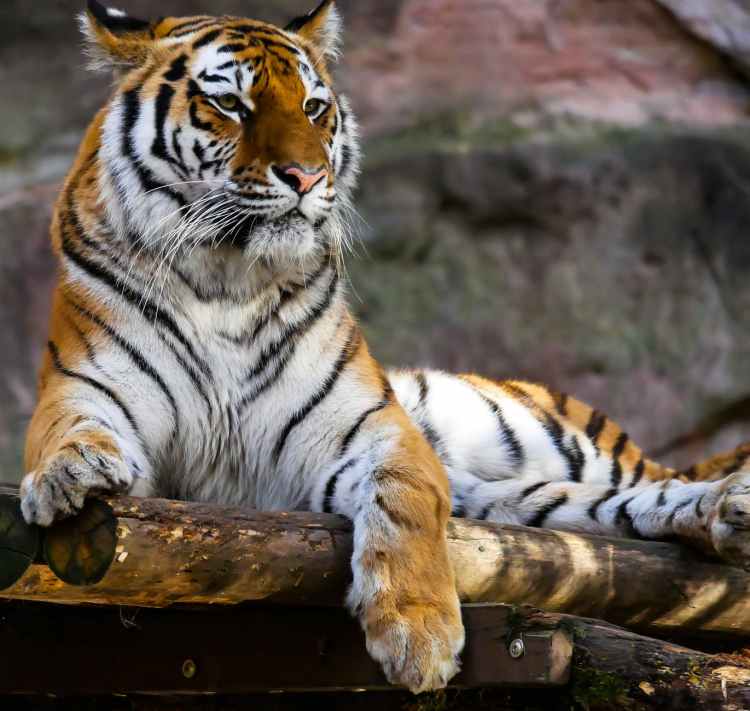
This view of a tiger stretching gives a good idea of the power of its forelegs and the size and strength of its paws. Photo by Richard Verbeek on Pexels.com

An example of village relocation comes from 2011 when the NTCA decided to relocate the village of Sunderkhal, The village lies in the middle of dense forest in what is termed a tiger corridor. Tigers from the nearby Corbett National Park began to expand their range. In the resulting conflict about 40 people died in a six-month period. Eight tigers were killed. Corbett National Park is the oldest such park in India and was founded in 1936.The relocation was voluntary. Residents could receive Indian currency worth about 15000 Euros at the time, which was about $17,000 USD. Or the residents could swap their current land for another parcel. The relocation project had one major flaw. Corbett Park is a popular tourist destination and there were no plans to stop building hotels and other tourist friendly structures in the region.

Map of Corbett National Park, founded in 1936, the oldest Indian national park and location of prime tiger habitat

The Park was named for Jim Corbett, a famous big-game hunter turned conservationist who hunted down known man -eating tigers. The park is located about 290 kilometers from Delhi in the foothills of the Himalayas. Corbett Park is one of the original 9 tiger reserves from Project Tiger in 1973. The park has grown from 324 square kilometers at its inception to about 1400 square kilometers, approximately 539 sqaure miles.

Project Tiger is the name of the original efforts to save the Bengal Tiger. It began April 1, 1973, when tigers in India were estimated to number around 1,200. Today, the number is three or four times as large.

Like Local Cougars, Indian Tigers May Be Losing Genetic Diversity, Becoming Inbred

Local cougar lovers are hopeful that a soon-to-be-built freeway overcrossing for wildlife may help save area cougars from inbreeding. Something similar may be needed in India to protect tigers there.

animal animal photography big cat feline
Tigers are the largest cats in the world, Their numbers worldwide have dropped from an estimated 100,000 in 1900 to perhaps 5,000 in the wild today. There are many more in zoos, shelters and private hands than in the wild. today Photo by Pixabay on Pexels.com

A recent study says that tigers in India are showing possible signs of inbreeding. India is home to 70 percent of the world’s free-roaming tigers. Inbreeding could be a disaster for the species. The article was published in the journal Molecular Biology and Evolution. Locally the problem is mostly due to freeways which carve up the cat’s habitat. Freeways make seeking new territory to find a mate hazardous. The situation in India is similar but caused less by freeways than by fragmented habitat caused by human settlement.

The study examined 65 tigers from four of the five surviving tiger subspecies. Some lists contain the South China Tiger, but many experts consider it extinct. The study found Indian tigers (Bengal tigers) were more genetically diverse than their cousins from other parts of Asia. Tigers from the north were more diverse than those from the south, suggesting inbreeding. The study authors expressed uncertainty about whether inbreeding would adversely impact survival.

The ambitious Liberty Canyon project is designed to help save cougars and other local wildlife from inbreeding.

Undescended testicles and low sperm count found in local cats cause biologists to fear infertility leading to a dearth of healthy cubs.

The problem is essentially the same in both locales. Cats hemmed in by urbanization eventually mate with close relatives. There are more tigers in India than cougars locally so the damage would likely be slower to show up.

photo of a cougar near a log
The National Park Service has been studying local mountain lions in the Santa Monica Mountains for about 20 years. Photo by Nicky Pe on Pexels.com

The solution is the same in both areas. Find ways to connect separated populations and be sure the cats will use the pathway. The Liberty Canyon project provides a wide, inviting and natural looking pathway across the busy 101 Freeway in Agoura Hills. Ground breaking may take place as early as February with the project completed sometime in 2023.

Hunters Kill Wolves Roaming Out of Yellowstone Park; Perhaps 20 percent of Park’s Population

A large number of wolves who wandered out of the protection of Yellowstone National Park have been killed by hunters. The killings underscore the tenuous recovery of gray wolves in the American west as wolves try to return to their former range. Wolf advocates are worried because the hunting season is not over.

white wolf on brown dried leaves
Like dogs, gray wolves exhibit a variety of colors including white and black, Photo by Shelby Waltz on Pexels.com

Wolves once roamed freely throughout the United States. They were extirpated in most of their American range by 1960. A few survived in Michigan, Wisconsin and Minnesota and their cousins, red wolves, survived in the South until 1967. Red wolves were so critically endangered that the survivors were captured. They entered captive breeding programs, but are once again hanging on by their teeth in the face of extinction.

brown deer standing on brown field
Elk are a prey species for both humans and wolves, leading to conflict between the two species. Photo by Ari Koess on Pexels.com

Gray wolves have always had mortal human enemies including stockmen and ranchers who blame them for deaths of domestic animals. Some hunters also wish to kill them. Attitudes softened starting in the 1970’s with a new generation of biologists studying wolf behavior and reintroduction efforts began in the 1990’s. Wolves were reintroduced into Yellowstone National Park in 1995 and more favorable attitudes to wolves allowed for them to begin a slow reintroduction in other parks of the west. Wolves came into the United States from Canada and left Yellowstone. There are packs in Washington, Oregon, Idaho, the Yellowstone region and California.

But the reintroduction has not been without controversy and wolves still have many enemies. Some troll the internet to brag about killing wolves. Some resort to poison.

a brown bear standing on green grass
Bears are able to chase wolves from kills, helping bears to survive lean winters. Photo by Tatjana on Pexels.com

Scientists say reintroduction has been good for the ecosystems involved. Wolf kills provide food for many smaller animals and scavengers. They also provide food for bears in difficult winters. Wolves have limited coyote populations, which may help smaller animals survive and thrive. Their impact on animals people hunt and on livestock has been debated but does not seem to be too large. Colorado State University notes, however, that although the total impact of wolves on livestock is low it is unevenly distributed. Some producers are hit seriously while others aren’t. The University also notes that wolves don’t always fully consume a kill, which rankles livestock owners.

Columbus Zoo Loses Key Accreditation, But Receives Nod From Another Accreditor

The Columbus Zoo, once home base for television wildlife expert “Jungle Jack” Hanna, has lost a key accreditation. The Association of Zoos and Aquariums (AZA) stripped the zoo of its accreditation. The AZA acted because of reports of mishandled funds and other charges levelled against former officials including Hanna.

In better news for the zoo, the Alliance of Marine Mammal Parks and Aquariums recently accredited the zoo. The AMMPA is an international accreditation body, specializing in marine parks. The new accreditation is part of the zoos effort to regain status. Accreditation was granted after a two-day inspection.

The AZA stripped the zoo of its accreditation due to alleged financial irregularities. About $650,000 in funds may have been mishandled, leading to the departure of the management team in place at the time. There were also questions about Hanna’s alleged use of animals from unaccredited institutions in television appearances. A new management team has replaced the old and changes have been made. The zoo has cut ties with some of the organizations allegedly supplying animals in violation AZA guidelines.

This Pallas Cat is one of the 7,000 animals in the zoos collection. The animals represent 800 species.

the accreditation was yanked last year, but the zoo operated with a provisional accreditation while appealing the decision.The appeal was denied and the zoo must wait until summer to reapply. Accreditors are waiting to see proof the changes made can be sustained

Hanna has retired and severed all ties with the zoo. His family has announced the popular television figure is suffering from dementia and no longer takes a public role. On its website the zoo recognizes Hanna’s role in bringing the zoo to national prominence.

The Columbus Zoo and Aquarium is a non-profit zoo located on 400 acres near Powell, Ohio close to Columbus. The zoo traces its roots back to 1905 but did not obtain national prominence until Jack Hanna became director in 1978. He held that post until 1993 and became director emeritus that year, maintaining that role for more than a decade.

Florida manatees are present at the zoo. A recent increase in deaths of manatees in Florida has Increased calls for conservation

Hanna’s frequent television appearances on Late Night With David Letterman, Good Morning America and other shows brought the zoo into prominence. Critics allege he violated AZA guidelines in securing the animals used in his appearances.

Wildlife Abundant Near Site of Chernobyl Nuclear Accident, But Biologists Are Cautious About Mutation Risk

The accident was horrific . A nuclear reactor in the Ukraine exploded in April, 1986, killing people and blighting a huge area with nuclear waste. News coverage of the nuclear mishap gripped the world. Some thought the region would be a dead zone for centuries. Nearly 40 years later the exclusion zone around the destroyed power plant is not a desert but is thriving. Scientists are taking a closer and cautious look at the wildlife in the region, Genuine concerns about nuclear waste remain.

city landscape street hotel
The 1986 explosion at Chernobyl created an exclusion zone of 1,600 miles around the doomed nuclear power plant Photo by Oleh Mostipan on Pexels.com

Chernobyl is the name of a small town near the power plant, which itself became known as Chernobyl. In April, 1986 workers conducting what is called a “poorly designed” experiment at the nuclear plant made a series of mistakes. An analyst later said it was like trying to experiment on jet engines while flying. The plant exploded and an unknown number of people were killed, including emergency personnel trying to control fires. Estimates vary but perhaps 50 were killed outright and many others suffered life-threatening radiation exposure. A high-end estimate suggests 93,000 eventually died due to lingering effects of nuclear contamination. An unknown number of animals died outright or later from lingering effects. The disaster forced the then Soviet Union to create an exclusion. zone covering 1,600 square miles, an area about half the size of Yellowstone National Park.

nature animal head portrait
Eurasian lynx have returned to the area of the exclusion zone for the first time in 50 years. Photo by Pixabay on Pexels.com

Now. 36 years later the exclusion area is still off-limits to humans. But nature has made a comeback in the forbidden zone. Brown bears have returned for the first time in a century, Eurasian lynx for the first time in 50 years. Bison, dozens of types of birds and other creatures are abounding.

shallow focus photo of bear
European brown bears have returned to the region after a century of absence Photo by Janko Ferlic on Pexels.com

.

But the enormous success of gray wolves has astonished scientists and raised serious doubts. Attracted by the abundant supply of food, and the near total absence of humans, wolves in the forbidden zone apparently outnumber wolves in surrounding regions by perhaps 7 times. The zone is still radioactive and the worry that the wolves may be spreading genetic mutations when population pressure encourages them to move out of the zone. It is a problem that other species might share and it is under study.

One this seems certain, that the animals are thriving despite the radiation. It also seems certain that the lack of humans contributes strongly to the resurgence of animal populations.

Meanwhile the presence of humans has been a major obstacle as gray wolves seek to repopulate traditional areas of the US. Some are killed by cars and some are poisoned.

,

Tiger King “Joe Exotic” To Be Resentenced January 28

A federal judge will resentence “Joe Exotic” the “Tiger King” on January 28, following a successful appeal. Joe Exotic was sentenced to more than 20 years for assorted wildlife violations and other offenses. His sentence is expected to be lowered at resentencing. He has been held in federal medical prison facilities because he is suffering from cancer.

Joe Exotic, whose real name is Joseph Maldonado-Passage, ran an exotic wildlife park in Oklahoma. He became embroiled in a feud that led to his eventual arrest by federal authorities and closure of the park.

He was convicted of plotting a pair of murders-for-hire because he wanted to have a woman killed who ran a wildlife rescue operation. The two were embroiled in a legal dispute. Maldonado-Passage also killed five tigers and sold cubs. Authorities found he falsified wildlife records. His lawyers appealed his sentence, arguing it was miscalculated. Two murder-for-hire convictions were sentenced separately not as one sentencing offence. In July, an appeals court agreed that the sentence was too long. He is expected to receive a shorter sentence.

An undated file photo from the Santa Rosa County Jail in Mllton Florida shows “Tiger King” Joe Exotic who will be resentenced January 28 folowing conviction and imprisonment on federal wildlife charges.. Phot from AP
Promotional material for the live feed event celebrating the relocation of 141 animals once held by -Passage.

The lurid story of feuds and death plots became a Netflix series. Meanwhile, authorities worked to relocate the hundreds of tigers, bears and other animals held at the park. Living conditions at the park were substandard. The Wild Animal Sanctuary in Keenesburg Colorado received many of the animals. The sanctuary operates on 10,000 acres in Texas and Colorado. They have accepted 141 animals so far.

Maldonado-Passage sold the facility. The new owners were unable to meet quality standards and another 97 animals will need to be relocated.