Texas Cougars Gain Safety As State Enacts First-Ever Protections And Puts Limits On Trapping

Cougars (Puma concolor) have come a long way from shoot-on-sight vermin to ambassadors of wildlife. The big cats are much more top-of-mind as urban sprawl brings them into closer contact with people. Efforts to protect them are gaining ground. Now Texas cougars gain safety as the Lone Star State has enacted first-ever protections for the cats.

close up shot of a cougar looking up
Cougars gain safety in Txas as the state enacts its first protective egislation.Photo by Catherine Harding Wiltshire on Pexels.com

According to KEYE Austin conservationists are hailing a recent state decision. The Texas Parks and Wildlife Commission recently banned “canned” cougar hunting. That involves animals being confined to a small area so that “hunters” have little difficulty making a kill.

They also banned keeping cougars trapped for more than 36 hours. Of the two measures the canned hunting was the least controversial as most hunters in Texas hunt ethically. The trapping measure was more of an issue as cougars do attack livestock and the area is so vast it can be difficult to get to a trapped animal.

Like mice cougars can be trapped. Texas now prohibits them from being left in the trap for more than 36 hours. Photo by ‫צור אייזקס‬‎ on Pexels.com

The decisions mean that the Texas cougars and their future are. on the radar of Texas biologists. They are first steps and are far short of laws in California where Cougars are well protected.

They do have friends in the state including the Texans for Mountain Lions Coalition. The coalition is a broad grass roots organization with conservationist, landowner and biologist members.

Mountain lions are not considered in immediate danger. They range from Canada south to Argentina. It is the largest north south range of any cat. But numbers are uncertain and some area may face local extinction.

Texas is moe than 260,000 square miles in size. An unknown number of cougars live there. Efforts to protect them have just received a boost.,

California recently surveyed its cougars and came up with what is a smaller and probably more accurate number. About 4,500 cougars roam California, most of which is good habitat. That number is much lower than previously thought. Nationwide there may be as many as 40,000 of the cats, but that number is by no means certain. As Texas cougars gain safety a clearer picture of their numbers should emerumbge. In contrast to California, Texas may have only 400 cougars, according to some estimates.

Most of the cougars in Texas as thought to be in the west and south of the state. There are no controls on killing them as of now.

In Cal

According to KEYE Austin

Indian Tiger Population Increasing As Four To Five Tigresses In A Reserve Are Spotted With Cubs

India has about 70 percent of the world’s wild tigers (Panthera tigris). The nation has spent much time and energy protecting the regal cats. Officials are now excited because four or five tigresses have recently given birth to cubs in the same reserve. The Indian tiger population is increasing.

Mother tigers like this one have recently been sighted in a tiger reserved with several cubs each.

According to the Free Press Journal the mini baby boom has occurred in the Bandhavgarh Tiger Reserve. The reserve is adjacent to Bandhavgarh National Park. The reserves are located in Madhya Pradesh in central India. The capital of Madyha Pradesh is Bhopal The park and reserve are home to much diverse wildlife including high tiger density.

Photo by Pixabay on Pexels.com. Cheetahs like these cubs were driven from Inida abut 70 years ago The country is trying to reintroduce them

Acccording to the Free Press Journal:

“The officials at Bandhavgarh Tiger Reserve are overjoyed as four to five tigresses have given birth to cubs recently. The cubs are one to five months old. Spotted with cubs in tourist and non-tourists range, tourists are missing no chance to click their photos, which are going viral on social media.

“Tigresses are being spotted with cubs at four to five places,” Bandhavgarh Tiger Reserve deputy director Prakash Kumar Verma told Free Press. Of late, they were seen moving in Tala and Khitoli ranges with their cubs. One tigress is being seen along with four cubs in Tala and another tigress is spotted with three cubs in Khitoli range.”

The cubs are thought to number between two and four per female. Camera traps are expected to determine the exact number. Partly because the area has a high tiger density conflict with humans has occurred, including one fatality.

India has been very successful in efforts to increase tiger numbers, which have doubled. TheIndian tiger population has reached nearly 3,000 indiciduals. The government is very proud of its conservation success. India wrestles with growing population and increased urbanization. That impacts wildlife. Success in increasing tiger numbers may decrease habitat for other species, a problem the nation is seeking to solve. India is also launching Project Cheetah, an effort to bring that cat (Acinonyx jubatus) back

to land it was driven from in the 1950s.

Caracal and Pheasant by Antoine-Louis by The Metropolitan Museum of Art is licensed under CC-CC0 1.0 Caracals are another wild India feline the nation is striving to protect

(The ambitious project intends to bring 50 cheetahs t0o India from Namibia. The cats are expected to start a breeding population. They can then bring a natural balance to the areas they are introduced too. India is also looking to protect its population of caracals. Caracals, (Caracal caracal) are mid-size predators. Their population numbers are low in India. With Indian tiger population increasing, India probably has most of the tools in place for successful conservation efforts ofr other big cats. India is home to almost half of the world’s wild cat species. Many of them are threatened in India. The country has much work to do.

Sailors Take Revenge As Ship-Eating Ocean Worm Is Set To Appear On Dinner Plates And Grocery Shelves

Sea going worms have always been a bane of sailors. They bore into wooden vessels and eat them. Now the tables may be turning, at least in the United Kingdom. That is if university researchers can sell people on the idea of eating them. If sailors take revenge in the United Kingdom, can we be far behind?

The researchers are seeking to convince people to harvest and eat the worms as a cheap source of renewable protein.

Various forms of worms attack wooden ships hulls. But the worms may actually prove tasty enough to find their way to human dinner tables.

According to The Independent teredo worms (Family Teredinadae) are found worldwide. They eat wood submerged in water. Teredo navalis is the species in question and it translates to naval worm.

The Sunday Times suggests they taste something like clams .Enthusiastic proponents think worm farming can help protect overfished species like cod. Sailors take revenge indeed.

According to Britannica:

The most economically important shipworms, i.e., those causing the most damage, are members of the genus Teredo, which includes about 15 species. Other genera are BankiaXylotrya, and XylophagaTeredo norvegica, of the coasts of Europe, has a tube about 30 cm (1 foot) long. The common shipworm, T. navalis (20 to 45 cm [8 to 18 inches] long), has a worldwide distribution but is especially destructive on the Baltic Sea coast.

Photo by Esmihel Muhammad on Pexels.com It will be less difficult to convince people to eat pork sourced from the feral hogs roaming much of the United States

Only a small part of the anterior end of the shipworm is covered by a shell; the remainder is a long tubelike structure that, in some species, may be 180 cm (6 feet) long. The white shell, often marked with closely set lines, is used for burrowing into wood. File-like ridges on the shell cut into the wood at a rate of about 8 to 12 rasping motions a minute. Shipworms secrete lime to line the inside of the burrow. The tubelike portion of the animal, which extends back to the burrow opening, ingests food particles and oxygen from the water and discharges wastes and reproductive cells. A certain amount of wood is also ingested as food by most species.” (Links in original).

Asian swamp eels are eaten in many Asian countries Whether they wlll be a hit n the United States remains to be seen,

If sailors take revenge on worms, other pests can follow. Other pests are now entering the human food chain. Feral hogs and destructive eels. among them. Asian swamp eels are an invasive pest that is plaguing Florida. The eels are already eaten in Asia. Many were probably released from restaurants in Florida, Now it is hoped they will have a wider dining audience. Feral hogs are, of course, pork on the hoof. Wild pork dishes are becoming more common, too.

We have written extensively about invasive species. Adaptation to their arrival includes developing predation techniques. Even if we have to do it outselves.

Zookeepers In Danger; Snake Handlers At Australian Facility Perform Health Check On Deadly King Cobra

Among the many jobs in the world with unusual dangers is that of the zookeeper. Proximity to wild animals is often dangerous, but handling poisonous snakes definitely puts zookeepers in danger.

According to Yahoo Life the health check was performed on Sultan, a very large King Cobra(Ophiophagus hannah)). Australia has its own venomous snakes but because Sultan is bger than most of them he may the most dangerous snake on the island continent.

Special precautions had to be taken to protect the zookeepers in danger.

.

Photo by Wild Life Photography on Pexels.com

Yahoo said:

“Australian zookeepers have successfully performed a health check on a highly venomous snake. Sultan the King Cobra, a resident at The Australian Park, is known to be incredibly deadly and one bite often proves to be fatal without the treatment of antivenom. To be able to handle the exotic species, the Park were required to have specialised antivenom imported from overseas. King Cobras are among the largest snakes in the world, often exceeding 5 meters in length when fully grown. Astonishingly, Sultan measured a whopping 3.4 meters long and weighed an impressive 5.5 kilograms (cq). Already at this length, Sultan very well could be the longest venomous snake living in Australia. The most dangerous task during the health check was milking the cobra. King Cobras are notorious for producing substantial venom yields, making them one of the deadliest snakes in the world. Milking the cobra was essential to evaluate the health of its venom, while also providing an opportunity to closely inspect its fangs. During the milking process, Sultan yielded an astonishing 350 milligrams of venom.”

Snakes like this are cobra food. They frequently eat pythons up to 10 feet long. Photo by Pixabay on Pexels.com

According to Britannica:

“:

The king cobra is an active hunter. It preys almost exclusively on other snakes, prowling in forests, fields, and villages in the daytime as well as at night. The king cobra’s greatest predators are humans, who harvest it and use certain body parts for food, medicine, and leather.

It is not normally aggressive to humans—bites are rare—but it is hostile and dangerous during the breeding season or when cornered or startled. When threatened, the king cobra lifts the front part of its body so it stands roughly perpendicular to the ground. Its threat display also includes the spreading of its hood, which is just below its head, and the utterance of a low-pitched hiss. In this posture it can move or lunge forward to strike its victim. The king cobra’s paralyzing venom is so copious and powerful that elephants have died within three hours of a bite to the toe or trunk. In captivity it is aggressive to strangers but recognizes its keeper and anticipates feeding time.”

Photo by Omkar Vinchu on Pexels.com The mongoose is one of the cobras few enemies and is victorious about 80 per cent of the time.

As mentioned, cobras are native to India not Australia. Australia has its own deadly snakes. Worldwide snakes kill about 150,000 people annually only 5 of those deaths is likely to occur in the United States. Australia, despite the presence of dangerous snakes, loses about two people annually. India, however, loses an estimated 58,000 people annually.

Thylacine Resurrection May Still Be In The Cards As Scientists Work; Some Think A Few May Still Survive

Officially they went extinct around 1937. Some now put that date 30 years later. A few diehards give credence to sightings. One way or another a Thylacine resurrection or rediscovery may still be in the cards.

Taxidermy Mount – Thylacine, Thylacinus cynocephalus (Harris, 1808) by Photographer: Rodney Start is licensed under CC-BY 4.0 The mystery creature is dear to Tamanian hearts and efforts to find or replicate them are popular.

The dog-sized striped predators were the largest marsupial predator. Conflict with humans led to their probable demise. The last zoo specimen died in 1936 in the Hobart Zoo.

Researchers in Australia and elsewhere are trying to use innovative DNA technology to resurrect the marsupial predator. The odds are still long because there is a small amount of DNA to work with. Other problems stand in the way, but researchers appear determined and some breakthroughts have happened.

Photo by Valeriia Miller on Pexels.com. Kangaroo appears to have been on the thylacine menu.

Swedish researcher recently found a thylacine specimen dating to 1891 with well preserved genetic material. The RNA in question was thought not to survive for decades but since the hide of the animal was dried that may have contributed to preservation.

Meanwhile, what may be the “last” of the Tasmanian tigers has been found in a cupboard where it was left after the animal died. The remains were thought to be lost but were simply misplaced in storage.

The fat tailed dunnart is the closest living relative to the thylacine. this adds challenges to de-extinction efforts.

Of course, thylacine resurrection is not even necessary if they are not actually extinct. The Thylacine Awareness Group of Australis (TAGOA) is dedicated to proving the experts wrong. The fact that a recent study suggests the beasts survived after official extinction strengthens their resolve. Some experts think credible sightings from the 1990’s exist. Of course sightings are controversial and can be faked or mistaken so perhaps the question of thylacine resurrection remains open in both senses.

The scientific hurdles remain. Enough viable DNA must be found to create the genome. The material must be inserted into a surrogate and the birth must be live. The closest relative to the thylacine is a fat-tailed dunnart. That raises questions about how to implant a fetus and bring it to term. Dunnarts and tiny and the tiger weighed aroud 50 pounds.

Tiny Sand Cats Capturing The Imagination; Fierce Mini Predators Drawing Scientific Attention

The sand cat (Felis margarita) is one of the most adept and least known of the nearly 40 species of wild cats on earth today. Tiny sand cats weigh in at around 5 pounds but are fierce and versatile predators.

They are not well known to science according to the International Society for Endanged Cats (ISEC) of Canada.

Sand cats fit well in their habitat and are active mostly at night.

ISEC says there are several reasons for this.

“The first radio telemetry study on these little cats (1993) was in Israel, where biologists discovered they were extremely difficult to track. The fur on the soles of their feet that prevents them from sinking in soft sand also makes their tracks almost invisible. When a light is trained on them, they crouch low, closing their eyes so that no reflection is visible. This behaviour, along with their excellent protective colouring, compounds the problem. The cats also buried all their feces, making it impossible to gather data about their diet.

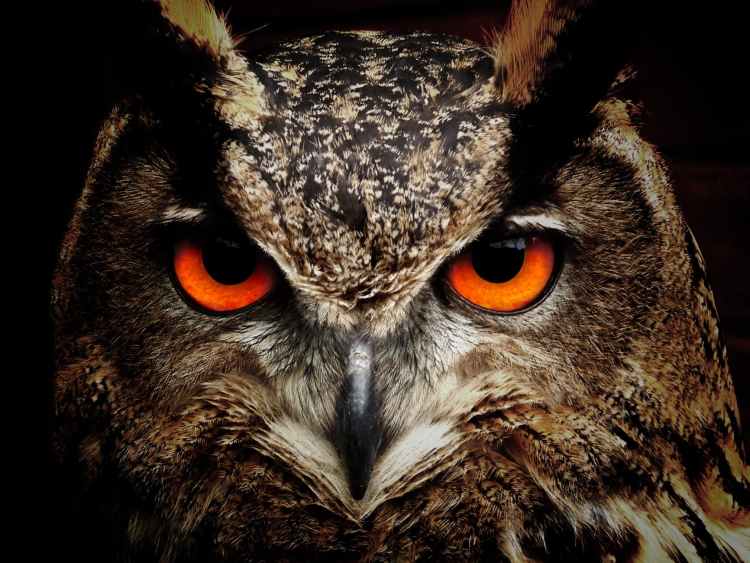
Lareg owls are enemies Photo by Pixabay on Pexels.com

Home range sizes likely vary according to ecological conditions and vegetation cover available for prey animals. In a study along a dirt road in southern Morocco, initial home ranges of two males and one female followed during four to six days were 35.3 km², 21.8 km² and 13.4 km², respectively. A radio telemetry study in Israel suggests large home ranges, with one male using an area of 16 km².  Seven annual ranges in Saudi Arabia, were estimated at 19.6-50.7 km² .””

Snakes are both food and foe. Often the tiny san cat dispatches deadly snakes with rapid paw hits to the head. The snake, exhausted and disoriented is then dispatched with a neck bit. But not always. Photo by Miriam Fischer on Pexels.com

They have been video photographed at night, however, making them something of a YouTube sensation.

“Sand Cats have been recorded to move long distances in a single night. In Morocco, one male travelled more than 14 km in a straight line in less than 30 hours.” According to ISEC

The information about them is sketchy and their numbers are unknown. They are the only cat to live entirely in the desert. They may be few in number, or not. But there are conservation issues according to the ISEC.

“Habitat degradation and loss are considered to be the major threats to the Sand Cat. Vulnerable arid ecosystems are being rapidly converted by human settlement and activity, especially degraded through livestock grazing.  Additional threats are the introduction of feral and domestic dogs and cats, creating direct competition for prey, predation and disease transmission. This applies particularly along roads through suitable habitat.

In Iran, Sand Cats are killed by shepherd dogs and trapped in snares set for other species. They also get stuck in fences and are vulnerable to indiscriminate trapping and poisoning of predators.

In the Arabian Peninsula, sand dune habitat continues to decline. Several of the areas have been affected by political strife, and war-like conditions that have accelerated habitat destruction i.e. Syria.

Locally, Sand Cats may be threatened by the pet trade. There are occasional reports of Sand Cats being shot in Saudi Arabia.

In Algeria, they are not considered a threat to poultry, or trapped to sell as pets. Toubou nomads living northwest of Lake Chad consider Sand Cats frequent chicken thieves which readily enter their camp in the evenings. They do not generally retaliate, due to traditional religious respect for these small cats as tradition holds that they were the companions of the Prophet Mohammed and his daughter.

The development of reliable survey methods is urgently needed to assess the population. Furthermore, studies on the behaviour and ecology of the Sand Cat are crucial to apply appropriate conservation measures.”

A recent inquiry suggested the tiny sand cats extensive range could be a problem. The big range could mean fewer individuals and thus more extinction risk. The study also showed, however, that the cats fought rarely. Their more cooperative nature may help protect them. Cooperation could be a survival adaptation.

New Nevada Wolves May Be Following Moose Into State From Idaho;First Wolves In State in 100 Years

Nevada wildlife authorities are examining evidence that wolves may be returning to the Silver State. It would be the first time in a century. According to Outdoor Life the new Nevada wolves may be following a Moose boom in the state.

Moose have been coming into the region of Elko, Nevada for several years. Enough have arrived for the state to allow its first moose hunt. Apparently the wolves, (Canis lupus) are interested in hunting the moose too.

Photo by patrice schoefolt on Pexels.com Wlves are born wanderers and can travel many miles in search of food.

The moose were being counted by a helicopter overflight when the “suspected” wolves were spotted. That is according to the Nevada Department of Wildlife (NDOW). Biologists were dispatched to the scene. Tracks were found at the scene.

Nevada has lots of arid land but some is capable of supporting wolves and their prey. Landscape View Of The Nevada Desert And Mountains Along Highway 50 by Jennifer Bourn is licensed under CC-CC0 1.0

“The agency added that biologists measured those tracks and found them to be consistent with gray wolves. They also installed trail cameras and collected scat and hair samples for DNA testing.” Results are pending.

The agency added that biologists measured those tracks and found them to be consistent with gray wolves. They also installed trail cameras and collected scat and hair samples for DNA testing.

Western wolf populations have rebounded in a big way since the species was reintroduced in the 90s, however, and it wouldn’t be at all surprising if the wolves were moving into the area from other states. Nevada is literally surrounded by wolves, with all five neighboring states harboring at least some of the animals.

Moose (Alces alces) are very large members of the deer family. They appear to be moving into northern Nevada and wolves are following their trail it appears. Photo by Pixabay on Pexels.com

The largest source populations for Nevada’s wolves lie to the north in Oregon and Idaho. These states currently hold around 178 and 1,337 gray wolves, respectively.

Utah has the smallest number of wolves among the five states, with an estimated 20 gray wolves currently living in the northeast corner near the borders of Idaho and Wyoming. Next is California, which is home to an estimated 45 gray wolves and seven named packs. Arizona is home to a different species, the Mexican wolf, but their numbers have been growing for eight rows in a row now, with the most recent survey showing 144 individuals. (Because of where the wolves were seen in Nevada’s northeast corner and the federal regulations establishing separate recovery zones for the two species, it’s almost certain that the wolves spotted in Nevada earlier this month were gray wolves and not Mexican wolves.) (Links in original)

Reintroduction of wolves remains controversial. Colorado reintroduced them late last year after major debate. Recent reports that a wolf has killed a calf has rekindled debate.

Wolves are a hot button conservation issue all over the west and in other parts of the world.

New Arizona Jaguar Spotted On Camera May Be A Member Of A New Unnamed Jaguar Subspecies

Another jaguar (Panthera onca) has been spotted in Arizona, making 8 identified in recent years. The new Arizona jaguar is something of a mystery, however, as it may be a member of a different, as yet unnamed subspecies.

Jaguar (Felis onca) from the viviparous quadrupeds of North America (1845) illustrated by John Woodhouse Audubon (1812-1862). Original from The New York Public Library. Digitally enhanced by rawpixel. by New York Public Library is licensed under CC-CC0 1.0

According to Animals Around The Globe the large cat was filmed in the Huachuca Mountains in the vicinity of Tucson. It is pretty clear that jaguars are entering Arizona. However, they have all been males. Until females appear and begin to breed it cannot be said there is a population in the state. The website appears confident the new Arizona jaguar is indeed a member of a new subspecies.

Jaguar Effigy Vessel by Greater Nicoya is licensed under CC-BY 3.0 Jaguars are a popular motif in Central and South American art. Indications are that substantial support exists for efforts to protect the cat from destruction.

Conservationists are working to reintroduce cats to the southern United States and have begun the formal petition process to encourage the federal govenment to act.

Jaguars are the largest of the cats to inhabit the American continent. They are the third largest in the world. Currently the most generous estimate of their numbers is about 175,000 mostly from Mexico south into the Amazon basin. The cats are facing serious pressure from human development and their habitat is fragmenting.

Photo by Soubhagya Maharana on Pexels.com Large snakes such as anacondas are among the 85 or so prey animals jaguars are known to eat.

But a number of efforts are being made to rescue the cats and expand their range. One method is to take a leaf from the Liberty Canyon Wildlife Overcrossing. That involves building and maintaining wildlife corridors to allow for genetic diversity and preventing inbreeding. The other is “re-wilding.” Re-wilding can be as simple as re-introducing animals into habitat from which they were driven. Or rewilding can be a more complicated process. Animals not born in the wild can be re-habituated to normal behaviors prior to release in the wild.

If the spotting of the new Arizona jaguar is followed by the arrival or one or more females the more natural process of reproduction may re-introduce the jaguar to Arizona.

Worth noting is the fact that jaguars have one of the most powerful bites in the animal kingdom. Measured at 1500 pounds per square inch a jaguar bite is about twice as powerful as that of the most powerful dog. This helps explains why jaguars are able to kill and eat very large snakes and crocodilians. They can bite through a turtle shell.

Freeway Cougar Closure Timeline Announced As CalTrans Prepares To Put 140 Ton Beams In Place

April 15 will not only see the pain of Income Tax Day but the beginning of overnight closures of southbound lanes of the 101 Freeway in Agoura. The Freeway cougar closure will facilitate the placing of beams needed for the Liberty Canyon over crossing according to the Ventura Star.

Mule deer (Odocoileus heminous) are common in southern California and will benefit from the crossing, experts believe. Photo by Danny Shives on Pexels.com

“Starting April 15, closures of all southbound lanes are expected to run from around midnight to 5 a.m. weekday mornings and to 6 a.m. Saturdays. Some lanes will begin closing as early as 7 p.m. Times and dates, however, are subject to change, the agency said.

A total of 82 girders, or 41 on each side, will stretch from the walls on either side of the freeway to middle support columns. Built in Riverside County, each one weighs from 125 to 140 tons, Caltrans officials said.” (link in original) North bound closures are scheduled for May.

The completed overcrossing is expected to be wide enough and natural enough to draw animals across it

The overnight work is part of the construction of the Wallis P. Annenberg Wildlife Overcrossing in Liberty Canyon. Annenberg was a prime contributor to the public/private venture. The venture began as something of an homage to P-22. That mountain lion (Puma concolor) led a highly public life for a secretive cat. His adventures captivated Los Angeles and spotlighted the dangers wildlife face in Los Angeles. The National Park Service (NPS) has identified traffic as a particularly dangerous threat to mountain lions, deer, bobcats and other creature. The freeway cougar closure is part of a statewide effort to reduce feline and other fatalities on California roads.

In his prime P-22 was King of the Hollywood Hills and successfully transited the 101 Freeway twice against all odds. His exploits triggered tremendous interest in the cougars roaming the Santa Monica Mountains and resulted in the impetus to build the overcrossing

The project may be the largest of its kind in the world. The idea of creating traffic safe crossing for animals in now being implemented world wide.

Another less well-known but ambitious overcrossing of the 101 is also in the works for the 101 Freeway farther north.

According to the Los Angeles Times conservationists in the Bay Area are raising funds for a pathway similar to Liberty Canyon. Like the Southern California crossing it will be over the 101 Freeway. That freeway has several dangerous stretches for wildlife and people. A recent “mortality map” showed just how dangerous some roadways are for cougars. Traffic accidents are a serious threat to wildlife. Caltrans and partners are working to make the roads safer.

Internationally the idea of linking jaguar (Panthera onca) habitats has taken a leaf from the California work. Conservationists now realize that simply setting aside parks is not enough. Wild animals must be able to move between populations to prevent inbreeding and local extinction. Santa Monica Mountains cougars have been spotted with kinked tails, a sign of inbreeding, The National Park Service(NPS) says. Nps has been conducting local cougar studies for about 20 years and has collared more than 100 of the large felines.

Burgeoning Wildlife Tourism Industry May Help Rescue Many Endangered Species

It is no secret that tourism is a big business. But the burgeoning wildlife tourism industry may prove vital to the animals spotted by travelers.

According to the Future Markets Insight (FMI) blog the industry may nearly double in the next ten years .Wildlife tourism – or observing wild animals in their own habitat – is a critical part of the tourism industry in Australia, America, Africa, Canada, Indonesia, Maldives and Sri Lanka.

The blog says :

The Wildlife Tourism Market is thriving. This is a classic example of how it can work, It can be intrusive and efforts must be made to keep it unobtrusive if possible.

“By 2034, the size of the worldwide wildlife tourism market is expected to reach US$ 2,45,298.4 million. Based on projections, the market is expected to grow at a compound annual growth rate of 5.20% until 2034. The industry for wildlife tourism is expected to be worth US$ 1,47,753.3 million in 2024.” (Links in original)

Of course the idea of animal tourism has positives and negatives.

Despite outward similarities snow leopards are not particularly closely related to true leopards (Panthera pardus). They are more closely related to tigers (Panthera tigris) Photo by David Ogden on Pexels.com

“During the visit to wildlife destinations, tourists contribute to the improvement and conservation of the conditions of wild animals. Wildlife tourism also improves the life of the local tribes, as when tourism flourishes, they get opportunities of improved livelihood. Continuous flow of tourists keep the poachers away from killing endangered species of animals. When tourists visit wildlife sanctuaries certain amount of entrance fee is charged from them.

This money is directed towards animal conservation programmes. However there are some negative impacts too. The disturbance is always high when tourists approach the wildlife very closely to take photos. Also, the breeding patterns of animals may also get disturbed due to constant pressure of tourists to take photographs of animals with their young ones.”

An increasing desire to see nature closeup with less impact is driving the urgeoning wildlife tourism industry. Photo by Pixabay on Pexels.com

The rise of eco-tourism has fueled the burgeoning wildlife tourism industry. It is also driven by a growing understanding of bottom up conservation. People the world over are more likely to protect animals if the creatures can be woven into their economic well-being. If snow leopards, for example are seen as economic partners not threats. the local people are much more willing to protect them. Snow leopards (Uncia uncia) are under threat and three strategies are evident. The are protected by law from the top down. Governments and agencies do help to mitigate predation loss with payments. They also provide shelter to protect vulnerable livestock. Recently, efforts to help residents develop new profitable skills such as beekeeping have been started. This reduces competition between the cats and livestock owners. Top down conservation, mandated by governments or agencies is evolving into more sustainable conservation efforts.

Another aspect of conservation is modifying behaviors both human and animal. Efforts are underway to protect snow leopards by convincing locals to raise bees rather than livestock, reducing competition

Exit mobile version