Yucatan Underwater Labyrinth Is Teeming With Life, Researchers Discover

A recently explored Yucatan underwater labyrinth is teeming with life, researchers say after exploring the site,

According to Science Alert the discovery is massive and not very well understood.

It joins a number of other such finds, many in cold Arctic and Antarctic waters that are rapidly expanding our knowledge of sea life.

Afloat the RMS Titanic was the playground and then tomb of rich and poor alike

The labyrinth is formed by a number of underground freshwater rivers whose water flows above the saltwater from the Gulf of Mexico. The area has been known for Mayan relics but is now known for other discoveries.

Beneath the waves she is home to a variety of life. Nearby a volcanic vent provides warmth for even more wildlife

According to Sciece Alert:

“For the first time, researchers have sampled some of the more inaccessible extremes of these mapped cave systems, which cover 1,500 kilometers (932 miles). They found thriving microbial metropolises within the layers of freshwater sitting on top of the saltwater intruding from the Gulf of Mexico.

Mexico’s Yucatán carbonate aquifer is one of the most extensive groundwater systems on Earth and only some of it has been properly mapped. Its numerous sinkholes, some of which are toxic, as well as its complex web of subterranean tunnels, and its massive caves, provide drinking water for ten million visitors each year and two million locals.”

“These are incredibly special samples of underground rivers that are particularly difficult to obtain,” notes geobiologist Matthew Selensky, who worked on the research while at Northwestern University.” (Links in original)

The Underwater Yucatan Labyrinth is teeming with bacterial life which intrigues biologists. Photo by CDC on Pexels.com

Researchers probing the oceans have been finding many amazing troves of wildlife. The world’s largest known ice fish nesting ground has been found in the Weddell Sea. It is 92 square miles. Another massive area of sea life has been found near the wreck of the RMS Titanic. That “fountain of life” is based on a volcanic spout about 3,000 meters deep near the wreck. Finally, other researchers have found another unexpected bounty of life elsewhere in Antarctica. One may be millions of square miles in size.

The Yucatan underwater labyrinth is very impressive itself as it mixes fresh and salt water and a bacterial “metropolis.”

New Ghost Shark Species Discovered Off Thailand, Ancient Deep Sea Creature Has Huge Eyes

Ghost sharks are among the most unusual of sharks. They have made striking adaptations to survive According to Newsweek scientists have found a new ghost shark species. This creature lives in the Andaman Sea off the coast of Thailand. The new ghost shark is one of several dozen members of the chimaera family.

Greenland sharks are another unusual deep water shark. Adapted to cold water they can also be found in tropical waters, surprising scientists.

According to Britannica:

“Chimaeras are tapered fishes with large pectoral and pelvic fins, large eyes, and two dorsal fins, the first preceded by a sharp spine. They have slender tails, from which the name ratfish, applied to some, has been derived. There are about 47 species of chimaeras, ranging in length from about 60 to 200 cm (24 to 80 inches) and in colour from silvery to blackish. The species are placed in three families: Chimaeridae (including the species called rabbit fish), characterized by a rounded or cone-shaped snout; Callorhinchidae (elephant fishes), with an unusual, hoe-shaped, flexible snout; and Rhinochimaeridae (long-nosed chimaeras), with an extended, pointed snout.”

Nwswek said:

“Chimaera or ghost sharks—also known as rat fish, spookfish or rabbit fish—are distant relatives of sharks and rays, having diverged from their cousins about 400 million years ago. Ghost sharks living fossils of sorts, as they have retained many primitive characteristics similar to ancient fish species.”

Photo via Newsweek

The new ghost shark is one of several unusual sharks that have been in the news lately including the Greenland shark. That shark can live for centuries. Adapted for cold water it has surprised scientists by being found in tropical waters.

Icefish are not sharks but they are similar in their profound adaptations to cold water. Their blood is a form of antifreeze and lacks hemoglobin,

Rare Indian Cats Get Increased International Protection After Inclusion As Migratory Species

India is one of the world’s most populous nations and one of the most dedicated to preservation of its wildlife. Indian wildlife faces threats from expanding population and the habitat loss that come with it. Rare Indian cats now have increased protection according to The Pioneer.

The wild cats of India. Fifteen is the number of species normally given but if feral cats and the recently re-introduced cheetah are added the number reaches 17. Close to half of the world’s recognized species.

Among its many distinctions is India’s plethora of wild cat species. 15 of the approximately 40 species of wild cats live in India. That is more than any other nation. Tigers (Panthera tigris), leopards (Panhera pardus), and now cheetahs (Acinonyx jubatus) are among the cats India is working to protect. Now two more rare Indian cats are getting increased protection. They are Pallas’ s cat (Otocolubus manul) and the Turkestan lynx (Lynx lynx isabellinus). According to the Pioneer, an Indian news website, the protection is in the form of recognition as migratory species.

Manul kittens show the unusual facial features that have made the cat an internet sensation

“Having unique characteristics and habitats, their inclusion in Appendix II of the Convention on the Conservation of Migratory Species (CMS) has been much awaited demand from wildlife experts seeking targeted conservation efforts as the number of both the cats in India are on decline. This would be a significant step toward their conservation and management, particularly in regions like India where information on their distribution and status is limited. Both species, known for their elusive behavior, face various threats, and concerted efforts are required to ensure their survival.” The website said.

“The Central Asian lynx, a subspecies of the Eurasian lynx, is sparsely distributed in regions such as India’s trans-Himalayan area of Ladakh. Sightings of this medium-sized carnivore are rare, and its population appears to be declining. The inclusion of the Central Asian lynx in Appendix II encourages international cooperation for its conservation, leveraging networks established for the protection of species like the snow leopard, with which it shares its habitat.

Eurasian lynx (Lynx lynx) are the largest of the four lynx species. They can reach 50 pounds or more. Canadian lynx, Iberian lynx and the American bobcat round out the family. They strongly resemble each other. Photo by Ellie Burgin on Pexels.com

Similarly, the Pallas’ cat, primarily found in Central Asia but also recorded in regions like Ladakh, Sikkim, and Himachal Pradesh, faces threats such as habitat loss and poaching. Experts emphasize the importance of targeted conservation measures for these species, especially in areas like Ladakh where they coexist with threats like free-ranging dogs.” the website added.

The two rare Indian cats have very different profiles in the conservation world. Because the Manul has a striking appearance it has begun to attract internation attention. Some call it the “world’s grumpiest cat. The manul genome has recently been mapped. The Turkestan lynx is a subspecies of the Eurasian lynx. The cat is widely distributed but appears to be in decline in India. Eurasian lynx are not endangered, unlike their Iberian cousins. India recently re-introduced cheetahs to the country from which they were driven in the 1950’s.

Extinct Java Tigers May Still Survive, New Research Suggests And The Search For Proof Is On

Extinction seems to be a more fluid concept than it once seemed. Science and Industry are working to “De-extinct” wooly mammoths and Thylacines (Tasmanian Tigers). Meanwhile a number of officially extinct species have been rediscovered. Extinct Java tigers (Panthera tigris sondaica) may be the next to be rediscovered.

According to Phys.org the future of the extinct Java tiger can be said to be hanging by a thread, or in this case a single hair. The hair was found clinging to a fence off of which a tiger was said to have jumped in 2019.

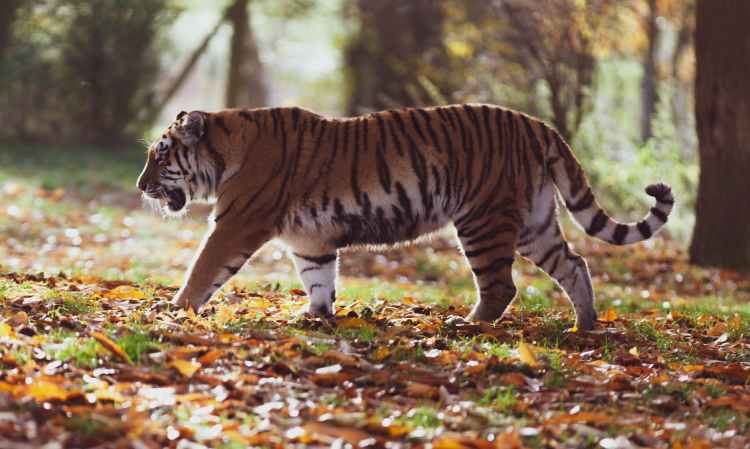
Tigers in Siberia are the largest living cats Photo by TheOther Kev on Pexels.com

Java, Bali and Sumatra were the homes of the three island tigers. Only Sumatra is known to have a surviving population and it is critically endangered. Bali tigers died out in 1937 and the Java tigers are thought to have been gone since the 1970’s.

According to Phys.org:

“Scientists from Indonesia’s National Research and Innovation Agency (BRIN) along with conservationists discovered genetic traces of the Javan tiger in a single hair found near a West Java village in 2019, according to a study published by Cambridge University Press.

“The Environment and Forestry Ministry appreciates the research… there are several actions that we are doing and will do to respond to the results,” said Satyawan Pudyatmoko, head of conservation at the environment and forestry ministry.

He said those measures included setting up camera traps, inviting genetics experts to help authorities conduct further research and tests, and collecting community data.”

Caspian tigers went extinct in the 1970’s. They are now said to be extremely closely related to tigers living in Siberia.

Authorities promised that surviving Java tigers would receive immediate protection.

Tigers in the wild face an uncertain future. Many more tigers exist in zoos and private hands than in the wild. The 13 tiger habitat countries have all pledged to try and double the number of wild tigers, currently thought to number under 5,000. Russia, India, Nepal, and Bhutan are among countries with success in tiger . conservation. China, Myanmar, Vietnam, Laos and Cambodia are among the countries with a bleaker outlook. Thailand, Bangladesh and Malaya have small populations.

India has about two-thirds of the world’s tigers On Sumatra DNA science is being used to help protect the approximately 400 tigers on the island.

Another problem facing tigers is inbreeding. This golden tiger displays a rare coat pattern. Several of these tigers have been spotted recently. Since the color mutation is rare spotting several of the cats could suggest inbreeding leading to more frequent mutation.

Tiger genetic studies have recently changed the way the animals are classified. Instead of 7 to 9 subspecies the field has been narrowed to two. Mainland tigers are Panthera tigris tigris and the island tigers are Panthera tigris Sondaica. The extinct Caspian tiger is now seen to be virtually identical to the Siberian tiger. That animal is now classified with the Bengal tiger and other mainland tigers.

The reclassification may serve to protect any extinct Java tigers found. It could aid conservation. For example, If tigers from India and South China are recognized as genetically identical Indian tigers could be transplanted to China where they are likely extinct.

California’s Abundant Bobcats Are Now The Subject Of A Conservation Management Study

Bobcats (Lynx rufus) are something of a conservation success story. They are present in all the contiguous states except Delaware. They are common in southern Canada and into Mexico. Northern Canada and Alaska do not have bobcats because of the climate. Hawaii bars them entry. California’s abundant bobcats may be the most numerous in the nation. The California Department of Fish and Wildlife (CDFW) estimates 100,000 live in the state.

Bobcats are a bit bigger than housecats. Most of the United States, urban and rural, is suitable habitat. Bobcat. Original public domain image by National Park Service is licensed under CC-CC0 1.0

Now those bobcats are getting their due as the state is actively studying them and seeking to manage them better. The cats are abundant because of their midsize. Weighing up to 35 pounds they can sustain themselves easily and hide from humans. They are big enough to deter many predators. With a diet that ranges from insects to the occasional deer they are not at a loss for food.

According to CDFW:

“The Department seeks to improve understanding of bobcats in California specific to: 1) population monitoring; 2) species health; and human-bobcat interactions. CDFW continues working to better understand the complexities and capabilities of this native species. Research is vital to applying an adaptive approach to managing their population.”

CDFW was asked to do a statewide population survey. The fieldwork for that survey ended in 2022. A statewide management plan will be completed by January 2025, CDFW said.

Canada lynx are well adapted to the cold north. They strongly resemble their bobcat cousins.

California’s abundant bobcats are not without threats. Perhaps the two biggest are traffic and ingestion of pesticides. Commonly used rodenticides can and do cause mange in predators. The famous mountain lion (Puma concolor) P-22 had mange and was successfully treated. The National Park Service (NPS) is also studying bobcats. They estimate about 400 live in the Santa Monica Mountains. Traffic threats are being addressed by CalTrans which is now working to build overcrossings and other wildlife protection into future road development.

Wild rabbits around the world have to be wary of lynx. Photo by Pixabay on Pexels.com

Bobcats are one of four members of the lynx family. The Eurasian lynx (Lynx lynx ) is common throughout Eurasia and is the largest. It can reach 70 pounds. Lynx Canadensis is the Canada lynx and is found mostly in norhern Canada and Alaska. It weighs up to 37 pounds. The Iberian lynx weighs about 30 pounds. It is found is scattered locations in Andalusia and appears to be clawing its way back from the verge of extinction. Only 94 were known to exist in 2002. That number is now 1,663 as of May 2023.

Cougar Overcrossing Construction May Shut Down Freeway In April

The wildlife overcrossing in Liberty Canyon across the 101 Freeway is making progress. In fact, construction of the cougar overcrossing may result in freeway closures in April.

The overcrossing is designed to provide a safe way for wild animals, including bobcats, cougar, coyotes and deer to navigate the otherwise fatal stretch of road.

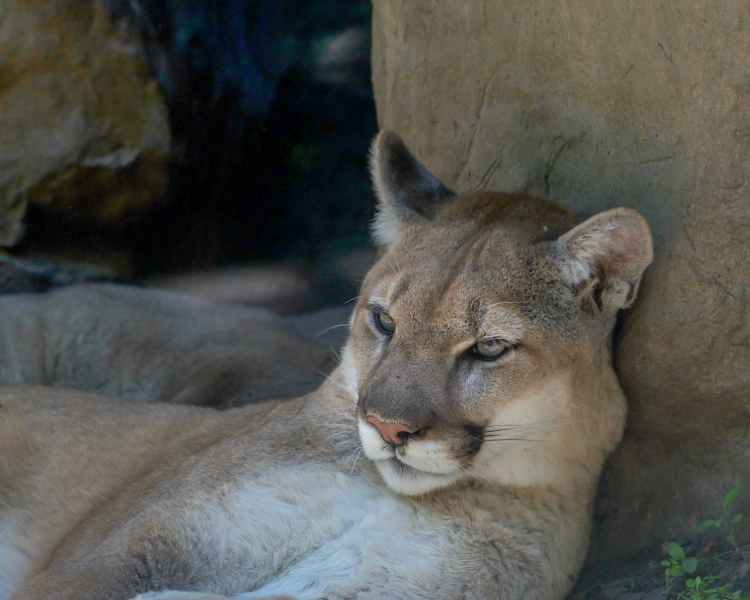
Mountain lions (cougars) are soon to have a way to cross the 101 Freeway safely. It is hoped this will help provide needed genetic diversity for local cougars .Photo by Andrew Patrick on Pexels.com

According to the Ventura Star CalTrans will do overnight work to finish the next section of the project. The project is officially named after Wallis P. Annenberg. She is a major contributor to the public-private venture. The project arose from a groundswell of public affection for P-22. He was a mountain lion who twice crossed the freeway. His daring earned him a place in many people’s hearts during his roughly 12 year life. Alhough he crossed the freeway twice, he was hit by a car late in his life. Those injuries and other ailments caused officials to capture him and euthanize him.

In his prime P-22 was the pride of the Santa Monica Mountains. He had a large human following until old age caught up to him. Disease and injury compelled him to interact more with humans, including attacking pets; He was recaptured and euthanized.

Cougars in the Santa Monica mountains have been under study by the National Park Service(NPS) for roughly 20 years. More than 100 cougars (Felis concolor) have been studied. Many have died in traffic collisions, some trying to cross the freeway. NPS researchers and other conservationists fear that the freeway will cause local extinction of the cougars.

If they cannot get across the freeway they will inbreed, biologists say, and eventually go extinct. Signs of inbreeding, including kinked tails, are already showing up in local cougars.

When completed the cougar overcrossing construction in Liberty Canyon will provide a camouflaged path that should appeal to a variety of wild anials moving from the Los Angles area into other parts of the state. This artist’s rendering shows the anticipated result.

California cougars are under both intense study and major threat. CalTrans is working to protect wildlife by factoring in their needs when planning roadwork. The cougar overcrossing construction is one example. The agency is working on a number of wildlife friendly projects in the state. Although the cats are not in immediate danger of local extinction recent research has lowered their estimated numbers, raising some concern.

Mating Pythons Captured En Masse; Reptiles Form Ball After Hibernating

Florida snake catchers have caught almost one dozen snakes at once by hauling in balls of writhing Burmese pythons (Python bivittatus). According to The Guardian the catch weighed more than 500 pounds. The mating pythons captured brings the total weight of pythons harvested in one part of Florida to over 34,000 pounds since 2013.

The snakes were vying for the right to mate with a female. According to the paper:

“The catch of a total of 11 pythons was a record for the Conservancy of Southwest Florida (CSWF), the Miami Herald reported – and it adds to the total of 34,000lb of pythons captured in that part of the state since 2013.

Pythons are not venomous but constrict their prey. That doesn’t mean they don’t have a formidable bite. Burmese python by National Park Service is licensed under CC-CC0 1.0

Pythons, which are native to south-east Asia, made their way to Florida through the pet trade beginning in the 1970s, according to the CWSF. They have since established themselves as the apex predator across the Everglades region and are responsible for a 90% decline in native mammal populations.

“For 10 years, we’ve been catching and putting them down humanely,” CWSF biologist Ian Bartoszek wrote in a post on Facebook.

“You can’t put them in zoos and send them back to south-east Asia. Invasive species management doesn’t end with rainbows and kittens. These are remarkable creatures, here through no fault of their own. They are impressive animals, good at what they do.”

Pythons can mate as couples or as groups. Photo by Goutam Mukherjee on Pexels.com

The CWSF found three snakes coiled in one mating ball. There were six in another “writhing’”, 7ft-wide mating ball, the Miami Herald reported. Two more pythons were captured nearby.

According to an article titled Animal Sex: How Snakes Do It on the website Live Science, snakes will form a mating ball in the days after they emerge from hibernation.

“Within the snake mass, each male will try his best to get the female to open her cloaca (waste and reproductive orifice) so that he can insert his penis and mate with her,” Live Science wrote.

“Sometimes, males will resort to force by suffocating the female and inducing a stress response in which she opens her cloaca to release feces and musk – giving sneaky males an opportunity to mate.” (Links in original)

Alligators are one of the few Florida animals able to kill and eat pythons fairly routinely. Pythons tend to remain on land which helps prevent contact between the two. Photo by Rene Ferrer on Pexels.com

Pythons and other invasive snakes are considered a major invasive threat in Florida. Florida is responding with a variety of measures including an annual hunt. But the recent discovery that the pythons have been cross-breeding is worrisome. It may suggest the hybrids may be better suited to colder weather and may actually begin to move out of Florida to cooler, drier climates. The mating pythons captured does put a dent of 34,000 pounds of snake in the python population.

Invasive Wild Boar To Appear On More Menus As Effort To Reduce Damage Caused By Wild Pigs Intensifies

Invasive wild boar are becoming a huge problem in as many as 35 of the 50 United States. They are also problem overseas in both Italy and Japan. Although not invasive to Japan or Italy feral hogs have become a problem in urban areas in both countries.

Invasive wild boar are predatory and omnivorous. They will eat almost anything ad are highly destrctive.Photo by Magda Ehlers on Pexels.com

Human dietary habits are now being enlisted to help reduce the problem. According to The Cool Down, wild pig is being featured on more restaurant menus. Adventurous chefs are seeking to cook the wily predators to lessen the damage.

According to the Cool Down:

“Chefs in the United States are bringing wild boar to a fresh set of palates, and their practical introduction of the protein could prevent billions of dollars’ worth of damages.

As detailed by the Guardian, more than six million of the feral pigs roam the United States after being brought over by Christopher Columbus in 1493. 

A visual of the kind of damage rooting feral hogs can cause.

Chef Jesse Griffiths, co-owner of Austin, Texas, restaurant Dai Due, told the outlet that incorporating the game meat into his menu was a no-brainer.

“I think it’s a real easy equation: They’re invasive, they need to be removed,” he said. “The argument for a lot of other game species we eat isn’t as strong, but it is pretty glaring when it comes to hogs.” (Links in original.)The United States Department of Agriculture (USDA) estimates wild pigs cause $2.5 billion in damage in the United States. According to the Guardian the agency is now more supportive of bringing invasive wild boar to the restaurant table.

The barbecue and the restaurant grill may be utilized to make a dent in feral hog numbers.Photo by pascal claivaz on Pexels.com

There are other issues with wild hogs. Canadian experimented with breeding a “super pig.” Some of the experimental hogs escaped. The hybrid pigs are better adapted to cold and are causing concern in the northern United States.

California Wolverines May Make A Comeback If Proposed Law Is Enacted

The wolverine (Gulo gulo) is the largest member of the weasel family (Mustelidae). It has an outsized reputation for strength and ferocity. Until lately it has been missing from much of the southern half of its former range. A state legislator wants to enact a law bringing California wolverines back into the ecological picture.

Wolverine (Glus glus), Whipsnade Zoo by Mike Pennington is licensed under CC-BY-SA 2.0 40 pounds of bear like fury wolverines are a fierce near apex predator.

Wolverines were once common in the Golden State but largely disappeared 100 years ago. According to The Guardian, only two have been spotted in the last century.

The paper said

“Male wolverines walk through huge territories – easily several hundred square kilometers – and this winter’s heavy snowfall in the west may have created “habitat bridges” for the wolverine, Gammons said. The animal could have traveled from the Rocky and Cascade mountain ranges, or from as far away as Canada or Alaska.

Birds, rabbits, hares and small rodents are most of their diet. Photo by Marian Florinel Condruz on Pexels.com

Wolverines are members of a diverse group of mammals collectively known as mustelids, which includes weasels, badgers and ottersThey are the largest land-based member of the family, famous for their elusive nature, love of snow and ability to punch above their weight. Three feet (1m) long and 15 to 50lb (7 to 18kg), wolverines are compact animals resembling small bears with bushy tails, large skulls and powerful jaws capable of crunching through frozen meat and bone.

These traits, along with their snowshoe-like feet and dense fur, make them highly adapted to snowy arctic and sub-arctic environments. Snow seems to be particularly important to mother wolverines, who consistently choose the deepest snow available to make their dens in snow tunnels or under snow-covered rocks or logs between February and April.”

In the right situation animals as large as moose have been killed by wolverines. Photo by Pixabay on Pexels.com

The paucity of the predator in California may end if a legislator has her way. According to the Los Angeles Times:

“While wolverines are solitary and live at higher elevations, California is part of their natural home territory, and seeing them here shouldn’t be that rare and won’t be in the future if we manage reintroduction carefully,” said Assemblymember Laura Friedman (D-Glendale), who introduced the California legislation. (Link in original). She sponsored AB2722, the reintroduction bill. She is also running for the U.S. House of Representatives.

Mountain lions are among the predators of wolverines. Photo by Nicky Pe on Pexels.com
Wolverines have been scarce in the lower 48 states, but recent sightings have occurred. They have been spotted in Yellowstone National Park and collared in Utah. Colorado is in the midst of re-introducing wolves to the state. It has been reported that wolverines may be next on the list of returnees.

New Giant Anaconda Found, Researchers Say Snake May Be Heaviest In The World

Researchers recently announced the discovery of a new species of green anaconda and believe the snake may be the heaviest in the world. The new giant anaconda (Eunectes murinus) was found in Ecuador.

Boas, pythons and anacondas are among the largest of snakes. Of the three, green anacondas are the heaviest. According to The Conversation the largest females can be more than 20 feet long and weigh over 500 pounds. Although pythons can top 28 feet they weigh perhaps half as much.

Anacondas and pythons are now present in Florida and the pythons are wreaking havoc.

“Green anacondas are true behemoths of the reptile world. The largest females can grow to more than seven metres long and weigh more than 250 kilograms.

The snakes are well-adapted to a life lived mostly in water. Their nostrils and eyes are on top of their head, so they can see and breathe while the rest of their body is submerged. Anacondas are olive-coloured with large black spots, enabling them to blend in with their surroundings.

This map shows the expansion of the Florida python. Some fear it could spread much farther.

The snakes inhabit the lush, intricate waterways of South America’s Amazon and Orinoco basins. They are known for their stealth, patience and surprising agility. The buoyancy of the water supports the animal’s substantial bulk and enables it to move easily and leap out to ambush prey as large as capybaras (giant rodents), caimans (reptiles from the alligator family) and deer.”

Deer are among the animals that could be threatened by an Anaconda upsurge.Photo by Danny Shives on Pexels.com

Up to this time researchers were unaware of the differences among anacondas. The Ecuadorian research made a major discovery. Some of the green anacondas had a genetic divergence of about 5.5 percent. Humans and apes diverge by as little as two percent. The discovery means that the anaconda family tree will need revising.

Although anacondas are not native to the United States they may be part of the invasive species problem in Florida. Florida is home to many avid snake collectors and there is some concern anacondas may establish a breeding population in the beleaguered state. Green anacondas may already be established near Fort Myers. Florida, of course, is already plagued by Burmese Pythons (Python bivittatus) and there is concern the snakes may be on the move.

Exit mobile version