Are Chimpanzees Practicing Medicine on Each Other – And Using Medicinal Insects?

Recent observations in the wild suggest that chimpanzees may be practicing health care on each other and crushing insects to use as medicine – but many questions remain.

What is certain is that a small group of chimpanzees, about 45 in the troop, have been seen crushing insects and applying the insects to open wounds on themselves or other chimps, and that behavior has not been seen before. It is also unclear whether this and similar behavior is common among chimps or restricted to certain groups.

Perhaps it is not something to be too surprised about as chimpanzees, humans and bonobos are very closely related. Chimpanzee and human DNA is 98.8 percent identical, so quite a few similarities are likely. Chimpanzees and bonobos are similar physically but bonobo groups are more peaceful and are led by females.

This research has been published in Current Biology and concerns a troop of chimpanzees in Gabon. Researchers in the Ozouga Chimpanzee Project made the discovery. The Ozouga project works in Gabon’s Loango National Park. The park includes forest, savannah and coastline. The park covers about 1500 square kilometers and was founded in 2002.

Suzee, Sassandra and Olive, three of the chimps in the Ozouga project. Suzee is the mother who treated her son, Sian, not pictured. Photo Copyright Tobias Deschner , Ozouga chimpanzee project

In November, 2019 a volunteer observed a mother approach her son, suffering from a foot wound. She took something out of her mouth and placed it in the wound. A volunteer researcher spotted the unusual behavior on video. Subsequent viewing suggested the object was an insect. In the following15 months the same or similar behavior was observed 22 times. Sometimes one chimpanzee aiding another, but most incidents exhibited what looked like “self-medicating” behavior. That included rubbing the insect in the wound. Although self-medication is known among other animals, this appears to be the first time insects have been observed being used as medicine. One animal treating another is very rare, too.

Savanna is one of the components Gabon’s Loango National Park Photo by Magda Ehlers on Pexels.com

Several hurdles remain for scientists trying to explain the behavior exactly. They have not been able to identify the insect used. That makes it difficult to know if the chimpanzees are truly self-medicating. They are working with entomologists to try to determine which small insect the primates are grabbing and applying. That will help determine the medicinal impact of the insect. It is also possible that the behavior is specific to this group of chimpanzees. Chimpanzees in other areas have been observed using leaves to daub wounds, but they don’t seem to grab specific leaves.
Foul Play Possible in the Death of 24 Monkeys Found by the Side of the Road in India; Officials investigating

Authorities in India are suspicious about the deaths of 18 male and 6 female monkeys whose corpses were found piled by the side of a road.

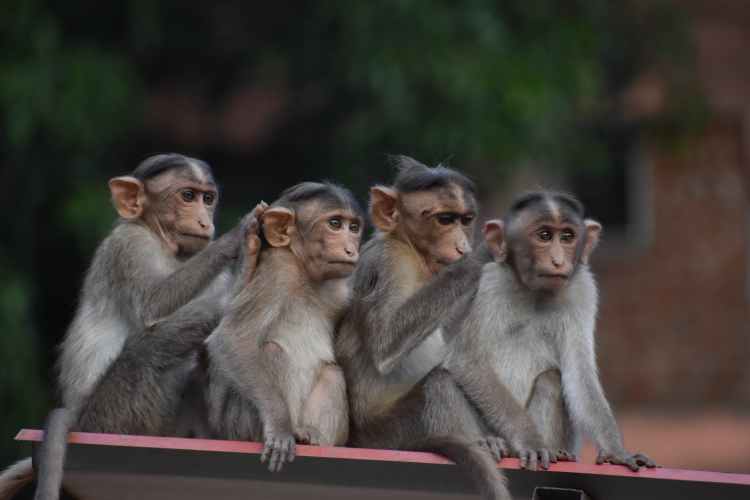
Although the monkey victims were not identified by species macaques and langurs are among the 15 species of monkeys in the country. Photo by sonali joshi on Pexels.com

The deaths did not appear to be natural, according to news reports of the incident.

Officials continue to investigate the matter, but no new details appear to have emerged two weeks after the Jan 25 report

Langurs are another common monkey in India. Photo by Moments Immortalized on Pexels.com

The incident occurred a few miles from the town of Tiruchirappalli in the Indian State of Tamil Nadu. Formerly known in English as Trichinopoly, it is the fourth largest city in the state. There are an estimated 15 species of monkeys in India and the victims were not specifically indentified. There are a number of species of langurs and macaques.

Investigators are not certain where the monkeys were killed and there is suspicion they were caged prior to the deaths.

Langurs are another common monkey in India. Photo by Moments Immortalized on Pexels.com

Monkeys have a special place in Hindu life as they are sacred to the Hindu god Hanuman. In India, Hanuman is revered as the companion of Rama and commander of the monkey army. He is an important character in the Ramayana. In China, the Monkey King, living on Flower and Fruit Mountain, also has a dedicated army of monkeys and is a companion to Buddhist leaders. He is a key character in the novel Journey to the West Both Hanuman and the Monkey King are good at spotting and destroying demons. Recently, an estimated 1,500 people attended a funeral for a revered monkey in India. The monkey was honored with a funeral procession and a feast.

Both Hanuman and the Monkey King can be fierce warriors, Photo by Artem Beliaikin on Pexels.com

The sacred status of monkeys does not preclude conflict with humans. Recently, Indian monkeys reportedly hurled dogs from high points to their deaths, and began to threaten humans.

April 22 Groundbreaking Set for Liberty Canyon Wildlife Crossing, Good News for Cougars and Other Wildlife

The Liberty Canyon overcrossing is counting the hours to ground breaking. When completed, the overcrossing will help alleviate inbreeding among cougars and other local wildlife and reduce wildlife death by traffic accident. Friday’s groundbreaking by Caltrans will start the clock on the two-year project.

A projection of the completed project

Officially known as the Wallis Annenberg Wildlife Overcrossing after a major donor the bridge has two major functions. The crossing will connect home ranges of many animals including deer, mountain lions, coyotes and bobcats. This will allow mingling and should reduce inbreeding. Second, the pathway should drastically reduce traffic fatalities among wild species.

NPS Cougars are the headline animals to benefit from the crossing. These kittens were born locally and the crossing will help ensure their future. NPS photo

The project is the result of public and private efforts uniting federal,state, and local agencies and numerous wildlife organizations. Tens of millions of dollars have been raised to make the trail a reality.

Mule deer are the key prey species and will also benefit from the crossing .Photo by Rod Dion on Pexels.com

Public interest in the crossing grew as a result of a 20-year National Park Service (NPS) study. The study counted mountain lions in the Santa Monica Mountains. That study revealed that there were more lions in the area than earlier believed. However, they were probably doomed to local extinction. Traffic accidents and inbreeding were the major culprits. Local citizens decided to take action and the project was begun.

Other countries such as India face similar conservation issues. India has been working to preserve many animals, including tigers. The goal in both countries has been to connect populations.

More Wolves Killed After Straying From Yellowstone National Park, Remaining Population Estimated at 90, Montana Curbs Winter Hunt

The return of gray wolves into what was once their natural territory faces major challenges from humans – hunters, drivers and poisoners. The uneasy relationship between the canines and humans has been difficult for centuries as many humans harbor wolf hatred.

Hunters in Idaho, Wyoming and Montana have followed the hunting rules of their states and killed 24 roaming wolves this winter. The wolves wandered out of the protection of Yellowstone National Park and were shot. Anger at the toll – 15 to 18 killed in Montana, has prompted the state to call an early end to the season, which normally runs through March. The remainder were killed in Idaho and Wyoming.

Although usually grayish, wolves come in a variety of colors. Photo by Shelby Waltz on Pexels.com

Meanwhile, drivers take their toll on roaming wolves too. OR-93 was an Oregon gray wolf who traveled from Oregon into Ventura County, California. He died late last year when he was hit by a vehicle in Kern County. Prior to his demise he was a media star as he was the first wolf recorded that far south in California in 100 years.

Finally, Oregon authorities are trying to locate whoever poisoned an entire pack of Oregon wolves. State police are investigating and rewards have been offered.

Yellowstone Park was the first American national park, founded in 1872, It is probably the world’s first national park tpo. It is revered for its beauty, wildlife and geothermal features, Photo by Lukas Kloeppel on Pexels.com

Wolves were once common throughout much of the United States. They were, however, regarded as vermin and received no legal protection whatsoever until recent decades. The once abundant animals were reduced to remnant populations in Minnesota, Wisconsin and Michigan. A few Mexican gravy wolves have crossed the southern border. Red wolves, a smaller cousin went extinct in the wild in 1967. A number were captured and put into captive breeding programs, which have had some success.

Bison are among the animals preyed on by wolves in Yellowstone and their interactions have transformed the park, Photo by Chait Goli on Pexels.com

As popular attitudes toward the animals changed, efforts began to reintroduce the animals to suitable habitat. Wolves were reintroduced in Yellowstone in the 1990’s and wolves returning to the United States from Canada were not formally persecuted. Oregon, Washington, Wyoming, Montana, California and Idaho all have wolf populations now. The populations vary in size and are vulnerable in some of the states. State laws vary as to hunting regulations. Many people still fear and loathe wolves as evidenced by the recent poisonings in Oregon. Others believe that they target livestock and kill too much game. Both of these contentions are contested.

Octopi From Space? Study Says Eight-legged Sea Creatures May Be Extraterrestrials

They are amazing beings as it is. Able to squeeze through tiny holes, escape in a cloud of ink and use great strength and suction to prey on their food. Now a new study says they may not have even arisen on Earth.

Both fascinating and delicious some think these eight legged beauties originally arrived on a comet. Photo by Pia on Pexels.com

It does sound like the plot of a bad movie, however, a group of 33 scientists from well-known institutions around the world argue that the eggs of the billowy creatures rode to earth in the train of a comet. Others strongly dispute the idea.

Supporters if the idea make two arguments in their article in the journal Progress in Biophysics and Molecular Biology. One is that fertilized octopus eggs crashed into the ocean during a comet collision. Second is that a space virus infected early squid and jump started their evolution, turning them rapidly into octopi. Squid and Octopi are related and are both cephalopods.

Not so fast, say other scientists. The biggest single problem is one admitted by the authors, that the paper is speculative and has very little concrete evidence behind it. Some scientists think the paper is useful because it “thinks outside the box” so to speak. Others think it is a waste of time. Another problem is that the authors suggest space viruses could have infected early squid and changed their evolutionary direction, evolving from squid to octopi. One critic notes that the octopus genome was mapped in 2015 and it appears that squid and octopus separated about 135 million years ago, not 540,

One theory suggests that space viruses infected squid who involved into octopi But others note the genome of octopi does not support the argument. Photo by Mark Newbury on Pexels.com

The debate about octopus origins is part of the debate over the contested concept of panspermia. Panspermia is the concept that viruses and bacteria have arrived on earth from comets and evolved into higher life forms. It has been roundly rejected and grudgingly accepted and is now considered plausible. It has been shown that comets contain ammonia and methane, which can transform into amino acids. It has also been shown that comets contain a number of other life affirming compounds that could have given rise to life on Earth. There is evidence that space dust contains the building blocks of life compounds. It is even argued that since no experiments have ever shown life arising from nothing, than life must have come from life – perhaps in the tail of a comet.

Is calamari revenge on space aliens?Photo by Naim Benjelloun on Pexels.com

Serious issues remain as many doubt the ability of viruses to survive a trip of several million years. Or the heat and pressure of entry into the Earth’s atmosphere. Or the radiation they would encounter. Those arguments have recently been at least partly countered. A better understanding of comets suggests their extremely cold, watery makeup could allow bacteria and viruses to remain in a form of hibernation. That makeup could also shield any bacteria and viruses from radiation. Many argue that it is possible that viruses and bacteria could have arrived from outer space, but it is certainly not proven.

In Reap The Wild Wind (1942) Actor John Wayne met his end in the tentacles of a giant cephalopod as he tried to salvage treasure from wrecked ships. Octopi and Squid are both cephalopods.

No one knows for sure. What is sure is that octopi and squid are fascinating and have preyed on human imagination as terrors of the deep. Although the depth of our knowledge of the sea has expanded, the deep still holds secrets.

Despite Tearful Plea “Tiger King” Joe Exotic Sentence Is Only Reduced by One Year

Former wildlife exhibitor and convicted animal abuser Joseph Maldonado Passage will spend one year less in prison after a resentencing January 28.

Passage, who went by the name “Joe Exotic” and the “Tiger King” will spend 21 years in captivity rather than 22, Federal Judge Scott Palk has ruled. In tears, Passage asked for a shorter sentence because he believes his medical conditions, including prostate cancer, will kill him. He doesn’t want to die behind bars after convictions for crimes he denies committing. Palk presides in Oklahoma City and was appointed to the Western District of Oklahoma by President Barack Obama in 2015.

Tiger King Joe Maldonado aka Joe Exotic

The flamboyant showman was convicted of attempting to hire murderers to kill his chief critic, killing 5 tigers, illegally selling tiger cubs and false record keeping regarding animals in his charge. The lurid story became a Netflix series and a sequel. We have reported on it here. Passage ran the Greater Wynnewood Exotic Animal Park in Wynnewood Oklahoma from 1999 until he ran into legal troubles in 2018. Maldonado Passage lost the park in his legal battles and it has since closed.

Passage locked horns with Carole Baskin, who operates Big Cat Rescue near Tampa, Florida. The two got into a business dispute, but Baskin disdained the way Passage treated animals in his custody. The legal battle escalated and Passage was eventually convicted of trying to have her killed. Because the Netflix series was so popular and created fans for Passage Baskin still feels threatened even though he is jailed.

The Wild Animal Sanctuary with locations in Colorado and Texas has been rescuing animals from his exhibitions. Last November they hosted a live event spotlighting the 141 rescues so far made.

The resentencing came about because Passage won an appeal on his original 22-year sentence. His attorneys argued that his original sentence violated federal sentencing guidelines The appeals court agreed that the sentence was miscalculated and sent it back to Judge Palk. The recalculated sentence is one year shorter.

UPDATE: Stump The Experts Game Takes Dramatic Turn as Unidentified Pennsylvania “Mystery Animal” Chews Its Way Out of Enclosure

The “mystery animal,” probably either a dog or a coyote, found and rescued in Pennsylvania has added to its mystigue by chewing its way to liberty at the wildlife rescue station where it was being treated. Pictured below, the creature is definitely a canid but rescuers could not be sure if it was a dog or a coyote.

The animal was kept at Wildlife Works for about a week before it decided to bid adieu. The animal destroyed its living area and managed to chew through a screen to escape. It was genetically tested and the results are pending, but the amount of damage done in the escape leads a number of observers to feel it was probably a coyote. The shelter staff said they were “shocked” and “Mortified” by the destruction the animal did.

“It” was found cold and shivering by a Pennsylvania woman who has become something of a celebrity. “It” is a still unidentified animal that has baffled experts trying to determine exactly what kind of canine the creature is.

Coydogs can vary greatly in appearance based on the breed of dog that mated with a coyote. They show a mix of characteristics from both parents. Photo by Noemi McRae on Pexels.com

News reports agree that Christina Eyth found the animal. MSN identifies Eyth as a resident of Adams County . Eyth says she first thought it was a neighbor’s dog. She told news agencies that it was cold and shivering in the snowy area. She managed to get it into her basement and called animal rescue. Rescuers were baffled by the appearance of the docile animal. Genetic testing has been started, but the results could take up to one month.

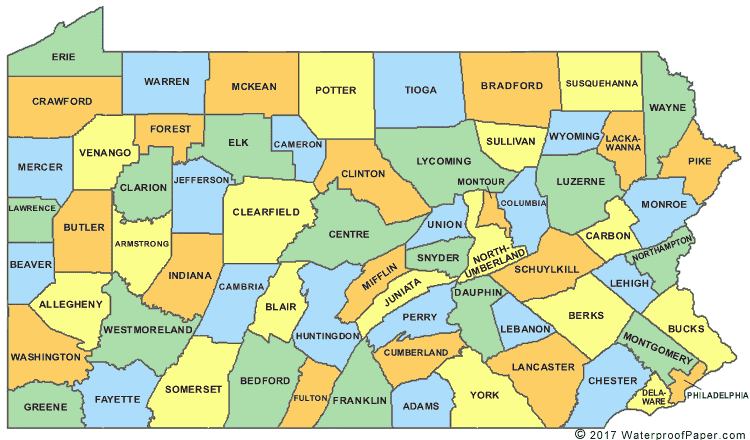
Adams county is a small county in Pennsylvania’s southeast along the Maryland border. Other news reports say the animal was found near Fairfield in Westmoreland County in the western part of the state. Apparently the first rescuers on scene were From TJ’s Rescue Hideaway a small dog and cat fostering organization.

News photo of “mystery animal” found in Pennsylvania

As the picture shows, the male animal is some type of canid. Rescuers at Wildlife Works suspect it is either a domestic dog or a coyote, although it isn’t clear exactly which. Wildlife Works was called in by TJ’s. Dogs and coyotes do sometimes interbreed, leading to coydogs, Although Dogs and coyotes can produce litters they don’t appear to do so too often, partly because the two animals have different breeding seasons. The genetic testing undertaken will take up to one month to complete and rescuers will update with results. One news report said Pennsylvania is seeing an increase in the number of dog-wolf crosses, which apparently are more common than dog-coyote crosses. Wolves and coyotes also crossbreed. This is a factor in the efforts to save the endangered red wolf. Since the small wolves do breed with coyotes finding pure blooded wolves is difficult.

Adams county is located in the east along the Maryland border while Westmoreland County is farther west and north,

Wildlife Works is a non-profit, donation funded volunteer supported wildlife rescue organization dedicated to rescuing and rehabilitating injured or distressed wildlife. It is located in Youngwood, PA.

Arabian Leopard Cub Born, Birth Increases Odds of Species Survival

Saudi Arabia is welcoming the birth of an Arabian leopard cub. The birth is a sign that the nation’s captive breeding program is working to save the critically endangered species.

Last week we reported on the plight of Arabian leopards, the smallest of the eight extant varieties of leopards. The leopards have been exterminated in most of their historic range. Oman is home to the largest wild population. Omani officials and residents are working to save the remaining leopards. Saudi Arabia, which is not believed to have any leopards, is now working to restore the species. It is not known what the status of the leopard is in war-torn Yemen.

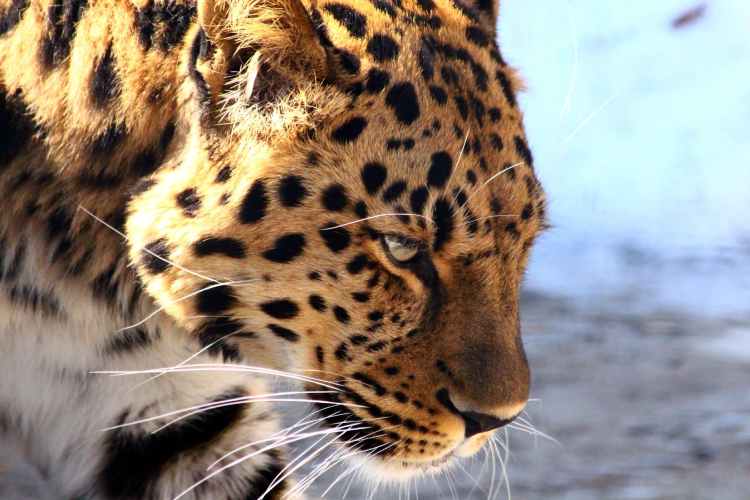
Today there are African, Indian, Persian, Arabian, Amur, Sri Lankan, IndoChinese and Java leopards., Arabian leopards are the smallest. Photo by zoosnow on Pexels.com

Saudi Arabia has established an Arabian Leopard Breeding Center near the city of Taif. The center is now home to the female cub, who was born some months ago, and 15 of her kind. The Saudi government will establish a protected reserve in the north west of the country. The reserve will be established near AlUla with the leopards in mind to increase their ability to survive. AlUla is the region surrounding an ancient city and is rich in history. The government has allocated $25 million to leopard programs and has created an Arabian Leopard Fund. The fund will help establish an ambitious recovery program. The program wil involve aspects from law enforcement and captive breeding to international conservation partnerships and public education.

Saudi Arabia will dedicate a portion of its rugged northw est to leopard preservationPhoto by Jay Glenn on Pexels.com

In Arabic, leopards are known as An nimr ‘Al Arabi’ and are memorialized in art and language. Saudis revere the leopards for their strength, power grac, and courage, Unfortunately even though many countries revere their big and small wild cats that has not stopped people from driving them to near extinction.

Florida Manatee Crisis: Emergency Feeding Efforts Underway, Large Number Congregate in One Place

Florida’s manatees are under the microscope today as rescuers try an emergency feeding program to stop the record number of deaths. Meanwhile, record numbers of the gentle creatures have congregated in one warm water place. Cold water may be forcing them to congregate, making feeding easier.

Manatees may finally be seeking warmer water, allowing rescuers to feed them. Photo by Lars H Knudsen on Pexels.com

As we noted here, the massive creatures have been dying at a record rate. About 1,000 died last year. Some media reports say morst of the deaths were from starvation because their normal food is dying off. Manatees eat seagrasses which have been depleted by pollution. Water pollution blocks the sunlight the grasses need to grow.

To try and save the starving creatures a feeding plan has been proposed and tested. So far it has not worked as expected but colder weather should help. The severe plight of the well-loved animals has caused the Florida Fish and Wildlife Conservation Commission and the US Fish and Wildlifeus fish and wildlife service to step in. It is rare for agencies to step in to these situations but the record number of deaths sparked the move. Contrary to reports, the Florida ageny said most of the manatees necropsied last year died from water craft accidents. But a significant enough number died from starvation to prompt the move.

Cape Canaveral has also been famous for the U.S. space program. Here is a photo of a Space Shuttle launch. Photo by Pixabay on Pexels.com

Rescuers set up a feeding station at a Florida Power and Light plant along Indian Lagoon in Cape Canaveral on Florida’s east coast. Manatees gather there in winter to bask in warm water released from the plant. The idea is to use a conveyer belt to distribute romaine lettuce, cabbage and other greens to the animals. The vegetables are favorites of the animals when in captivity. However, a mild winter has kept the animals from congregating as normal and they have yet to be seen eating the greens. That is expected to change. The plan has the support of the Save the Manatee Club, founded in 1981 by singer Jimmy Buffet and former U.S, Senator and Florida Governor Bob Graham. The club works to protect the animals and their habitat.

Singer Jimmy Buffet co-founded the Save the Manatee Club in 1981

There is a sign that the plan is starting to work. The club counted a record 664 of the “sea cows” basking in the warm Volusia Blue Springs recently. The water in the St. John’s River had dipped to 59 degrees, the coldest this winter.

World’s Smallest Leopard Still Survives in Oman; Conservation Efforts Underway To Save Arabian Leopards

Elusive and small, the Arabian leopard appears to be clinging to life in Oman. Ambitious region wide efforts are underway to help ensure its survival.

The eight species of leopards are arboreal predators and most are badly threatened. Photo by Satria Bagaskara on Pexels.com

The leopards once roamed the entire Arabian Peninsula but today are mostly confined to Oman. There is a population in Yemen, but warfare there and photos of dead leopards make it extremely difficult to know their status. They are believed to be extinct in Saudi Arabia and there may be about 8 in Israel but there have been no recent sightings. Arabian Leopards (panthera pardus nimr) are shy and secretive. Males top out around 75 pounds and females about 50. By contrast, the largest Persian Leopard (Panthera pardus tulliana) can reach 130 pounds. Persian leopards are also endangered. Iran and Russia both have conservation programs in place. Persian leopards may number fewer than 1,000 in the wild.

Oman occupies over 300,000 kilometers on the Arabian Peninsula and is home to most of the world’s Arabian leopards. Photo by Anthony Beck on Pexels.com

In Oman the leopards survive in the mountainous Jabal Samhan Nature Preserve and a few other similar locations. The nature preserve is about 1,700 square miles and is home to an estimated 30 of the 200 or so leopards thought to survive. Oman borders Saudi Arabia, the United Arab Emirates and Yemen.

Gazelle, specifically Arabian Gazelle, are a prime food source Photo by David Rama on Pexels.com

Oman has the will to preserve the species as the Office for the Conservation of the Environment has several strategies in place. Leopards and their chief prey have been protected since 1976 The basic cause of human-leopard conflict has been livestock predation. Ranchers have been compensated for dead livestock since 2014. The program has worked and there is some evidence the population is bouncing back. Omani officials are also working to educate people and raise a new generation of animal activists. Currently there are only about twenty rangers to study and protect the leopards in the reserve. The cats are so shy that technology is a prime partner in conservation efforts. Surveillance cameras are key to tracking the animals. Studying droppings is also very important. Oman is also encouraging eco -tourism to help conservation efforts.

Saudi Arabia has come late to the game, but has pledged $25 million to efforts to protect the leopards. Efforts there center around captive breeding. Leopards have delivered about 16 cubs in the program and the intent is to reintroduce leopards into appropriate areas.

The cats survive in arid rocky terrain preying on Arabian oryx and Arabian gazelle. Now protected, their numbers have increased which can lead to an increase in the number of leopards. The Arabian and Persion leopards are two of the eight subspecies of leopards. The others are African, Indian, Javan, Amur, IndoChinese and Sri Lankan. Snow leopards were recently in the news as a cub was born in an English sanctuary. Genetic studies now indicate that snow leopards are true leopards and are now classified as Pathera Uncia rather than Uncia uncia. Clouded leopards are considered to be closely related to the big cats but are still in a separate category.

Snow leopards inhabit the high mountains of Asia. Photo by Adriaan Greyling on Pexels.com
Exit mobile version