“Species Royalties”: Conservation Revolution or Ethical and Practical Minefield?

The idea is, on the surface, rather simple: Help fund conservation causes by paying animals royalties when their images are used,

Tiger in vintage style
Tiger in vintage style by The British Library is licensed under CC-CC0 1.0 Tigers are ubiquitous in art and advertising. Many of the images are striking and beautiful. Should the creators pay a royalty to help save the animals in the wild?

It is a seemingly simple idea and likely appealing to that broad and varied segment of humanity called “animal lovers.” that is where the issues begin. “Animal Lover” covers a broad range of human acts and emotions and one person’s “love of animals” can be rank cruelty to others. A case in point is the recent war between Tiger King Joe Maldonado and the animal rescue groups opposed to him. He considered himself an “animal lover” and was willing to hire killers to finish off a woman who considered herself an animal lover too. He wound up in jail.

So the first question might be: Does someone like Joe Maldonado, proven in court to have run a substandard wildlife exhibition, get a pass if he pays “royalties” to organizations protecting the very animals he is alleged to exploit? And how do we define exploitation?

Which leads to the questions surrounding royalties themselves. Royalties, residuals, points, and other forms of income distribution have been fought over for centuries and still are. Television actors, for example, got no residuals (a form or royalty) until 1959 and had to fight the powerful powers that are in television to get any at all. Residuals have been a bone of contention ever since.

Lion at the Imperial Arch by David Dixon is licensed under CC-BY-SA 2.0 Look around and you will probably see a lion. The national symbol of 14 nations is a regal subject for art and commerce. How do you convince nations to pay a royalty to living lions that they mightlive in peace?

There is a popular sugared cereal with a famous Tiger logo we all know. In a perfect world a penny per box to an organization like Wildlife SOS, might be reasonable. Is it reasonable to suppose that the company would immediately agree to this? And what about all the other cereals with animal logos?

Size, distribution and fairness of royalties is an issue too. If one cereal pays a penny a box because it has big sales, what does a startup pay? And would there be a startup if the manufacturer shied away from the hassle of accounting and paying for a royalty?

Rabbits are not in danger of extinction, but they are used as logos and profit drivers too. Is it fair to ignore imposing royalties on people who profit from rabbits and impose them on people making money off leopard prints? Where would it stop?

Animal logos are ubiquitous. Do we all pay if we draw a fox, buy a themed shirt or give-in to buying that leopard print scarf? Some of the answers are emerging. Animal Royalties is an Australian art consortium that supports that continent’s beleaguered wildlife with what amounts to a voluntary royalty. But that raises questions too. The people paying the royalties may want some say in how they are spent. They are not truly voluntary contributions, after all. Australia his home to a great number of unique species. They are being devastated by feral house cats that are an “invasive species.” Can the royalties be used to help exterminate Australia’s feral cats? Or can they be used to help develop the biological weapons being considered against all of the many invasive species in the island continent? What about the feral cats? Do they have defenders?

Meadow Lane cat on garden wall by ceridwen is licensed under CC-BY-SA 2.0 House cat or feral or both? Will you be able to use royalties to protect one species and against another?

Animal rights as an area of law is emerging and many of these questions would have to be sorted out in courts all over the world.

Another question that sheds light on the complexities involved is what to do with nation’s with animals as their national symbol? For example, fourteen nations have a lion as their national symbol. Seven are in Africa, where the lion population has diminished by 40 percent in recent years. The others include Macedonia, which hasn’t seen a lion in centuries, and Britain, which probably hasn’t seen one in 12,000 years. So if a country isn’t willing to protect its national symbol, how can we expect royalties from that nation?

A likely toehold in this battle is highlighted in a recent NewYorker article. Leopards have a distinctive and beautiful coat. For many centuries leopards have been slaughtered for those coats. American First Lady Jacqueline Kennedy popularized leopard fur garments and the article suggests more than 250,000 leopards paid with their lives as people emulated her style choices. Kennedy’s garment was pieced together from six pelts. The slaughter led to bans on the import of leopard pelts. The recent development of faux fur and other leopard garments has renewed the interest in leopard prints at minimal risk to living leopards. Designers are now coming under pressure to pay royalties to leopard protection programs. Many of which we have discussed. Some of the questions we have raised here will be answered in the fashion industry. The ripples will spread out and the term animal royalties will becomes more familiar and accepted.

Flip Sides of Life With Leopards in India: Wandering Leopard Shuts Down Mercedes Assembly Line; Rabari Tribe Has Unique Relationship to Leopards

As we noted recently, India is home to 15 of the world’s wild cat species. The populous nation works hard to protect its animal heritage. Leopards are a special case because they are big enough to be classed as big cats but small enough to eke out a living close to human ways and works.

A young leopard recently wandered into an Indian Merceds Benz factory. Photo from Wildlife SOS

A case in point is the story of the wandering leopard who wandered into an Indian Mercedes Benz factory. There is no punch line but there is a happy ending. The young male, about three-years-old, was spotted wandering around the factory in Chakan. Chakan is not a rural community but is an emerging industrial area. It is located in Maharashtra, the second most populous state in the nation. Maharashtra also has wildlands and works to keep the wildlife population stable. Company officials shut down the production line and summoned, Chakan Forest Department workers and Wildlife SOS arrived and began rescue efforts. The factory was shut down and evacuated while animal control watched the animal wander. When the cat found a comfortable spot the animal was tranquilized and safely evacuated. The cat was medically monitored and finally released in a more suitable location.

The Mercedes is an ultimate symbol of status. The factory in question produces high-end variations of the car for the world market. Photo by Mike on Pexels.com

Leopards are not a nuisance or production delay to the Rabari. Rather they are fellow actors in the drama of life – and their relationship is complicated, difficult and evolving for both men and leopards. The Rabari live in the Kutch region of Gujarat and their relationship with leopards is deepened by the Rabari’s Hinduism and the strong association of Shiva with leopards. Rabari have little trouble with leopards and vice versa. In fact, leopard numbers in the region have increased.

Tourists at the Giant’s Causeway by Dr Neil Clifton is licensed under CC-BY-SA 2.0 Tourists wander the world with impacts ranging from minimal to dangerous. In India there is concern that tourist visits are exploiting both the leopards and the Rabari.

The problems arise with tourism and the government. The fact that Rabari people and leopards co-exist brings tourists. But tourism promoters do not compensate the Rabari well and are building resorts and tourist attractions that do little for the local people. Outsiders tend to romanticize the Rabari and their lives in “leopard country” as it is advertised to tourists. Despite the romanticized view of the relationship there is conflict with the leopards. The government does have a program for compensating for leopard loss. It is not generous and is hard to obtain. About the equivalent of $74 for a dead animal, $103 for a human injury and $3,000 for a death.

Countries all over the world continue to struggle with the same problem: how to balance the needs and wants of humans and the other animals that live around them.

A resting leopard displays its power and grace Photo by Darshak Pandya on Pexels.com

Pennsylvania Wildlife Misery: Deer Leap to Their Deaths From Overpass; Transit Officials to Offer Solution

Pennsylvania means “Penn’s Woods. ” The state has been forested and ripe for hunting and wildlife viewing since before Daniel Boone. Today, wildlife officials in the state are wrestling with a significant problem.

Whitetail Deer. Illustration from Pennsylvania Game Commission

The current estimate is that about two dozen white-tailed deer have leaped off a 219 Freeway overpass. The overpass is in Elk County near the town of Johnsonburg Borough. The Borough has about 3000 residents. The deer weigh up to 150 pounds. The falling deer are a hazard to people in the area as some are falling in populated areas. The Pennsylvania Department of Transportation is being urged to solve the problem quickly. The department says it they will have an answer in a few weeks.

Elk County is in the northwestern part of the state.

Apparently the deer find themselves on the overpass and, startled by oncoming traffic, flee, only to fall to their deaths. Residents have suggested barriers, fencing and other ways to keep them off the overpass. The transportation department says that it needs to find what draws them to the overpass in the first place prior to implementing solutions.

Snowplows clearing Pennsylvania roads are also part of the problem in Elk County.Photo by Алекке Блажин on Pexels.com

Meanwhile residents say an even bigger threat is the debris that launches off the overpass when snowplows clear the road. They are asking the state to control that problem, too.

Nationwide the death and damage toll directly associated with vehicle and deer interactions is staggering. An estimated 1.5 million car accidents take place each year involving deer and about 200 people die in the carnage,

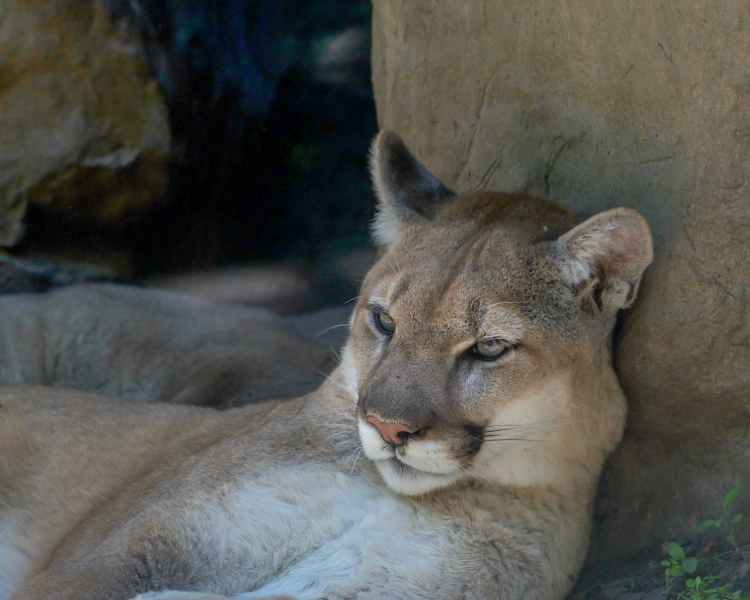
Locally hundreds of mountain lions and black bears are killed in California in traffic accidents. A recent five-year study counted 557 bears and 300 cats killed on California roads. Conservationists hope that the Liberty Canyon overcrossing will help. The multi-year project is expected to break ground soon. The overcrossing has two purposes. It is hoped it will help end the killing of animals by cars in that area. It is also hoped the corridor will allow animals free travel, to help reduce inbreeding.

Mountain lions are being closely studied in the Santa Monica Mountains and roadway deaths are a serious casue of mortality Photo by Andrew Patrick on Pexels.com

As India Works to Protect Wild Cats, Kidney Failure Emerges as Cause of Death in Captive Breeding Programs

India is home to 15 species of wild cats, including the only Asiatic Lions, most of the world’s tigers and many of the planet’s leopards. As has been reported here, India will take strong measures for feline conservation, including moving villages.

Caracal, with their distinctive ears, are among the 15 wild cat species of India They are not threatened at the moment. Photo by Jiří Mikoláš on Pexels.com

But while there has been progress on some fronts, the Delhi Zoo recently acknowledged that kidney and organ failure has killed six Asiatic lions and tigers within three years. The zoo’s director is calling for a close study of the causes behind the deaths.

Four of the deaths are directly related to kidney failure. Hema and Aman were two lions brought from the Chhatbir Zoo in 2015, Aman died in May of last year due to apparent heart failure brought on by infections and various organ problems. Hema died earlier this year of multiple organ failure.

The fishing cat stays close to water as it is adept at catching fish , It is roughly the size of a domestic cat, Photo by Davor Eres on Pexels.com

A white tigress named Nirbhay, who was 6-years-old, died late in 2020 shortly after giving birth to two cubs. One died as it was being delivered by C-section, the other died about 19 days later. She died of multiple organ failure.

Finally, a 15-year-old tiger called Bittu or B-2 died in November, 2020. He died of kidney failure, but he was at the end of a normal tiger lifespan and “age-related issues” were also cited in the passing. He had been obtained from the Van Vihar National Park and Zoo.

The deaths highlight the challenges faced by zoo veterinarians and staff as they try to protect their charges, especially those of endangered species.

Various forms of lynx are found around the world including Canada, Spain and most of Eurasia, India is home to a population, too Photo by Pixabay on Pexels.com

The zoo acknowledged that kidney disease is common among zoo confined felines. The director said the zoo will study ways to provide more exercise, better diet and “enrichment.” Enrichment, as cat owners know, includes toys, games, interaction and other mental stimulation. The zoo will also look into the genetic history of the animals involved .

India is a very important country in cat conservation as 15 wild species make the country, one of the most heavily populated on Earth, their home. It is also a country where national and local governments work with conservation groups to protect wildlife heritage.

India currently is home to Royal Bengal Tigers (slowly increasing in number), Asiatic Lions (back from the verge of extinction) and Asiatic Leopards. There are also Snow Leopards, Clouded Leopards and Leopard Cats, none of which are true leopards. They are referred to a leopards because they have spotted coats. Also on the list are Jungle Cats, Fishing Cats, Pallas’ Cat, Asian Desert Cats, Eurasian Lynx, Asian Golden Cats, Caracals, Rusty-Spotted Cats, and Marbled Cats. A few, including Caracal and the lynx, are not especially threatened. But all the others face threats of extinction.

The exotic Pallas Cat, or manul, is specially adapted to India’s mountains. It has extremely thick fur. Photo by Radovan Zierik on Pexels.com

Alaska Fighting A Familiar And Unpopular Invasive Species: Rats; State Works To Eliminate Them

The issue of invasive species is a problem world wide. Creatures are brought from their native habitats intentionally or by accident and the results can be anything from beneficial to disastrous.

They are useful to science and some people love them but rats in general are trouble. They actually do live about this close to us. Photo by Sunsetoned on Pexels.com

Recently we have written about invasive hippos in Colombia, domestic cats (gone feral) in Australia, and spiders in the United States. Of the three highlighted, the Joro spider so far is the least damaging. Australia estimates that there are six million feal house cats in the country and they are devastating unique wildlife. Cats are superb hunters and flightless birds and small animals are no match for them and are being driven to extinction. The hippos in Colombia, like Burmese pythons in Florida, are also disrupting local wildlife and may drive some creatures to extinction. Once established. invasive creatures can be very hard to control.

Cats are among the many animals which eat rats and mice, but rats reproduce at phenomenal rates and even voracious cats can’t keep up. Photo by Katherine Mihailova on Pexels.com

In Alaska the problem is a small opportunistic mammal that almost every one hates: rats.

A recent map from Alaska Department of Fish and Game shows where the rats already are. The drive is to keep them oput of Anchorage and other parts of the state.

Rats are one of the most damaging invasive species in the world and are difficult to control because they are commensal. The word comes from Latin and refers to sharing the same table, which is what rats do. They live very close to humans and depend on human negligence and waste for their existence. They are legendary disease bearers and they destroy far more food than they eat. The rats in Alaska came with sailors from other countries and have a toehold in the state. The weather is a big help in trying to keep them at bay because the extreme temperatures are too much for them. There are native rodents, including muskrats, but they are adapted to the climate unlike the invaders.

Alaskan authorities are recommending the same control measures recommended everywhere: deny them food and shelter. If you watch your crumbs, keep an eye on your pet’s food and contain your garbage they will have little to eat. If you clean your house, and seal cracks and entrances they will have nowhere to live. Outdoors, cold weather and abundant predators will soon eliminate them.

Rats are still rare in Alaska but Alaskans have to be on guard against the wily rodents.Photo by Dick Hoskins on Pexels.com

Meanwhile, Anchorage appears to be rat free and hopes to stay that way. Scientists can point to one great success story: Hawadax Island. The small island in the Aleutian Chain was colonized by rats after a shipwreck. Rats proliferated and took over the island as they were the top predator in the locale. in 2008 a consortium of federal, state and conservation groups set out to eliminate them.

They used poison, which worked well but had some collateral damage. The island has been rat free for ten years and the benefits to the island appear to outweigh the collateral damage which probably included a few eagles as well as other animals that ate the poison. Birds have rebounded because the rats aren’t there to eat their eggs. Kelp appears to have rebounded too. The birds are back and their lifeways contribute to growth of kelp. Scientists say a rat free island is noisy with birds, an island with rats is silent because there are few birds.

Captured, Collared,Utah Wolverine Gives Scientists Glimpse Into Elusive Animal’s World

Just yesterday we reported on an elusive wolverine caught on video by a tourist in Yellowstone National Park. Wolverines are rare in that park that a three-year survey turned up only a handful.

This wolverine is now collared and tracking will show where he goes and much of what he does, allowing biologists to better understand his species. DWR photo

It is now reported that Utah wildlife officials are thrilled because they have captured, collared and released a male whose travels will increase knowledge of the animals and their habits.

The wolverine, estimated to be about 4 years old, was making a nuisance of himself, according to the Utah Division of Wildlife Resources (DWR). According to the DWR the first to sight the animal were employees of the United States Department of Agriculture (USDA). They were flying a wildlife protection sortie March 10 when they spotted the wolverine feeding on a dead sheep. The creature is suspected of killing 18 sheep that morning. The DWR was called in, the federal agencies, landowners and the sheep owner co-operated and traps were set.

Sheep are important domestic animals and predation by wolverines, wolves, bobcats,and mountain lions is a major source of conflict between humans and other predators. Photo by Paul Seling on Pexels.com

All parties were elated when the healthy male was captured in a trap. He was sedated, examined and had blood, hair and other samples taken. He was collared and later released in the Uinta mountains on public land. The recent encounters are considered extremely lucky as wolverines have been confirmed in Utah only eight times since 1979. In Yellowstone a recent survey found a similar number in a three-year period.

The Uinta Mountains are the highest in Utah, They are the only east-west range in the continental United States. They range in elevation from 8,000 to 13,000 fett. They are the new home of the Utah wolverine.

Rare Wolverine Sighted In Yellowstone Park By Tourist Who Snaps A Video

A tourist in Yellowstone National Park took a once-in-a-lifetime video by capturing a wolverine on film. This is a feat experienced naturalists say is very rare. The incident occurred March 5 when Carl Kemp took video of the animal. The animal was encountered between Lamar Valley and Cooke City. Wolverines are considered rare throughout their range and only 7 were documented during a three-year research study in the park.

Mid sized and fierce wolverines are predators and scavengers Photo by Egor Kamelev on Pexels.com

Wolverines are relatives of weasels and have a fierce disposition. The animals weigh up to 30 pounds and reach about four feet in length. Wolverines are opportunists feeding on mice, birds, eggs, beaver, squirrels and marmots. But wolverines also eat whitebark pine nuts. When they are one the menu they are preyed on by mountain lions, wolves and bears. Their low birth rate and high infant mortality rate keep their populations low.

Weasels are smaller relatives of wolverines and are famous for raiding hen houses. Photo by Serena Koi on Pexels.com

In the rest of the world they are found across most of the northern hemisphere including Scandinavia, Alaska, Eurasia and Mongolia. The Wolverine Foundation works to support their populations worldwide.

Wolverines have been the mascots of the University of Michigan since 1861, when students and alumni started referring to themselves as wolverines.

Bison are among the iconic animals in the park. The decision has recently been taken to reduce the herd by about 900 head to prevent overpopulation and disease spread. Photo by Chait Goli on Pexels.com

Yellowstone Park is often credited as the world’s first national park and the National Park Service works to keep the park’s wildlife viable. The park has been in the news because wolves leaving the park have been killed and the bison population is being culled.

JFS 30

Ukrainian Wildlife, Domestic Animals Caught Up In War, Organizations Step Up to Help

It was U.S. General William T. Sherman who famously said “War is Hell.” and that is as true for animals as it is for humans.

Humans have always had a bad habit of involving animals in their conflicts. Whether it is riding horses into battle, training dogs to fight, or attaching burning brands to pigeons and sending them into besieged citie, humans have always treated animals badly in wartime, exploiting them for political gain. That in addition to the disruption and destruction of battle.

Perhaps horses are the most obvious example of animals used and abused in warfare,but plenty of other creatures suffer when men take up weapons. Photo by Ahmad Alsaad on Pexels.com

In the current war in Ukraine both domestic and wild animals are suffering and a variety of groups are taking active steps to assist zoos, veterinary clinics and rescue organizations. Reports are emerging of people fleeing the fighting with pets in tow, threats of destruction to zoos and the carnage of back and forth fighting over terrain.

People weren’ t content to fight wars but staged warfare for entertainment in Rome. Lions and other animals fought each other and humans in gladiator games all over the empirePhoto by David Cruz asenjo on Pexels.com

Twin 1-year old male lions were rescued from Kyiv, narrowly escaping death. They were rescued from a Ukrainian sanctuary and taken to Opglabeek Belgium and the Natuurhulpcentrum. The Belgian organization is a wildlife rescue organization. The lions had been seized in Ukraine in an animal neglect case and were taken from the Ukrainian sanctuary to a zoo in Poznan, Poland. The Polish zoo then transferred them to Belgium.

Many organizations, including the Internation Fund for Animal Welfare, are mobilizing fund raising efforts and efforts on the ground.

As for the fate of Ukrainian wildlife it is unclear. Despite the deadly nuclear accident in Chernobyl. local wildlife was rebounding. Ukraine has diverse regions and plenty of wildlife including deer, boar, lynx and wolves. Or at least it did before the arrival of tanks and artillery.

The destruction caused by the accident at Chernobyl proved destructive to wildlife in the area. Wildlfie appears to have recovered and may recover from the effects of war. Photo by Wendelin Jacober on Pexels.com

The war is ongoing and it is unclear how much damage will result to animals in Ukraine. It is clear that many organizations are seeking funds and volunteers to help and responding creatively to the challenges posed by European war.

Invasive Joro Spider May Colonize Entire US East Coast; Do Genetic Weapons Hold Key to Battle Against Invasive Species?

It is the stuff of an arachnopobes nightmare: large as a human palm and spreading a huge web – it is the invasive Joro spider and it appears to have colonized Georgia and seems likely to spread throughout the eastern seaboard.

The joro spider is native to Japan. It began showing up in Georgia recently but there isn’t much to worry about according to The Alabama A&M and Auburn Universities Extension. They say Joro and similar spiders have been in the U.S. for about a decade and have not displaced native species. They have venom, most spiders do, but it is not medically significant. Their jaws are also adapted to biting soft-bodied insects, making bites unlikely.

A joro spider eats soft bodied insects and thus does not have the jaws to bite people. Photo credit Pam Overmeyer

Although it is so far benign in its impact -except to prey species – it is a non-native species and is being watched with care. Invasive, species, those that disrupt eco systems, are causing havoc all over the world. Many are far bigger than spiders. We have reported on a number of cases including hippos in Colombia. The hippos were brought to Colombia by drug lord Pablo Escobar and abandoned after his death. They are multiplying and may have to be killed to prevent all sorts of environmental damage. Also, There are numerous invasive species in Australia. Many of you are probably familiar with the invasion of Florida by Burmese pythons and the major efforts underway to fight them. Florida has been struggling for years, offering bounties, trying to find recipes and even importing snake hunters from Asia. A recent news article about a bobcat eating python eggs has been taken as a sign that native species are fighting back.

There are many types pythons . Burmese pythons are invasive in Florida and wreaking havoc on native wildlife.. Photo by Pixabay on Pexels.com

But humans are inventive and there is a never ending effort to control ongoing invasions by any means available. Recently, major advances in the war against dangerous insects point the way toward control of other invasive species. We recently reported on a major advance in the war on ticks, In the United States alone ticks are responsible for 14 dangerous diseases. Researchers at the University of Nevada have announced that they have found a way past tick defenses to modify their genes. Meanwhile, billions of genetically modified mosquitoes are to be released in Florida and perhaps California to drive down the population of the biting insects. This is similar to the very successful efforts eliminate screw worms by releasing sterilized flies. The federal government has approved the pilot program. Disease carrying mosquitoes have arrived in the US carrying yellow fever, dengue fever and Zika virus. The release, which has met with opposition, is designed to reduce the number of mosquitoes. The mosquitoes are male, which do not bite. They are designed to mate with females who will then produce a generation of females that do not survive to maturity, thus breaking the reproductive cycle.

A Florida bobcat was recently seen eating oython eggs, a sign that native species are fightingn back. l lPhoto by Alex Burr oxels.com

Genetic modification can be done on large animals as well, but is likely to be even more controversial. Australia is plagued with 6 million feral cats which are annihilating native species. So Australia is considering bioengineering methods to destroy the cats, The methods under study include similar controls imposed on insects. One idea is genetically modifying the cats so that only one gender is born. This would quickly lower the population. Other options include making the animals more susceptible to disease. One thing is likely – there is likely to be more public concern about genetic assault on larger animals than there is on ticks, fleas, mosquitoes, flies or even, potentially, spiders.

House cats are not native to Australia. They have gone feral and are annihilating many vulnerable populations of native animals.Photo by Sol Fotografías on Pexels.com

Yellowstone Bison Herd to Be Reduced By Hunting and Transfers to Forestall Possible Disease

The Yellowstone National Park bison herd is being reduced by up to 900 individuals through hunting and transfers. The project is underway, The National Park Service (NPS) has announced. The culling of the herd, estimated to number over 5,400 individuals began February 13 and will continue through March.

Bison are formidable animals, strong and fast, They are notorious for charging people who get too close. Photo by Brett Sayles on Pexels.com

The decision was taken several months ago. The park has limited room for bison, and they wander out of the park which causes conflict with the park’s neighbors. There is also concern over brucellosis, a disease fatal to cattle that may be spread to domestic animals by bison.

Bison gather in herds which at one time covered the plains Photo by Oliver King on Pexels.com

The culling will take place in three ways. Hunting by Native American tribes and other hunters, processing by the tribes, and transfers through the Bison Conservation Transfer Program. The program was initiated by the NPS and the Fort Peck Assiniboine and Sioux tribes on the Fort Peck Indian Reservation in Montana. Under the program healthy bison are transferred to various tribal herds. The program works with more than one dozen plains area tribes interested in bison conservation. Native American tribes are fully involved in the decisions taken. Fort Peck was founded in 1871 and is home to members of the Assiniboine tribe. Members of a number of Sioux bands live there too, including some descendants of Hunkpapa who fled to Canada with Siting Bull.

One of the tribes sponsoring hunts is the Crow Nation. The Crow offer hunts for trophy quality bison for a set fee. The hunts are of a limited number of tribal buffalo on tribal land. The tribe is also seeking to join six other tribes in permitted hunts outside the park in winter,

Crow warriors such as Medicine Crow were bison hunters and their descendants maintain a herd and sponsor hunts. Medicine Crow’s grandson Joe Medicine Crow served in World War Two and was the last war chief of the Crow Nation based on his exploits in the U.S. Army

Bison in America have made a spectacular comeback. They were hunted to near extinction by the close of the 19th century. The herd in Yellowstone is one of a very few herds whose members are pure bison with no interbreeding with domestic cattle. There are an estimated 30,000 bison in managed herds, including a growing number managed by Native American tribes. Beyond that there are several hundred thousand bison in private hands throughout the west. But many of those are cross bred with domestic cattle.

For our earlier reporting on this issue click here

Exit mobile version