Humans Brave Danger to Rescue Trapped Leopards; Novelist Details Terror Caused By Escape of Leopard From Oklahoma Zoo

Humans and leopards have a complicated relationship based on fear and admiration. The former comes from the fact that leopards are fearsome predators and humans are about the right size for a meal. Anthropologists have found ancient human skeletons with bite holes in the skull that exactly match the jaws on leopard skulls.

tiger animal
Medium sized and powerful, leopards are one of the strongest of the cat family. Photo by Pixabay on Pexels.com

Yet humans around the world admire and revere leopards for their strength, cunning, grace and power. Novelist Stephen Harrigan, author of Gates of the Alamo has written The Leopard is Loose a story built around the actual story of an escaped leopard that terrified an Oklahoma city. The story evokes both the respect and the terror inherent in the relationship,

Leopards are comfortable in trees and capable of dragging prey weighing more than they do into the branches where it is safe from other predators Photo by Pixabay on Pexels.com

It is unclear exactly how many people are killed by leopards now. Although their range is wide, only Nepal and India keep any records. Recently, two women were attacked in India within 48 hours by the same leopard. Both were killed. Individual leopards are alleged to have killed up to 125 people.

Yet people in India and elsewhere go to great lengths to save leopards who are in extremis. Several examples come from Maharashtra state. Villagers have pulled leopards out of wells. In Pune, a four-year-old female was rescued by Maharashtra Forest Department and Rescue SOS. Rescuers spent two hours rescuing the exhausted and drowning leopard. Rescuers first lowered a log for the cat to hold onto and then lowered a cage. The leopard eagerly entered and was rescued and later released.

Maharashtra is a region of India that includes Mumbai and other large cities. Its western border is the Indian Ocean.

A similar rescue occurred in February in the Ahmednagar district. A male leopard was saved from drowning in a well by rescuers. Both rescues were captured on video.

A leopard with its head stuck in plastic bottle was rescued in Maharashtra , according to Indian newspapers. Residents noticed the starving and distraught animal. It was captured and the bottle was removed. The leopard was rehabilitated and released. India and her people are involved in conservation efforts. The country is committed to doubling the number of wild tigers and reports indicate villagers in several villages a year are paid to relocate in order to reduce conflict with tigers

Novelist Harrigan has chosen the fear of leopards, especially escaped leopards, as the basis of The Leopard is Loose. He was a small boy when the incident occurred. Nicknamed “Leapy” the Indian leopard vaulted out of its enclosure igniting a terrorized pursuit that lasted three days and generated national headlines. The search by hundreds of armed citizens and authorities, including some military, was ultimately unsuccessful. Driven by hunger, Leapy returned to the Oklahoma City Zoo. Unfortunately he had eaten drugged meat and succumbed to poisoning. From terror, the public mood shifted to sadness over his death. As part of the reaction to his escape and death he was stuffed and put on display.

Author Harrigan, who has written extensively about Texas and its history, is the author if The Leopard is Loose.

Harrigan has chosen this story as a back drop for a coming-of-age novel for a little boy in the post World-War-Two area who confronts his deepest fears while living in a world still scarred by the war and death and loss.

The future of leopards world wide is somewhat uncertain. Their size and habits make counting difficult. They have been known to live in very close proximity to humans undetected. However, estimates of their numbers are declining. A recent survey puts the number world wide at about 14,000. Arabian leopards are the smallest and probably the scarcest of the types of leopards surviving. They are currently the subject of intense rescue efforts in Oman and Saudi Arabia.

JFS 30

Bad News For Bats: Bat Falcon Spotted in United States For First Time; And Invasive Noble Widow Spider Caught Chowing Down on Bats in Britain

Bats are amazing flying mammals ranging in size from tiny to tremendous. Most consume great volumes of insects, some eat fruit. Other creatures return the favor including a falcon now at least visiting the U.S. and a poisonous spider.

Bats can be Halloween nightmares or efficient insect eaters. Or they can be food for falcons and spiders.Photo by HitchHike on Pexels.com

Bat falcons are small falcons living mostly in Mexico and Central America. There may be as many as 5 millions cruisisng the skies at dawn and dusk. These falcons eat bats, as the name implies. The birds catch bats on the wing and on the ground but also snack on large flying insects such as dragonflies. Bat falcons are not above eating mice and other ground dwellers either.

Bat Falcon with dragonfly Photo US Fish and Wildlife Service

According to the U.S. Fish and Wildlife Service a first occurred recently. A bat falcon was seen in south Texas at the Santa Ana Refuge. It is not clear whether the falcon is solitary or whether the falcons are moving north. Although the refuge is small it is located along major migratory routes for birds and is considered a key wildlife refuge,

As for spiders, few are more recognizable, or dangerous, than black widows. Members of the latrodectus genus they are both easily recognizable and have potent venom. Less well-known are their cousins, the false back widows. They are members of the steatoda genus. False black widows may closely resemble their dangerous cousins but they lack the infamous red hourglass. Their poison is medically significant to humans. Although it has some of the same components as black widow venom it is nowhere near as dangerous. Because spiders are spiders each can and will eat the other.

Noble false widow with entrapped bat, Photo by Ben Waddams,

One of the false widows is the “noble widow” which has become an invasive species in Great Britain and Ireland. Native to the Canary Islands and Madeira it is considered a highly invasive spider because it is spreading around the world. On two separate days one was observed in Shropshire, England, capturing and feeding on pippistrelle bats. It was the first time this predatory behavior was observed. These bats are “microbats” as they are about two inches long and weigh about one-quarter ounce. The spider caught a “pup” and killed the baby and was eating it. The next day the same spider caught an adult but that bat was rescued and released. The incident is considered important because conservation authorities are concerned about the impact of the invasive spider on English wildlife. Invasive species are problems the world over, including Colombia and Australia.

Tiger Population in Nepal Nearly Doubles as Country Intensifies Efforts to Protect Regal Cat

Tiny Nepal, is excited to be on track to double its population of wild tigers by the end of this year. Nepal joins India at the top of the list of countries reporting significant increases in tiger numbers.

Nepal is home to Mt Everest, 235 rare tigers and the scenery pictured here, Photo by Samrat Maharjan on Pexels.com

The Himalayan republic is an active member of Tx2, an effort to double the wild tiger population in countries known to have resident tigers. The World Widlife Fund is heavily involved in TX2.

The goal of the project is to double the world’s wild tiger population by the end of this year. India, Nepal, Bhutan and Russia have all shown population increases, but the number of wild tigers has not fully doubled. A common estimate is that there were 100,000 wild tigers in the world in 1900. The number fell to about 3.200 in 2010, the year TX2 launched. A current total of 4,000 tigers world wide would be a high-end estimate.

More tigers are living in zoos than in the wild but this mother- cub scene is becoming more frequent world wide Photo by Waldemar Brandt on Pexels.com

In Nepal, Tigers face the same basic problems as they do elsewhere: poaching, the wildlife trade, prey and habitat loss and fragmented populations. The governments of the 13 countries in which tigers may live have all pledged to reduce poaching and animal trading. Wildlife corridors are an increasingly important feature of conservation as they allow tigers to move between otherwise isolated populations. In India, the government will relocate villages to reduce conflict with tigers and create corridors. In the United States, the world’s biggest animal freeway overcrossing is slated to break ground soon. Liberty Canyon is primarily aimed at restoring cougar populations in Los Angeles County. But Los Angeles cougars and Indian tigers are both showing signs of inbreeding. Animal corridors and overpasses help to diversify the gene pools of large predators.


A rendering of the proposed Liberty Canyon Overcrossing in the Santa Monica Mountains. The project is expected to help local mountains avoid inbreeding by crossing over the freeway. Similar corridors serve wildlife elsewhere

Counting wild animal is always difficult. The Nepalese number were arrived at by methods including camera traps, analysis of prey density, and locating tiger scats(droppings) and other signs of tiger presence.

The latest estimates indicate Nepal is home to 235 tigers, almost double the number counted 10 years ago. The possibility of tigers being present in unexpected parts of the country is being investigated as well. The Nepal Tiger Project is trying to document a small population of tigers in an area of Nepal outside of the nation’s park system. A recent estimate of international tiger numbers can be found here.

JFS -30-

Advance in War on Ticks Big Boon For Animals Wild and Domestic and Humans Too

Ticks, small eight-legged arachnids related to spiders and scorpions, are no friends to humans and animals, wild and domestic. But now, gene editing holds out the possibility of better control of the eight-legged pests For starters it may help to virtually eliminate Lyme Disease.

Eight-legged liked their spider cousins, ticks are a significant source of disease in humans and animals.Photo by Erik Karits on Pexels.com

The tiny blood suckers attach themselves to hosts and can spread many diseases. In the US alone the Centers for Disease Control (CDC) lists a whopping 14 tick borne diseases that can spread to humans and animals. Beyond well known diseases such as Tularemia, Rocky Mountain Spotted Fever and Lyme Disease ticks spread such lesser known diseases as anaplasmosis and babesosis. Anaplasmosis is a flu-like condition that rarely kills victims. Babesosis is a blood-destroying conditions that can also prove fatal. Far more common are tularemia, Rocky Mountain Spotted Fever and Lyme Disease. Tick borne illnesses can be treated, usually with antibiotics, but all five listed can be fatal.

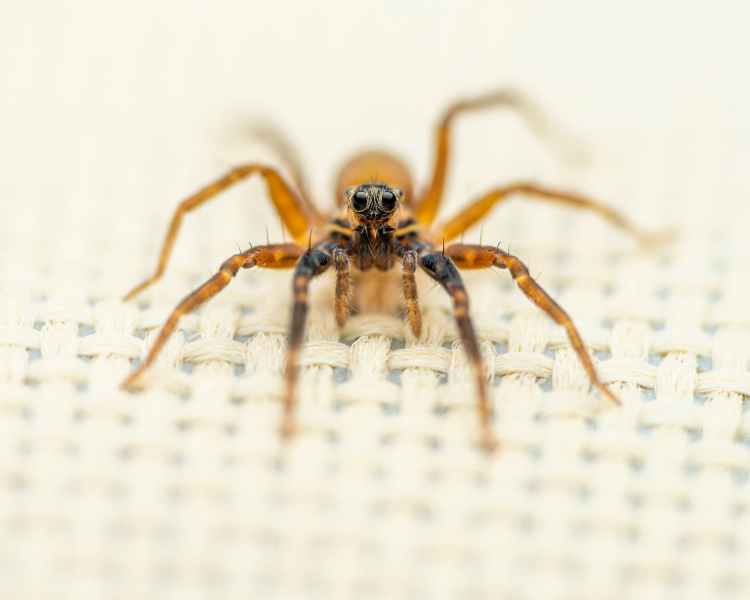
Wolf spiders are large clear sighted ground dwellers with a reputation for catching and eating their cousins, the tick. Photo by Skyler Ewing on Pexels.com

But now researchers at the University of Nevada, in a paper published in the journal iScience, may have found a way to relieve the destruction. Up until now conventional wisdom was that ticks could not have their genes altered. Their eggs are covered in a thick protective wax. The scientists found a way to remove the wax without rendering the eggs unviable. They also found a way to directly edit tick DNA. The DNA can be edited to prevent the ticks from carrying the bacteria that causes the disease. The results were successful one out of seven times, proving the technique has a long way to go. But the fact that there are two methods points to the possibility of releasing gene-edited ticks into the wild and thus cutting down the incidence of tick borne diseases.

Domestic chickens are known to feast on ticks on the ground and are said to groom them off of larger animals. Photo by Zahaoha on Pexels.com

The method is a cousin of earlier successful attempts to eradicate screw worm flies, which we reported on recently. Australia is having trouble with a number of invasive species and is considering biological and genetic warfare. Screw worms were eradicated in the United States because scientists developed a way to sterilize males with radiation and release them by the billions, eliminating the population.

Ticks are not going to go without a fight, however. A recent news report spotlighted a tick that lived for 27 years and didn’t eat for eight years. Females in the study were able to store viable sperm for four years after the last male in the group died. The hardy beasts surviving descendants are under study. Meanwhile, nature has its own answer to the tick problem: Predators: A suprisingly long list of animals feasts on ticks, including some spiders, many other insects, ducks, crows and other birds and mammals including mice, rats and squirrels.

Nuts, cheese, grain. fruit and ticks, it’s all on the menu for this mousePhoto by Monique Laats on Pexels.com

Drug Lord Pablo Escobar’s Hippos May Be Culled to Prevent Overpopulation and Serious Damage

We reported a little while ago on drug lord Pablo Escobar’s decision to bring hippopotami to Colombia to populate a private ranch. Now some of the progeny of the dead drug lord’s hippos may have to be killed to contain the damage he caused.

Massive and aggressive, introduced hippos are causing an enviromental debate in Colombia as their numbers grow.. Photo by Pixabay on Pexels.com

During his career, which ended in a police shootout in 1994, the drug lord amassed a fortune. Like many wealthy people he chose to start a private zoo at his mansion. After he died, the majority of the animals were relocated to shelters. But not the hippos.

The large intractable animals imported from Africa were simply left to fend for themselves in the local river. They did so successfully. With no enemies and a comfortable river system, the animals thrived.

Manatees are far gentler creatures Droppings from hippos may change the chemistry of the rivers in Colombia and threaten them. s Photo by Koji Kamei on Pexels.com

Hippos are also dangerous. The giants. are aggressive and kill about 500 people per year in Africa. The most dangerous land mammal on the continent, they can attack watercraft and on land run at almost 20 mph. So far, no one has been killed or seriously injured in Colombia. There have been three recorded confrontations so the danger of death is real.

A bad temper and powerful jaws make hippos dangerous, Photo by Mehmet Turgut Kirkgoz on Pexels.com

Scientists say that killing some of them may be necessary. Select sterilization is a possibility. All of the identified options are expensive and pose dangers to both animals and people. The fact that many Colombians like the animals complicates the issue. To complicate the issue further, a US judge recently declared the hippos have human rights, but the impact of the ruling is expected to be nil. Colombia is not bound by the ruling and is not expected to follow it.

Forest Officials in Thailand Mount Effort to Save Crippled Tiger With Missing Leg

Thailand is home to a population of increasingly rare Indo Chinese tigers and efforts are underfoot to rescue one that is missing a leg. The female was recently seen eating a dead buffalo, and rescuers hope she will return and can be captured.

The buffalo belonged to a farmer, and it is assumed the cat attacked the animal because it was easier to catch than wild prey. But this increases the risk of conflict with humans. The rescue operation is being mounted by Freeland and the Thai National Park, Wildlife and Plant Conservation Department.

Freeland is an international conservation group. They hope to rescue the tiger and reduce conflict by assisting local farmers in finding areas to graze animals. The conflict is believed to have occurred because farmers illegally graze their animals in park land. The Thai department is the government agency working with other conservationists to protect Thai parks, wildife and native plants. Thailand is expanding efforts to save its tigers, thought to number under 200 in the country.

The drama is occurring in Phao Laem National Park, which has recently been the site of poacher activity and conflicts between humans and the few surviving tigers. The Indo Chinese tiger is smaller than tigers in India and Siberia. It is believed to have separated from Malayan tigers. The current estimate is less than 500 Indo Chinese tigers are left in the wild. They occur in China, Burma, Laos, Cambodia and Thailand. Numbers in China, Laos and Cambodia are quite small and they may be extinct in those countries.

Photo of tiger with missing or badly injured leg. Photo courtesy Freeland/

Khao Laem National Park is about 1,500 square kilometers in size and is in the northwestern part of the country. It is remote and difficult to access but is a tourist destination nonetheless. It abuts the coast and features jungle settings.

Thailand has both inviting urban centers and remote jungle where tigers can exist if left alone Photo by Humphrey Muleba on Pexels.com

The injured tiger is considered an easy target for poachers, and the loss of the limb makes hunting difficult. The plan is to try to entice her with food, tranquilize her and take her to a shelter for veterinary care and protection.

There are now more tigers in zoos, rescue situations and private hands than there are in the wild. Tigers face enormous threats from humans. In India conflict with humans may be leading to inbreeding. In the United Startes irresponsible owners have forced rescue organizations to work overtime to rescue abused tigers.

JFS -30-

DNA Says Escaped Pennsylvania “Mystery Animal” was 100 % Coyote

The “mystery animal” that turned up in Pennsylvania was a coyote after all, DNA tests confirm. It has since escaped confinement and has yet to be relocated, according to news reports.

A news photo of the”mystery animal” shows why identification took some time

The emaciated and sickly creature was found shivering in the cold by a Pennsylvania woman who took the docile creature in. The animal was rescued and then transferred to Wildlife Works. Wildlife Works, a rescue facility that specializes in rehabilitating wildlife, had the animal in its care for about a week. It was fed, treated for mange and inflections and otherwise cared for. After about a week the animal apparently decided it was time to go.

Coyotes tend to be about half the size of wolves. They have narrower and more pointed snouts and usually are found alone. Photo by patrice schoefolt on Pexels.com

It escaped its cage, apparently chewed at a window seal until it could lift the window, then tore through a screen to escape. Wildlife Works said the behavior was completely unexpected because the animal had been docile up to then. The center has tried to entice the animal back, but with no success.

Deer remains are found in a very large percentage of coyote droppings. They are a primary food for wolves ,too. Conflict over food impels wolves to drive coyotes away and sometimes kill them. Photo by Pixabay on Pexels.com

During its stay at the rescue facility the coyote was given a DNA test as well as medical treatment. The coyote left before the results came in, which indicated it was 100% coyote.

Coyotes have been expanding their range since the near destruction of wolf packs. Wolves do not hunt coyotes as food. They apparently see them as competitors and will attack them if they come to close to their food. The absence of wolves in much of the nation has helped to expand coyote numbers. In Yellowstone Park, for example, the return of wolves has had a big negative impact on coyote numbers.

Coyotes have returned to Pennsylvania and the coyotes found there are bigger than many other coyotes in the US. Males weigh in at up to 55 pounds and females around 40. A study of their scats (droppings) suggests that 57 percent of their diet consists of deer. Deer are abundant in Pennsylvania and if a coyote cannot kill one they can scavenge large numbers of road kill animals or animals dead from accident or other misadventure. Rabbits, woodchucks, mice, fruits and vegetables and even insects make up portions of the diets.

A Texas chihuahua (not pictured here) escaped with only puncture wounds when grabbed by a coyote in Texas, Photo by nishizuka on Pexels.com

Nationwide, the wily predators have been in increasing contact with humans and pose significant threats to domestic animals and smaller dogs and cats. A woman in Texas is lucky. A bold coyote pulled her pet chihuahua through a fence and ran off. The dog apparently fought enough to escape and was rescued and received veterinary care.

JFS -30-

Brazen Bunny Breaches Building Security, Reaches Pentagon Inner Courtyard, May Have Been Airlifted

Our usual fare has been somewhat grim with conflict between humans and monkeys and tigers and wolves predominating so today we talk about a more pleasant mystery – how a bunny appears to have infiltrated one of the most secure buildings in the world – the Pentagon.

A photo of the Pentagon Bunny, courtesy news outlet ARL

Observers have spotted a rabbit where none is supposed to be – the 5.1 acre inner courtyard of the Pentagon and it is unclear how it got there.

If its name is Bugs then it might have become lost on its way to Pismo Beach making a wrong turn at Albuquerque, as in the Warner Bros. cartoons. In keeping with the mystery the Pentagon will not officially acknowledge the plucky lagomorph exists.

The Pentagon is not an easy building to navigate even if you know where you are going. How a rabbit made it from outside to inside is a mystery

There is some thought it was accidentally airlifted. The theory is that it was actually captured by a hawk and dropped before it could be fed to its young. But the rabbit doesn’t appear injured in the videos so far seen, and hawks have sharp- claws. There are 25 or so species of hawks in the United States and each state has several species so the identity of the purported airlifter is unknown and local hawks are not commenting. There are 7 types of hawks in Virginia and the Rough-legged and the Red-tailed are the biggest, and thus likeliest suspects.

Did a hawk lose its dinner on its way to an Air Force meeting? There are approximately 25 species of hawks in the United States, a number of them big enough to catch a rabbit. Photo by Diego F. Parra on Pexels.com

The animal in question may have found a safe haven to live out its life, if it can avoid the hawk that allegedly dropped it. The rabbit is probably an eastern cottontail, which tops out at about 3 pounds, a perfect size meal for a long list of predators. Even Wile E. Coyote should find it very difficult to find his way into the Pentagon. The Pentagon replaced the old War Department and was completed in 1943 during World War Two. Named for its distinctive shape it contains about 3.7 million feet of office space. It is about 71 feet tall and is considered the largest one-story office building in the world.

Rabbits face a short life as they are on the menu for a host of predators, Photo by Raymond Eichelberger on Pexels.com

The list of predators who should be stymied includes foxes, bobcats, domestic dogs and cats and several unexpected predators such as crows and skunks. Coyotes and weasels are also on the list. Human hunters take a share too. Hawks and owls are threats even in the Pentagon courtyard. Estimates are that 80 percent of adult rabbits are killed each year. The only counter the rabbits have is fecundity. doe (female) rabbits can produce up to 7 litters of up to six babies a year. They fall pregnant almost immediately after giving birth. Perhaps half of the babies survive the three weeks to self-sufficiency. Here’s hoping at least one rabbit will beat the odds.

-30- JFS

Federal Judge’s Ruling Increases Protection For Many Gray Wolves

A federal judge in California has given many gray wolves increased protection. His ruling covers wolves in states including Washington, Oregon and California. The decision does not affect wolves in Wyoming, Idaho and Montana where they can still be legally hunted. The ruling resulted from a lawsuit challenging removal of the wolves from endangered species status.

Wolves can now breathe a little easier in some parts of the country as protections expand. Photo by patrice schoefolt on Pexels.com

Wolves may not be hunted. trapped or killed in the states covered by the ruling. It follows reports of poisoning of wolves in Oregon. The ruling also strengthens state protection rules in these areas. Colorado has already declared wolves an endangered species. The state has one active pack and plans to introduce more.

Bison are among the more challenging prey animals for gray wolves in Yellowstone Park. Photo by Chait Goli on Pexels.com

U.S. District Judge Jeffrey White, 76, a senior district judge presiding in Oakland, was critical of federal environmental authorities. White ruled that the US Fish and Wildlife Service did not adequately consider threats to wolves outside their core habitat. Wolves are established in the northern Rocky Mountains and the Great Lakes. The US Fish and Wildlife Service delisted the wolves during the Trump Administration. Lawsuits were filed by groups incuding the Center for Biological Diversity, and the Sierra Club, and led to the Feb. 10 ruling.

The plaintiffs are happy with the ruling but hope that it will be extended to all wolves in the country. No appeal of the ruling has been announced.

Wolves are frequently grayish but come in colors ranging from pure white to jet black. Photo by Vincent M.A. Janssen on Pexels.com

Since the 1990’s wolves have been slowly repopulating western states after extirpation from most of their range. Wolf populations appear stable in Michigan, Wisconsin and Minnesota. Wolves are protected in Michigan and Minnesota. A legal hunt has been allowed in Wisconsin. The number in that state is thought to be over 1000. The animals were reintroduced into Yellowstone National Park in the 1990’s The reintroduction has had enormous impact on the park and wolves have moved beyond its boundaries. Outside the park they have been met with rifle fire from legal hunters.

California, Oregon and Washington all have packs, but conflicts with legal and illegal hunters, poisoners and traffic collisions are taking their toll.

Rescued Mountain Lion Kittens Doing Well At Orange County Zoo; Future Habitat Nearing Completion

The two surviving kittens found under a park bench in Thousand Oaks and brought to the Orange County Zoo are doing well and gaining weight, a zoo representative told Wild Animal News in an email.

The rescued kittens pictured with Orange County Supervisor Don Wagner Cougar kittens are spotted at birth but lose the spots with age. . Photo credited to KTLA/Supervisor Wagner

Marisa O’Neil said the kittens now weigh 22 pounds and are “gaining weight steadily.” Mountain lion kittens weigh about 1 pound at birth. She said they two girls “are progressing as we would expect and hitting milestones.”

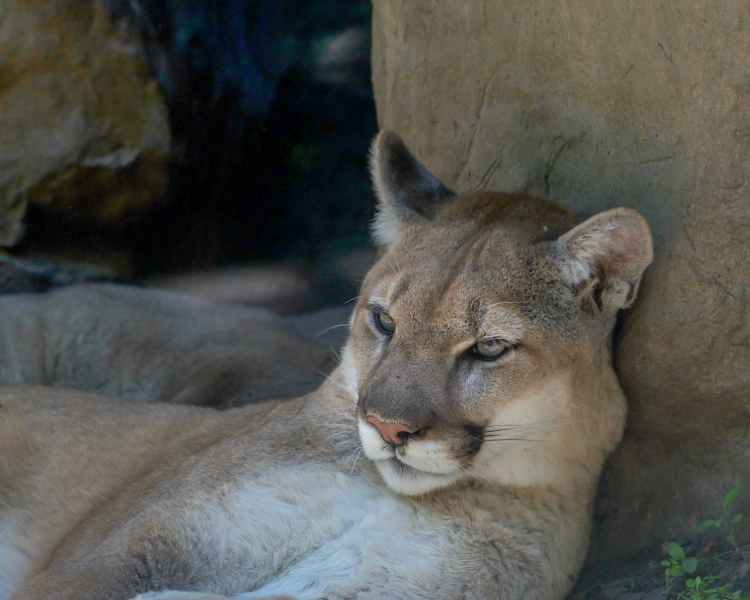
Mountain lions , or cougars, roam most of north, central and South America, although their numbers are declining is some areas. Photo by Pixabay on Pexels.com

Whether the kittens have been named yet was not disclosed. Their interactions with humans began November 29 last year when they were spotted, with two other siblings, under a picnic bench in Thousand Oaks. The bench was located near an office building that abutted wild areas, according to news reports. The mother was not present and is believed to have been killed or to have abandoned the litter. State and federal wildlife agencies were notified and monitored the kittens, hoping the mother would return. She did not, and two of the kittens began to weaken, so the authorities stepped in. The four were taken to veterinary facilities, but two did not survive. The Orange County Zoo has taken the survivors.

The zoo is preparing to open a large mammal enclosure. No exact date has been given, but the new feature should open in the spring, O’Neil said. The zoo appears to be a good match for the two kittens as it focuses on wildlife found in the southwestern United States.

“The Zoo’s focus is on animals and plants native to the southwestern United States,” The OC Zoo website says, ” Many of our animals are injured, orphaned, confiscated, or not releasable into the wild. Animals on exhibit include black bear, mountain lion, bald eagle, kit fox, ocelot, beaver, great horned owl, porcupine, coyote, turkey vulture and more. ” But wild animals are not the only residents. “The zoo also features a barnyard with domestic goats and sheep,” according to the website.

Mountain lions, or cougars, can weigh over 150 pounds and are skilled hunters with tremendous jumping skills. Photo by Andrew Patrick on Pexels.com

Much media focus has been given to mountain lions in the Santa Monica Mountains.The National Park Service (NPS) has been studying cougars there for about 20 years and has entered about 100 animals into its records. Mountain lions in that study face challenges from auto traffic, inbreeding and pesticides. Orange County, meanwhile, is also home to its own mountain lion population. The mountain lions of Orange County are estimated to number about 30, which is believed to be the carrying capacity for the region. They are not currently being studied but it is feared that because they are walled off from other mountain lions they face the same inbreeding risks their Los Angeles County relatives face, along with threats from cars and pesticides as well.

Exit mobile version