Cougars In The News: P-22 Takes A Stroll in Los Feliz; Boy Recovering From Attack In Santa Clarita; California Cats In Death Valley Are Starting To Eat Donkeys

Mountain lions are iconic apex predators in California. They are good at living close to humans and because they are so adept they are frequently in the news.

Here are three recent stories showing the good and bad of mountain lion proximity.

P-22 caught on camera trap. NPS photo.

World famous P-22 is believed to be the cat recently spotted in a residential neighborhood of Los Feliz. The cat was lolling in a couple’s driveway when they got back from the movies. After a brief eye-to-eye encounter, he strolled away. P-22 is part of the 20-year-old National Park Service (NPS) mountain lion study and currently roams the Griffith Park area. The big male is famous for posing near the Hollywood Sign, crossing two freeways successfully (a trick one hopes he won’t try again) and even showing up in local neighborhoods. P-22 appears to have moved into his region in 2012 and seems unlikely to budge. The cougar eats mule deer and smaller prey such as racoons. He is fitted with a radio collar which is changed every two years.

two brown donkeys
Donkeys appear to have been added to the mountain lion menu in wetlands near Death Valley. Photo by hermaion on Pexels.com

His last check up was in 2021 and he was healthy. Two years before he had mange, which he no longer has. He is about 11, old for a mountain lion, but his solitary status is a mixed blessing. It means he may live to see the opening of the Liberty Canyon wildlife overcrossing. But because local mountain lions live in a wilderness “island” the species as a whole faces local extinction. Normally a younger, fitter male would have displaced P-22. The cats in the region are at risk of inbreeding which the overcrossing might help to solve.

P-22 when he suffered from mange. Orange County Register photo.

But cougar/human encounters often have a worse outcome. According to ABC News:

“A 7-year-old boy is recovering after being attacked from behind by an aggressive mountain lion while walking through a park, authorities say.

The incident took place at Pico Canyon Park, located near Santa Clarita, California, in Stevenson Ranch, when authorities from the Department of Parks and Recreation in Los Angeles County say the boy was suddenly attacked and bitten by a mountain lion as he made his way through the park.”

Authorities are trying to match DNA taken from the victim to known mountain lions They have also been luring the cat into a trap. If captured and positively identified, the cat will likely be euthanized.

Smilodon fatalis
Smilodon fatalis by Steven Traver is licensed under CC-CC0 1.0 Despite the name., the Smilodon was not related to the tiger. Exactly how the outsized fangs were used remain a mystery,. Smilodons were part of an entire sub family of felines that is now extinct.

Meanwhile, Cougars in Death Valley are now known to be eating feral donkeys, according to Newsweek. The discovery, caught on a camera trap watching donkeys, is an Aha! moment for researchers. Previously it was thought the donkey and other large animals had no predators. It was theorized that since the disappearance of saber tooth tigers (Smilodon fatalis) and Dire Wolves (Aenocyon dirus) 12.000 years ago wild donkeys had a pass.

But the video, and the discovery that donkeys are rarer in wetands frequented by cougars,have changed attitudes. Efforts to expand the wetlands can be undercut by donkey damage. Currently large amounts of money are spent to catch and hold nuisance donkeys. That money could be better spent encouraging cougars and wolves and protecting them, some experts are now saying.

Mutant Frogs Spotted Near Site Of Chernobyl Nuclear Meltdown – Possible Adaptive Response To Radiation

Ukrainian wildlife has been in the news before and during the current war. It has been a very mixed bag of good news and war related misery.

This photograph of a European green tree frog (Hyla arborea) yawning came from Roeselien Raimond Nature Photography.

Just before hostilities broke out it was reported that the area surrounding the 1986 Chernobyl nuclear meltdown was teeming with life. Wolves, in particular were becoming abundant as were prey animals and other species. At the time scientists were cautiously optimistic, glad that the species were rebounding, but worried about radiation effects.

Now, The Daily Mail is reporting the discovery of what they call “mutant” frogs in the area, European green tree frogs have been found that are black in color.

Newsweek says that the frogs are darkest near the “exclusion zone” nearest the explosion site. The speculation is that the darkening is caused by increased levels of melanin, which is known to protect against radiation and its effects. The study was published in the Journal Evolutionary Applications. EA. The journal is a peer-reviewed publication delving into the interface of biology, health, economics and use of biological resources.

Wolf Taken in a Trap (Loup pris au piège)
Wolf Taken in a Trap (Loup pris au piège) by Antoine-Louis Barye is licensed under CC-BY 3.0 European gray wlves, (canis lupus) were increaing in numbers before the Ukraine war. This wolf is suffering the fate of many throughout history – caught in a trap,

Newsweek quoted the paper saying skin color was

” …darker in localities closest to areas with high radiation levels at the time of the accident, whereas current radiation levels seemed not to influence skin coloration in Chernobyl tree frogs,”

The Chernobyl meltdown refers to an April 12, 1986 incident in which a reactor at the nuclear power plant melted down and exploded.

The number four reactor at the Chernobyl nuclear power plant melted down and exploded on 26 April 1986. According to Smithsonian a meltdown occurs when the cooling system in a power plant fails. It can lead to a “meltdown” of the uranium in the core and an explosion.

wrecked home furnitures interior
The Chernobyl metldown left behind photos reminiscent of World War Two destructionPhoto by Wendelin Jacober on Pexels.com

The Chernobyl explosion led to ionizing radiation being spread over much of the Ukraine. Such radiation can cause mutations. It can lead to deformities, cancers and death as well

The paper suggested that the tree frog mutations may not have been random. The frogs may be adapting to the presence of radiation by changing color.

“Dark coloration is known to protect against different sources of radiation by neutralizing free radicals and reducing DNA damage, and, particularly melanin pigmentation has been proposed as a buffering mechanism against ionizing radiation.” The paper said.

War-torn Ukraine has been in the news for other animal related issues. Conservationists have mounted an international effort to save wild and domestic animal rescues. Zoos, sanctuaries and veterinary clinics have been hard-hit by the war. It is still unreported what the impact of the war has been on the rebounding wild animal populations in the country,

Fierce and Fiesty Wolverines Chase Grizzly Bears In Grand Teton Mountains

Wolverines are one of the fiercest small to mid-size predators in the United States. Their reputation as such has been strong for centuries. The University of Michigan named its football team Wolverines and we can’t forget the Marvel character.

Wolverine on a hunt
Wolverine on a hunt by The British Library is licensed under CC-CC0 1.0 Much myth surrounds the wolverine (Gulo gulo) but they are fierce predators.

But in the news are reports that a baker’s dozen of the beasts, top weight about 50 pounds, have been seen chasing grizzly bears. The weight disparity is amazing as a male grizzly can weigh 600 pounds. The incident occurred in the Grand Teton range of the Rocky Mountains.

comic books on the table
Wolverine the Marvel character has taken the mythic aspects of the animal to new heights in the world of comic book superheroes and villains Photo by Erik Mclean on Pexels.com

The story comes from Field and Stream magazine. The magazine quoted Doug MacCartney, a local naturalist guide. He and two friends were climbing in the area on August 2nd.. MacCartney said the trio saw a sow grizzly and her two cubs and watched the bears from a distance. They watched in amazement as many as 13 (MacCartney counted 12) wolverines gave chase to the bears. The bears retreated, climbing the rugged terrain at high speed. The wolverines kept pursuing for some distance.

Yellowstone Insight, an ecotourism agency, posted the story on its Facebook page October 2nd. Insight talked to a pair of wolverine experts about the sighting:

“Yellowstone Insight reached out to retired wolverine researcher Jeff Copeland, who currently serves on the board of The Wolverine Foundation to analyze the sighting. Copeland theorized that the large numbers of wolverines might have been congregating at higher elevations to feed on army cutworm moths…. Another local expert, James Halfpenny, said that there might have been a carcass nearby that was attracting the predators. Either way, a sighting of 12 to 13 wolverines in one place is exceptional, especially in the lower 48.”

The foundation exists to cut through some of the extravagant myths surrounding the creatures and bring understanding to a largely unknown predator. According to its website:

“Wildlife management and research are often driven by economics. Species receive attention when populations are reduced near the point of extinction, or if their numbers are adequate for exploitation. While wolverine populations appear able to support limited harvest, the status of the wolverine throughout its range is largely unknown. It is trapped and hunted for sport, and for its fur, throughout western Canada, in the U.S. states of Alaska and Montana, and is controlled as a predator of domestic livestock in Scandinavia. The level of human exploitation and habitat encroachment is not consistent with our limited understanding of wolverine population status, distribution, and life history requirements.”.

brown bear on green grass
Grizzly bears (Ursus arctos horribilis) are very large predators and compete for some of the same food as wolverines. Photo by Esteban Arango on Pexels.com

Dr. James Halfpenny is a naturalist and wildlife tracker who teaches animal tracking techniques.

Wolverines have been in the news lately. A wolverine in Utah, the state’s first, was caught and collared, and one of the creatures was spotted In Yellowstone National Park.

Halloween At Wildlife Learning Center: “Creeptacular” Is Here

The Wildlife Learning Center in Sylmar is an accredited small zoo and rescue center in the San Fernando Valley.

This October, co-founders Paul Hahn and David Riherd are providing Halloween style entertainment and learning for the young and young-at-heart. “Creeptacular” is set from 5:30 to 8:30 p.m. October 8, 15 and the 28-30th.

Gold-weight (abrammuo): scorpion
Scorpions are arachnids related to spiders. They grab prey with pincers and sting with the venom in their tail. Gold-weight (abrammuo): scorpion by Akan is licensed under CC-BY 3.0

“Don’t miss out on all the Halloween fun! Join us for one of our Creeptacular evenings on select weekends in October. Enjoy spooky decor and lights, meet some creepy critters, and don’t miss out on our photo ops! Each child receives a complimentary goodie bag” According to the website.

Tickets can be reserved at the website.

WLC has a variety of birds, mammals, reptile and arthropods from around the world. Among the “creepy-crawlies” are Asian forest scorpions, desert hairy scorpions and rose hair tarantulas.

annualreportofbo1898smit_0501
The Gila monster, (Heloderma suspectum) is the only poisonous lizard in the United States. It has four close relatives in Mexico and Guatemala, annualreportofbo1898smit_0501 by BioDivLibrary is licensed under CC-PDM 1.0

Beyond the Halloween creatures there are also servals, bobcats, lynx, foxes, pythons, Gila monsters and boa constrictors. Not to mention the birds and amphibians.

an tarantula crawling on the ground
Tarantulas are large hairy spiders. They inflict painful but not too poisonous bites. Unlike most spiders they do not spin webs. Photo by Josie Alheli Holgado Tupa on Pexels.com

WLC has recently returned to a more normal schedule following Covid-19 restrictions. The institution is a recent beneficiary of a fund raising golf tournament. Many zoos and rescue organizations were badly impacted by Covid Lockdowns and are trying to recoup losses while maintaining care for the animals in their custody. The fundraiser was backed by a pediatric urologist who began fund raising walks during the pandemic. WLC is accredited by by the Association of Zoos and Aquariums (AZA) and is an active participant in conservation efforts for the animals in its care,

Liberty Canyon Freeway Overcrossing Is Underway And On Schedule; To Be Landmark In Effort To Provide Wildlife Safe Passage Over Freeways

The long-awaited Liberty Canyon wildlife crossing over the 101 freeway is underway. The formal groundbreaking took place in April, work crews started in July and work is on schedule, Caltrans said.

photo of a cougar near a log
Mountain lions are expected to be prime beneficiaries of the overcrossing. But many deer are killed in highway accidents too, causing great damage and loss of life for both deer and humans. Photo by Nicky Pe on Pexels.com

When completed, the overcrossing will provide a bridge over the freeway for wildlife to use to avoid near certain death when trying to cross the freeway. It is also expected to help prevent inbreeding among cougars and other wildlife. Currently, the freeway creates a pocket for wildlife which they have great difficulty leaving. Lack of genetic diversity eventually leads to infertility and local extinction.

animal animal photography big big cat
Bobcats are also under study by the NPS. The small predators are often traffic victims too and will benefit from the crossing, Photo by Pixabay on Pexels.com

Caltrans spokesman Michael Comeaux said the multi-year project will be completed in two phases. “Construction is on schedule,” he said, adding “Caltrans is proud of our role in planning, designing and constructing this important project.”

Formally known and the Wallis Annenberg Wildilife Crossing. The project is in Agoura Hills at Liberty Canyon Road. Annenberg has been instrumental in raising some of the approximately $70 million needed to fund the project. It is a public/private venture in which Caltrans has a leading role. SaveLACougars.org has been a leading fundraiser.

brown and black tiger lying on ground
Tigers in India are also affected by fragmented habitat. Liberty Canyon may help point the way to effective conservation efforts in that Country. Photo by Julissa Helmuth on Pexels.com

Comeaux said “The wildlife crossing is expected to reduce the likelihood of wildlife-vehicle collisions on U.S. Highway 101, which also is known as the Ventura Freeway. The crossing also will have a crucial role in reconnecting wildlife habitat.” The National Park Service (NPS) has been studying mountain lions in the Santa Monica Mountains for 20 years. Of approximately 100 lions under study at least 17 have died in traffic collisions. Seven have died on the 101. A female was killed on the freeway the day before the 20th anniversary of the start of the study.

leopard lying beside gray metal chain link fence
Conservationists hope to establish a jaguar population in the United States. Overcrossings are vital to those plans here and in Belize. Photo by Yigithan Bal on Pexels.com

Comeaux said stage 1 is expected to be complete in Fall 2024 and “includes only the vegetated bridge structure over U.S. Highway 101 and supporting roadway items within Caltrans right of way. ” Construction began in July.

He said stage two includes a tunnel/bridge over Agoura Road, which is a street parallel to US Highway 101, and fill, grade and landscape between the bridge over US-101 and the bridge over Agoura Road.

The timetable for stage 2 is being developed. ” We anticipate State 2 will be completed in 2025, ” he added.

Liberty Canyon is by far the biggest overcrossing in California, and perhaps the world, but it is not the only one. Caltrans and conservation partners are working on many other wildlife related projects. Other nations are looking to Liberty Canyon as a model for conservation. efforts around the world.

Mange, Scourge Of Wild Cats And Domestic Animals, Claims First Victim In NPS Mountain Lion Study – Female Found Dead In Malibu

Mange is a highly destructive disease of both wild and domestic animals. The National Parks Service (NPS) recently announced that the disease has claimed a female mountain lion being monitored in the ongoing study of Santa Monica Mountain cougars.

n77_w1150
Mountain lions (Puma concolor) can sicken and die from rat poisons moving up the food chnin. n77_w1150 by BioDivLibrary is licensed under CC-PDM 1.0

She had also ingested rodenticides by eating small prey animals. Rodenticides may contribute to mange. The active ingredients in many rodenticides are anti-coagulants. The target animal dies from internal bleeding. Animals that eat them are believed to be more susceptible to mange.

The cougar, numbered P-65, had been in the study since she was collared in 2018.Her body was found near a stream in Malibu in March, the NPS said. A necropsy showed she died of complications of notoedric mange.

squirrel on grass
Squirrels (family Sciuridae) can carrey notoedric mange and can ingest rat poisons. Photo by Pixabay on Pexels.com

According to the Cornell Wildlife Health Lab mange is caused by mites that burrow into the skin. It is transmitted by close contact between a host animal and the dog or cat that gets mange. Mites are tiny blood sucking arthropods related to ticks and spiders. There are three types of mange: Sarcoptic, notoedric, and demodectic. P-65 suffered from notoedric mange which she probably caught from eating squirrels. Notoedric mange tends to be species specific to squirrels. Although mountain lions prefer local mule deer, they are opportunists and will eat rabbits and squirrels. She had traces of five different rodenticides in her body, the necropsy showed.

close up shot of a bobcat looking at camera
Bobcats (Lynx rufus) are one of two members of the lynx family in the United States. Photo by Gabriele Brancati on Pexels.com

Rodenticides are a challenging topic in conservation circles. They are effective at killing rodents, but are dangerous to other wildlife. California banned the use of second generation anti-coagulant rodenticides two years ago. The ban was designed to allow federal authorities to examine the question. Since people fear and loathe rats and mice, anti-coagulants have strong proponents.

Local bobcats also suffer from mange. Bobcats in the local mountains have been under study by the NPS since 1996. Over 300 of the small cats have been monitored. Mountain lions came under focus around the year 2001 and just about 100 have been monitored in the study.

Brown rat, or Norway rat (Mus decumanus) from the viviparous quadrupeds of North America (1845) illustrated by John Woodhouse Audubon (1812-1862). Original from The New York Public Library. Digitally enhanced by rawpixel.
Rats are despised creatures and most things bigger than they eat them. Brown rat, or Norway rat (Mus decumanus) from the viviparous quadrupeds of North America (1845) illustrated by John Woodhouse Audubon (1812-1862). Original from The New York Public Library. Digitally enhanced by rawpixel. by New York Public Library is licensed under CC-CC0 1.0

200 Pilot Whales Beach Themselves on Australian Coast, Fourteen Young, Rare Sperm Whales Do The Same On Another Beach, Cause Still A Mystery

Authorities are at a loss about what caused at least 14 young male sperm whales to beach themselves and die on a remote stretch of Australian coastline. Meanwhile, rescuers are trying to save some of more than 200 pilot whales who also beached themselves on a beach some distance away.

At last report perhaps 44 of the pilot whales have been saved by human rescuers and released in deeper waters.

Illustration of the sperm whale while attacking fishing boat from The Natural History of the Sperm Whale (1839) by Thomas Beale (1807-1849). Original from The New York Public Library. Digitally enhanced by rawpixel.
Whaling wasn’t easy as this illustration from Openverse shows. Physeter macrocephalus (sperm whales) could put up quite a fight.

Whales sometimes beach themselves but no one is sure why and these cases are no exception. According to the Daily Mail authorities will fly an aircraft over the site to see if more sperm whales are beached. A veterinarian will also conduct necropsies (animal autopsies) and collect samples to look for a medical cause. It is believed that a single whale beaching itself is usually sick or injured.

Speculation centers around the fact that the victims were all young male sperm whales. . They may have recently left the maternal pod and traveled together. It is suggested that there was a navigational error by the whales, or they followed one headed too close into shore. The causes of pilot whale stranding are believed to be similar. It is also thought that the gentle slope of the local beaches may make them feel they are in deeper water.

A Pilot Whale
A Pilot Whale by Hendrick Goltzius is licensed under CC-CC0 1.0 Pilots whales (Globicephala) are one of the largest members of the dolphin family,but are classed with whales for conservation purposes.

The sperm whale incident occurred at King Island off the coast of Tasmania. King Island has some tourist business, fishing, a small amount of mining and a limited population close to 2,000 people. It is roughly 424 square miles in size.

The pilot whales were stranded off the west coast of Tasmania. Tasmania is an island state of Australia located about 240km south of the mainland.

Sperm whales are the largest toothed predator on the earth. They take their name from spermaceti, a waxy, oily substance in their heads. It was thought to be coagulated sperm. The whales use it to help with buoyancy and to help with focusing acoustic signals. Because of the way humans use it, it was, perhaps, almost their undoing. Whale products including blubber, meat , oil and spermaceti came greatly into demand after 1800. Oil for lighting and heating (especially expensive candles) were prime movers in the increased demand and ships of all nations took to the seas. There was great profit and untold numbers of whales were killed. Around 1857 the whaling industry swiftly began a long decline. In that year kerosene lamps appeared. They were vastly cheaper, easier to produce, and had a better odor than whale oil lamps and candles.

Sperm whale from Johnson's household book of nature (1880) by John Karst (1836-1922).
Sperm whale from Johnson’s household book of nature (1880) by John Karst (1836-1922). by Biodiversity Heritage Library is licensed under CC-CC0 1.0

Although the whaling of sperm whales did not end completely until 1986, the pressure that was driving them to extinction was eased. They are still considered rare but are believed to be increasing in numbers.

Whale beachings are more common than many realize. Fish and Wildlife Foundation of Florida has this to say on its website:

“Cetacean stranding, more commonly referred to as beaching, refers to the phenomenon of dolphins and whales stranding themselves on beaches. There are around 2,000 strandings each year worldwide, with most resulting in the death of the animal. Beachings are rare enough that they are not a significant threat to any species. The beaching of a single, live animal is usually the result of sickness or injury. Bad weather, old age, navigation errors, and hunting too close to shore also contribute to beachings.

Some whale and dolphin species are more prone to mass beachings. Toothed whales (Odontoceti) are the most commonly affected. Toothed whales include dolphins, porpoises, and all whales with teeth. It is more common for these cetaceans to live in large groups with intricate social systems. If one member of the group is sick or in trouble, its distress calls can cause the other members to follow it to the beach, resulting in a mass stranding.”

It is also possible that human use of sonar underwater may confuse or injure some whales and cause them to beach.

Pilot whales are highly social and live in large groups, sometimes numbering in the thousands.

Tasmania has been in the wildlife news recently. Both for efforts to “de-extinct” The Tasmanian Tiger (Thylacine) and save the Tasmanian Devil (Sarcophius harissii),

Sharks In Odd Places: Mating Megamouths Off San Diego, Greenland Sharks In The Tropics

Two men fishing off San Diego California have sighted a pair of megamouth sharks. Not only are the sharks very rarely seen, as they live as deep as 15,000 feet, the pair may have been a mating couple.

Stock image of a megamouth, Megachasma pelagios, from the Tokai University Marine Science Museum. Newsweek photo.

According to Newseek there have been fewer than 300 sightings of the shark since it was first discovered in 1976. In that year, according to Hawaii.gov a 14.5 foot megamouth became entangled in a sea anchor of a U.S, Navy research ship. At the time it was thought there were about 300 species of sharks in the world, that estimate has since risen to 380. About 40 species make Hawaii their home. Researchers eventually realized megamouths were the first discovered of a whole family new to science.

wooden map of greenland
The waters off Greenland are home m to the Greenland shark, Somniosus microcephalus. Photo by Lara Jameson on Pexels.com

Megamouths can be found on the surface, but range to 15,000 feet deep. They are like basking sharks and whale sharks in that they feed on plankton which they filter out of the seawater they take in. At 18 feet in length they are smaller than either basking sharks (up to 25 feet) or whale sharks (up to 33 feet) and inhabit a different t ocean niche. Videos of the two sharks showed one had claspers extended. Claspers are used by sharks, rays and some insects to hold the female in place during copulation. So the inference is the pair were about to mate.

A few months ago, a deep sea Greenland shark was seen in tropical waters, another unusual sight, Greenland sharks are also deep water sharks, often found off the coast of Greenland. They are not plankton eaters, but hunters who prey on fish.

206. & 207. The Mackerel Porbeagle (Lamna punctata) 208. The Basking Shark (Selachus maximus) illustration from Zoology of New York (1842–1844) by James Ellsworth De Kay. Original from The New York Public Library. Digitally enhanced by rawpixel.
206. & 207. The Mackerel Porbeagle (Lamna punctata) 208. The Basking Shark (Selachus maximus) illustration from Zoology of New York (1842–1844) by James Ellsworth De Kay. Original from The New York Public Library. Digitally enhanced by rawpixel. by New York Public Library is licensed under CC-CC0 1.0

Greenland Sharks live near Greenland and they can be found across the Arctic and North Atlantic Oceans from the surface down to about 7,000 feet. They are big but slow moving and normally non-threatening. One might have attacked a human in 1859, so be careful as it may still be out there. They are carnivorous and subsist on fish and sometimes animals such as horses that drown and sink.

The fact that they seem to prefer cold water makes it surprising that one was recently spotted off the coast of Belize. Belize is in the Gulf of Mexico and borders Guatemala and Mexico. The shark was reeled in when it rose to some bait while researchers were investigating Tiger shark behavior.

According to Forbes Magazine:” Greenland sharks remain somewhat of an enigma to science. What is known about them is they tend to prefer the frigid waters of the Arctic and North Atlantic oceans, but they could be trolling the depths of the ocean all across the world. There is just so much scientists don’t know about them yet. ”

There remains some question about what kind of shark rose to the bait. The betting is on a Greenland shark. The most that is certain is that it is in the same family as the Greenland and it was big. It probably was a Greenland. But it is possible it is a hybrid with its close relative, a Pacific sleeper shark. Research findings were published in the journal Marine Biology.

Scientists might have made another surprising discovery. Yesterday (sic) we noted that modern research suggests plesiosaurs lived in fresh water. That was not believed previously. It may have implications regarding the Loch Ness Monster. Which has moved up the scale of plausibility.

Indian Prime Minister Announces Major Conservation Successes; Some Are Skeptical, Challenges Remain

India’s prime minister has been lauding critical successes in conservation, advances that mirror efforts in other countries. These successes may point the way to future efforts to prevent extinction of vulnerable species. There are, however, serious challenges ahead.

angry animal big carnivore
There are 9 recognized subspecies of tigers (panthera tigris). Three are extinct and one most likely is. The five surviving subspecies are scattered among 13 nations which have vowed, with varying success, to double tigerr numbers. i i Photo by Pixabay on Pexels.com

“India Week” concludes today on Wild Animal news. On Monday we reported about Project Cheetah, an ambitious effort to reintroduce Cheetahs to that country. They were killed off in 1952. Project Cheetah mirrors efforts in South America to reintroduce jaguars to areas from which they were driven 70 years ago.

Yesterday we talked about India’s use of elephants to patrol reserves. Project Cheetah is using two pachyderms to protect the eight cheetahs brought from Namibia. The cheetahs are currently in quarantine before full release. This is an example of how seriously India can take conservation.

And today comes word from India media about the overall success.

Prime Minister Narendra Modi has been a supporter of Project Cheetah. The cheetahs were released on Indian soil on his birthday, Sept. 17. He is using the occasion to point to what he terms major conservation success in India.

On the surface, the successes are quite stunning. India Today says the country now has 52 tiger reserves. Modi’s government also estimates that the leopard population has grown from about 7,000 to about 12,000 since 2014. India took a pledge, along with other nations, to double tiger populations. He says India is ahead in its pledge. That number has risen from around 2,000 to nearly 3,000. Budget for conservation has increased.

Protected spaces in India now total a bit over 5% of the country, up from 4.90%. The country is also rebuilding forest and working to increase the number of protected areas, which now total about 1.7 million square kilometers, Modi also mentioned Asiatic lions in the Gir Forest, which also seem to be increasing in number.

selective focus photography of leopard
Leopards are far smaller than tigers and more survive. Indian leopards (panthera pardus fusca) seem to have greatly increased in numbers since 2014.Photo by Satria Bagaskara on Pexels.com

But issues remain. At least one of the tiger reserves has no tigers. They were lost due to mismanagement and poaching. Indian officials plan to reintroduce tigers into that reserve, and say the mismanagement and poaching issues have been solved. That remains to be seen.

Counting wild animals is difficult too and totals always are estimates. It can be very tempting to pick a higher end estimate when you wish to appear successful and a lower end number when you wish to seek funds.

wildlife photography of cheetah lying on boulder
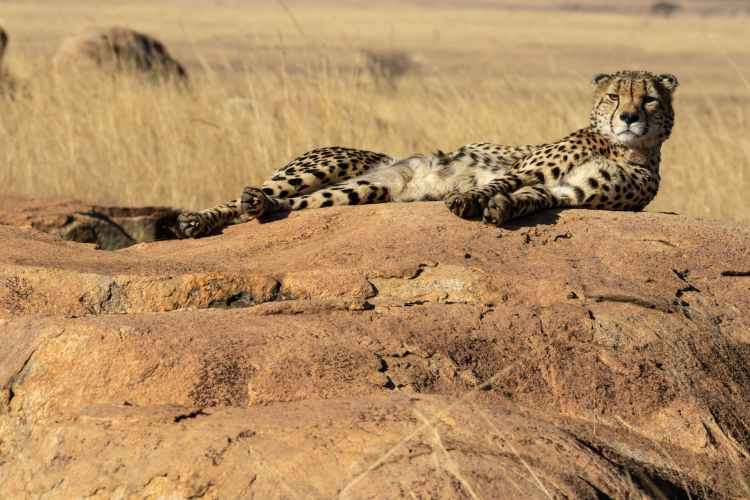
The cheetah (acinonyx jubatus) is a highly specialized predator, It is being reintroduced to Indiaph oto by Magda Ehlers on Pexels.com

More critically reserves are important but there must be interconnections or animals in the preserves become inbred. India is growing at such a rate that inbreeding in tigers is becoming an issue. In the United States mountain lion inbreeding in Southern California has helped lead to the Liberty Canyon overcrossing project. It is hoped that the freeway overcrossing project will link the Santa Monica Mountains to less developed areas of California so that the bigger cats and other creatures can safely pass over the 101 Freeway.

photo of a cougar near a log
The mountain lion (Puma concolor) is the least threatened of the larger cats. It is threatened by inbreeding and risk of local extinction in Los Angeles County. Efforts to open animal pathways and reduce inbreeding are influencing similar plans around the world. lPhoto by Nicky Pe on Pexels.com

Of the three cats mentioned leopards are probably the least concern. They are far less specialized than cheetahs and have a much wider prey base. Leopards are roughly one-third the size of tigers. That gives them greater ability to survive close to humans.

Unfortunately, the captive wild animal trade targets cheetah cubs, and is a serious problem in Africa. Some estimates suggest that stealing wild animals out of their habitat as exotic pets is on a par with drug running and gun running. Multi billion dollar businesses all.

Finally, India has yet to decide exactly how to protect its wild animals. The vow to double the tiger population has led to a “tiger-centric” approach. Indian officials have actually landscaped reserves to make them “tiger friendly.” The theory was that if tigers can live there, so can all the other creatures. That theory is being seriously challenged. Moreover, other conservation agencies are thinking of “flipping the script” and being “people-centric” in conservation. That is to say regarding humans as equal partners in conservation efforts and seeking input, buy-in and collective benefit when making conservation decisions.

Two Elephants Acting As Security Guards For Eight Namibian Cheetahs Brought To Indian National Park

Yesterday we reported on a controversial plan to bring up to 50 cheetahs back to India. The cheetahs are part of Project Cheetah, an attempt to reverse the extinction of the fast sprinting cat from India. The last Indian cheetahs were killed in 1952.

Today comes word that two elephants experienced in security work in Indian parks have been brought to the park to help protect the cheetahs. The cheetahs are in an enclosure under quarantine for 30 days

One of the cheetah guards. Photo India Times.

India Today says the elephants are named Lakshmi and Siddhnath. They were part of the team at Satpura Tiger Reserve in Narmadapuram. India Today said they were part of the effort to avert a serious embarrassment to Project Cheetah. Five leopards had somehow gotten into the security enclosure housing the quarantined cheetahs and had to be driven out.

Nakshmi and Siddhnath will patrol the area and monitor the cheetahs, as they have at the tiger reserves.

cheetahs-cubs-two-together-162318.jpeg
Cheetah cubs often have a low survival rate in the wildPhoto by Pixabay on Pexels.com

These elephants played an important role in the rescue operation to drive away four out of five leopards that entered the special enclosure made for the cheetahs before their arrival.

“Both the elephants are now patrolling day and night with the security teams of the national park, along with monitoring the cheetahs.” India Times said.

Lakshmi is said to be even tempered while Siddhnath, although very effective, has an ugly temper. He killed two handlers in 2010.

brown and black tiger lying on ground
Siddhnath the elephant has had a role in protecting tigers at a reserve. Those skills are now being used to protect cheetahs. Photo by Julissa Helmuth on Pexels.com

Project Cheetah has been in development for a number of years. It was delayed until this year, partly by COVID concerns. Indian iPrime Minister Narendra Modi released the cheetahs into Kuno National Park on his birthday, September 17.

India has been in the news for its conservation efforts for a number of iconic species. India and Nepal have both had success in increasing tiger numbers. They have also seen some succes with Asiatic lions.

However, critics remain. Project Cheetah is being criticised in some quarters. It is said to be unlikely to work. The current tiger restoration efforts are called “tiger-centric” The government does seem committed to trying to save India’s distinctive wildlife.