Ocean Puzzle: Shark From Frigid Deep Sea Atlantic Waters Spotted In The Tropics Off Belize

When most of us think of sharks we imagine something from Jaws or perhaps Claws.

But the reality is only about a dozen of the nearly 400 species of sharks are at all interested in dining on humans. Of these, Great whites, bull sharks, tiger sharks , mako sharks, and oceanic white tips are the most dangerous. Shark attacks are rare but get the headlines. All of the 300 other shark species mind their own business. Some of them are very remarkable indeed.

Moon over northeast Greenland
Moon over northeast Greenland by NASA Goddard Photo and Video is licensed under CC-BY 2.0 The frigid waters off Greenland give the Greenland Shark its name.

The Greenland Shark, recently found way out of its normal habitat, is a case in point. Research suggests that females don’t reach sexual maturity until 150 and they may live to be 500 or more years old. Even more unusual is the fact that females carry the eggs of their young in their bodies until the eggs hatch. Ovoviviporus is the term,

Great White sharks, sea horses and rattlesnakes are also ovoviviparous.

scary shark opening mouth in water
Great White sharks are ovoviviporous like Greenland Sharks. Photo by Mile Ribeiro on Pexels.com

Greenland Sharks live near Greenland and they can be found across the Arctic and North Atlantic Oceans from the surface down to about 7,000 feet. They are big but slow moving and normally non-threatening. One might have attacked a human in 1859, so be careful as it may still be out there. They are carnivorous and subsist on fish and sometimes animals such as horses that drown and sink.

The fact that they seem to prefer cold water makes it surprising that one was recently spotted off the coast of Belize. Belize is in the Gulf of Mexico and borders Guatemala and Mexico. The shark was reeled in when it rose to some bait while researchers were investigating Tiger shark behavior.

A Greenland Shark may live 400 years. Brittanica photo.

According to Forbes Magazine:” Greenland sharks remain somewhat of an enigma to science. What is known about them is they tend to prefer the frigid waters of the Arctic and North Atlantic oceans, but they could be trolling the depths of the ocean all across the world. There is just so much scientists don’t know about them yet. ”

There remains some question about what kind of shark rose to the bait. The betting is on a Greenland shark. The most that is certain is that it is in the same family as the Greenland and it was big it probably is a Greenland. But it is possible it is a hybrid with a Pacific sleeper shark. Research findings were published in the journal Marine Biology.

Scientists might have made another surprising discovery. Yesterday we noted that modern research suggests plesiosaurs lived in fresh water. That was not believed previously. It may have implications regarding the Loch Ness Monster. Which has moved up the scale of plausibility.

Loch Ness Monster Is Now “Plausible” But Still Very, Very Unlikely

This is our first foray into cryptozoology, the intense study of wild animals that probably don’t exist. Enthusisasts, of course, have their own society.

Two of the most famous “hidden creatures” are Bigfoot (Sasquatch) and The Abominable Snowman (Yeti). The Yeti seems to be out of the limelight these days.. But the most famous of all is most likely “Nessie” the Loch Ness Monster, who has been sought for many centuries. She is estimated to be worth $53 million a year to Scotland.

Loch Ness Monster
Loch Ness Monster by don cload is licensed under CC-BY-SA 2.0 Nessie can be a sort of sea serpent as here or a four-finned long necked plesiosaur to others.

Nessie has become the object of fascination and is a huge tourist draw (500,000 annually) for the remote Loch Ness in Scotland. Enthusiasts believe Nessie is one of a remnant population of Plesiosaurs, aquatic dinosaurs who vanished about 66 million years ago. Nessie and her family somehow remained alive and elusive in the cold depths of the lake.

n91_w1150
In her hetyday Nessie may have looked like this, n91_w1150 by BioDivLibrary is licensed under CC-PDM 1.0

Scientists have been, and remain, skeptical. One reason was that until very recently plesiosaurs were uniformly believed to have been salt water beings. Whoops! A recent discovery of plesiosaur fossils in an ancient riverbed suggests at least some were fresh water creatures. According to Newsweek, research by English and Moroccan university researchers found the bones and they are rethinking possibilities.

That is where the upgrade to “plausible” comes in. It is now plausible that at some point plesiosaurs lived in Loch Ness. But if so they likely died out some millions of years ago. The popularity of Nessie and the hordes of tourists looking for her have found nothing. The host of famous hoaxes hasn’t helped credbility either. Expeditions using sonar and submersibles have not found the beast. No fossils bone or other traces have shown up so far.

According to Newsweek:

“While the tales are often dismissed, according to these findings it’s actually plausible that such a creature would have inhabited freshwater lochs such as Loch Ness.

Scientists can’t rule out the fact that these creatures may have been permanent freshwater residents. They suspect that these ancient creatures possibly lived in freshwater, having found the same “food-chipping their teeth on the armored fish that lived in the river.” (SIC) This suggests they feasted on freshwater prey.”

This is not proof they still exist.

However, enthusiasts point out that the lake is gigantic and they say the volume of water is big enough to submerge humanity. I don’t know about submerging humanity but they have the first part right. The lake is 23 miles long and up to 750 feet deep and 1.678 miles across. So they believe some lucky plesiosaurs may be enjoying themselves eating fish and hiding from us. There is also the coelacanth. It was thought to have been extinct for millions of years. Until they started turning up in 1938. It was supposed to have gone extinct about the same time as the plesiosaurs…Hmmmm?

All I can say is it would be nifty to find Nessie. If archaeologists can find Richard III in an English parking lot, than modern science can find her if she is out there.

nature walking animal strong
Like Nessie Bigfoot or Sasquatch is said to be a large creature wandering around under our noses somewhere in the Pacific Northwest. Photo by Gratisography on Pexels.com

On firmer ground we have reported on the finding of rarely seen creatures here,

Polish Academy Of Science Declares Housecats To Be An Alien Invasive Species – Asks Owners To Keep Them From Roaming

Many people love housecats. They have been a hit with their human friends since the days of ancient Egypt. Today they are Youtube sensations and staples of popular culture from Tom and Jerry and Sylvester to Catbert and Simon’s Cat and the latest OwlKitty.

n358_w1150
African wildcats resemble domestic tabbies very strongly. But are usually leaner. They are still common throughout much of the world, but have mated with domestic cats. n358_w1150 by BioDivLibrary is licensed under CC-PDM 1.0

But the very reason they are popular is also the very reason several countries -including Australia and Poland – are trying to regulate their behavior. If not eliminate feral cats altogether.

The theory is that when humans began to farm grain about 10,000 years ago, the relationship with cats was born. African wildcats began to hunt around the granaries for the rats and mice that were spoiling the food. That endeared them to humans who domesticated them. Humans took them nearly everywhere, and therein lies the problem.

For domesticated housecats are superb hunters. They will stalk, kill and eat an estimated 1,000 prey species ranging from a large number of insects up to prey at least as large as a rabbit. There are reports of them showing predatory interest in animals as big as deer. Though deer are too large they can dream and their slightly larger cousins such as bobcats do sometimes kill adult deer though rarely.

cute kitten hiding behind a pillow
Is this the face of a killer? Frankly, yes. Photo by Francesco Ungaro on Pexels.com

People frequently abandon them and they are hardy. They quickly revert to a wild state and wreak havoc. They are particularly hard on birds and many small mammals. some of which are flightless or otherwise easy prey. Cats are also very fertile. Females mature quickly and can bear several litters a year with numerous kittens in each littler.

That is why the Polish Academy of Sciences recently declared them an “Invasive Alien Species.” The Academy acted in part because of the impact in Poland of housecats on birds. The use of the word alien apparently turned some people off but it is accurate as the animal was domesticated in the Middle East and is not native to Poland.

close up photo of gray feral cat resting ina concrete surface
Cats left to their owni devices quickly turn feral. Photo by Marina Solis on Pexels.com

The academy estimates 140 million birds are killed in Poland each year by foraging housecats. The number may seem shockingly high but a number of studies on wandering housecats show that they do kill large numbers of other animals.

Cat lovers attacked the decision. Some media outlets wrongly suggested the academy was seeking to eliminate cats. The official position is simply a request that cat owners limit feline roaming.

Requests to limit roaming are echoed by many mainstream veterinary groups and other stakeholders. Estimates of the total number of birds and mammals killed by wandering cats run into the billions.

But it is not enough for Australia. An estimated five million feral cats roam the island. They are wreaking havoc on native wildlife. Much of that wildlife has not had to face predators before and is easy pickings. So Australia is seeking to eliminate the problem, perhaps by genetic means.

close up shot of european robin
Few worry about rats and mice but song birds are too frequently on the menu of wandering cats. Photo by Phil M. on Pexels.com

The advice from the experts remains the same. Spay or neuter your cats and don’t let them roam. If you can’t keep them find a rescue group or a shelter. Feeding wandering cats is strongly discouraged. Volunteer or assist cat rescue groups seeking to find appropriate homes.

Male Jaguars Roam The Arizona Border, May RePopulate The State, But Challenges Remains

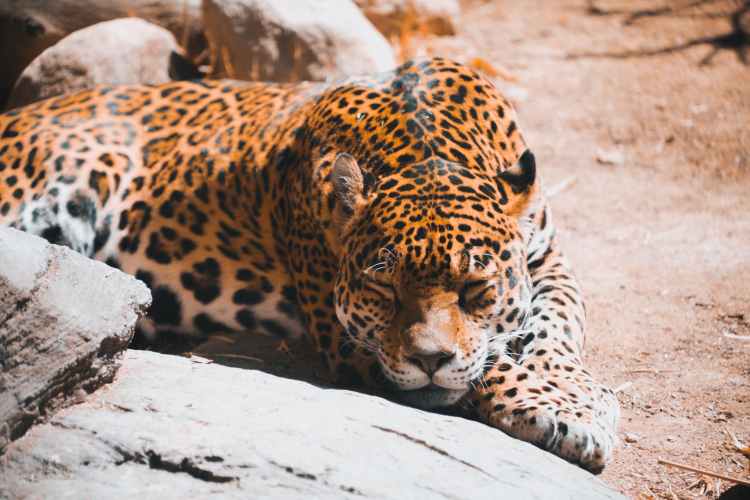
Jaguars, the largest cats in the Americas, have been absent from Arizona and the United States for decades. Males have been occasionally been sighted since the 1990’s in and around Arizona. At least one is thought to be a resident.

Now research suggests several are in Mexico, very close to the border.

jaguar lying on the ground
In size jaguars come in at number three behind tigers and lions. Note spots inside spots on the back of this cat. Photo by Audrey Walsh on Pexels.com

But human politics and road building remain the biggest stumbling blocks to reintroduction. Nevertheless, conservationists on both sides of the border are working to increase Jaguar populations in Mexico and encourage a spill over into the United States.

According to National Geographic:

“The borderlands of Arizona and New Mexico, and its series of mountain ranges, known as Sky Islands, represent one of the most biodiverse areas of North America. Interspersed with mountains are the dry plains of the Sonoran and Chihuahuan Deserts and assorted grasslands and riparian areas, collectively home to tens of thousands of species of plants and animals. For eons, jaguars, mountain lions, ocelots, bears, and many other wide-ranging species have freely roamed across this contiguous biome. But barriers such as roads and fences now hamper this movement.”

As always, human development remains the major issue. Roads present a barrier and a potentially fatal hazard to the cats and other animals. Arizona is heavily impacted by illegal immigration. Parts of a wall have been built to impede humans crossing the border and that wall impedes wildlife too.

leopards on a wooden bridge
Leopards are smaller than jaguars. Unlike jaguars their spots, called rosettes, do not have a spot inside them.. Photo by Anil Sharma on Pexels.com

Meanwhile, Cuenca Los Ojos, a grassroots conservation organization, is working to reverse environmental damage and make the land more habitable for jaguars and other widlfe.

As they say on their website: “Along the way, we have identified straightforward, pragmatic methods that any landowner or land manager can use. As we look to the future, we are enthusiastic about sharing our learned lessons with others. Widespread application of the techniques we have discovered could revive our degraded landscapes, leading to a more vibrant and prosperous environment for nature and people.”

close up photo of south american tapir
Tapir are among the jaguar’s regular prey but they have been seen eating almost anything. They sometimes eat large anacondas or other constricting snakes. Photo by Picas Joe on Pexels.com

Cuenca Los Ojos joins a number of groups in North and South America working to increase the number of jaguars in the wild. Some groups are focusing on over and underpasses to mitigate the impact of traffic on jaguars. CalTrans in California is working on such projects.

Others are rewilding jaguars and releasing them in areas from which they were cleared. Finally, there are efforts to maintain wildlife corridors to allow migration. This will help prevent inbreeding and local extinction. Liberty Canyon is perhaps the most famous example. That ambitious project is designed to help local cougars. Bridging the 101 Freeway it is expected to be finished in about two years.

Jaguar (Felis onca) from the viviparous quadrupeds of North America (1845) illustrated by John Woodhouse Audubon (1812-1862). Original from The New York Public Library. Digitally enhanced by rawpixel.
Jaguar (Felis onca) from the viviparous quadrupeds of North America (1845) illustrated by John Woodhouse Audubon (1812-1862). Original from The New York Public Library. Digitally enhanced by rawpixel. by New York Public Library is licensed under CC-CC0 1.0

Jaguars are still fairly numerous but estimates vary widely. Panthera estimate 15,000 remain while the World Wildlife Federation (UK) puts the number at 173,000. The disparity may involve varying estimates of the number in the Amazon rainforest, which is their stronghold. It is clear that Brazil and surrounding nations have the most jaguars. The realities of the rainforest make counting them difficult.

Britain Re-Introduces Wild Bison In Bid To “Re-Engineer” Island’s Eco-System

Wild European bison are returning to Great Britain for the first time in 12,000 years. The experiment is designed to re-engineer the English eco-system using the particular habits of the beasts. The animals are being introduced into a nature preserve.

forest animal farm grass
European bison are one of two species of bison in the world, along with American bison. Photo by Karolina Wv on Pexels.com

European bison are cousins of the familiar American bison, often called buffalo. They vanished from England around 12,000 years ago after the disappearance of a land bridge with the continent.

According to the Irish Times “The aim is for the animals’ natural behaviour to transform a dense commercial pine forest into a vibrant natural woodland. Their taste for bark will kill some trees and their bulk will open up trails, letting light spill on to the forest floor, while their love of rolling around in dust baths will create more open ground. All this should allow new plants, insects, lizards, birds and bats to thrive. “

large bison
American bison have rebounded from near extinction. There are several hundred thousand living. Cross breeding with cattle has diluted the original gene pool. Efforts are made to keep the gene pool pure. dPhoto by Pixabay on Pexels.com

According to Rewilding Europe: “With fully grown bulls occasionally tipping the scales at over 850 kg, the European bison is Europe’s largest living wild land mammal. It once roamed across the entire continent (except for parts of Spain, Italy and northern Scandinavia), but sustained hunting and habitat loss saw its range continually shrink across the centuries. When the last wild European bison was shot in the Caucasus in 1927, there were only 54 European bison left alive, all in captivity.”

Since that time the population has rebounded, but the foundation stock was small so the genetic diversity of the species is still narrow.

Pipistrelle bats are tiny English bats that may be unlikely beneficiaries of the return of the bison. Photo Blogspot

pipistrelle bats are small enough that spiders, such as this noble false widow can catch and eat them

Meanwhile, American bison have been expanding. In fact the population in Yellowstone National Parkis expanding. The expansion is not without challenges. Bison were cross bred with beef cattle and many herds are part domestic. Wild bison are being kept separate now to keep the genetic strains separate. Meanwhile, wild bison are subject to certain disease that can transmit to domestic cattle so care must be maintained to prevent that.

Gir Lions Found Hanging Out At The Beach – Could Be Sign Of Conservation Success

Gir lions are the remnant of the once populous Asiatic lion. They are restricted to the Gir Forest in Gujarat, India. Recently, they have been seen doing a rather unusual thing – hanging out at the beach.

lion roaring inside cager
Asian lions tend to be slightly smaller than African lions , Males have sparser manes so their ears are almost always viisible and the Asian lion has a fold of skin along its belly absent in African lions. Photo by Pixabay on Pexels.com

Gir lions are facing a number of stresses due to overcrowding and the march to the beach may be a response to that overcrowding.

close up shot of a nilgai
A nilgai is the largest Asian antelope and weighs up to 288 pounds. It is another favotite Gir lion meal, Photo by Hemant Goyal on Pexels.com

Lions usually spend their time in forest and grassland – but a dozen or so have recently been seen hanging out at the beach. It may be a sign that the species is increasing in numbers and spreading out of protected areas and over to the beach.

Officials in India are actively studying the Gir lions and the threat of overcrowding to the species.

Asian lion in the wild. Note sparse mane, smaller size and visible ears. Photo Zoological Society of London

Beach going lions may be a good thing for the locals, too as the lions appear to be eating wild boars and other prey animals that ruin local crops. Boar, as we have noted, are a problem in many nations and lions frequently eat them. Nilgai are the largest Asian antelope and also are a problem for farmers. They are also on the lion’s menu.

brown wild boar
Wild boar are a favorite meal of Indian lions, but they are less popular with Indian farmers. Photo by Francesco Ungaro on Pexels.com

Since 2015 the total population of lions has increased from 523 to 674 at the 2020 census.

About 104 now live along the Saurashtra coast with 17 along the Bhavnagar coast, That coast has been developed as a satellite home for Gir lions moving out of the sanctuary. The lions have adapted well to the coastal climate. In fact, the number of lions may be higher than 674, and could be over 1,000.

.

Italians May Kill Thousands Of Feral Hogs Plaguing Country, Or They May Call Out The Wolves After Hogs Test Positive For Dangerous Virus

Feral hogs are one animal not in short supply. They are a problem across much of the Southern United States and they are a big problem in Italy.

The exact number of hogs in Italy is unknown, but one estimate suggests a staggering 23,000 may be infesting the streets of Rome alone.

close up shot of a baby wild bore
Wild pigs are reproductive machines and kill and eat protected species. Photo by Alexas Fotos on Pexels.com

The hogs root for trash and leftover food and seem to find enough. Pigs are prolific breeders. Domestic sows can deliver two litters year of 10 or more piglets. Their wild sisters also deliver two litters annually, each with up to six youngsters. There is a great amount of variation in litter size.. however. Feral females can deliver up to 14 piglets and they can breed as early as 4 months of age, although most females start breeding some months later. They also may breed more than twice.

close photo of pig
Domestic pigs are important food animals and often used in research Escaped pigs turn feral quickly and become aggressive and damaging, Photo by mali maeder on Pexels.com

If the sight of pigs rooting on their streets doesn’t disturb Romans there have been some attacks on humans. Now veterinarians have found at least three hog carcasses with African Swine Fever (ASF). ASF cannot be transmitted to humans and is not a food safety issue, It is a highly contagious virus that impacts pigs and other livestock. It has been found in much of the world. Since there is no treatment or cure the only solution known is to kill impacted populations. The disease has not been found in the United States.

Italians are taking the basic measures by controlling trash and otherwise discouraging the pigs from foraging. But they are considering two other more drastic measures.

The first, as mentioned, is to kill the pigs en masse until they are reduced to tolerable numbers.

The second is to call out the wolves. In the United States the list of predators that eat feral hogs is longer than might be expected. But most of the predators only eat hogs occasionally and mostly they contribute to the 30 percent mortality rate among piglets.

brown wolf standing on green grass
The big bad wolf may be rehabilitated in Italy if they do in fact eat their share of wild pigs. Photo by Pixabay on Pexels.com

Wolves in Europe may be a different matter. Italian wolves were, like those in the United States, nearly annihilated. They are, however, making a comeback and 2,000 are thought to live in the country today. Pig remains are turning up in wolf droppings near Rome. There is some evidence wolves in Italy prefer feral pigs over other prey.

Calling out the wolves may not prove popular if Italians, who until recently slaughtered wolves, continue to fear them. They are opportunists and will not eat pigs on command. In the United States the slow reintroduction of wolves has met with opposition and it is hard to think Italy will be different.

Massachusetts Black Bear Population Growing and Moving East; Will Bruno Soon Say Hello To Boston?

Although much of America’s wildlife is under threat, some notable exceptions exist, and one of these is the black bear population of Massachusetts.

shaggy wild black bear walking in summer forest
Black bears are the smallest and most populous of the three North American bears. An estimated 800,000 call North America home. Photo by Alex Dugquem on Pexels.com

Estimated at around 100 in the 1970’s, the population today is probably closer to 5,000 according to biologists quoted in the Boston Herald Those wildlife officials said bears are even being spotted in Concord, just under 20 miles from Boston.

Residents in densely populated suburbs are now reacting to the same antics residents of Southern California mountain areas face. Bears in backyards, wandering around neighborhoods and generally acting like they own the place.

The wildlife officials suggest that residents accept the fact that they do have ownership rights. We have to change our habits because they won’t change theirs. Changes in habits will include securing garbage and not leaving pet food outside to make your backyard less attractive.

grizzly bears in the wild
Grizzly bears are a form of brown bear and are significantly bigger than black bears and can be very dangerous. About 55,000 are thought to live in North America, Photo by patrice schoefolt on Pexels.com

According to the National Park Service (NPS) there are important things to do if you run into a bear. The most important include. talking to show you are human and not prey,. Standing your ground and slowly waving your arms and staying calm are also important. Do not run but leave the area, moving sideways if possible. You are less likely to trip and can watch the bear. The NPS says black bears can reach about 500 pounds. They eat almost anything and can run, swim and climb trees.

white polar bear resting on a rock
Polar bears are the third North American bear. Very powerful and quite predatory their numbers have been increasing since 1950 and are now thought to number about 39.000 worldwide.Photo by Yigithan Bal on Pexels.com

American black bears are one of eight types of bears. They are found in North America and range from Alaska and Canada into Mexico. An estimated 800,000 are believed to roam this range. They are luckier than some of their cousins, such as Sun Bears, which have frequently wound up in the bear bile trade,

Scottish Foxes Eating Dog Poop; Experts Unsure About Possible Effects Of Humans And Their Pets On Wildlife

It started as a study of the diet of red foxes living in Scottish pine forests, but researchers discovered something unexpected that may have an impact on many forms of wildlife.

According to the BBC, the research discovered that dog poop was as much as the number two source of nutrients in these animals diet. A whopping 40% of the content of the fox poop was from dog poop.

red fox
Red foxes are reddish as the name implies. They have also adapted well to human proximity so farPhoto by Ralph on Pexels.com

What to make of it?

Researchers at first thought that it was an error because dog poop and fox poop can be pretty similar. But they ruled that out. It may be that the foxes are using poop as a go to when food is scarce as it is nutritious and it is easier to eat than a prey animal.

The study now raises other questions that investigators will start to answer. First, it has been known for a while that many animals eat their own poop. Rabbits are well known for this. They eat huge volumes of low-nutrient food and often consume their waste to redigest it.

raw meat on beige wooden surface
Steak is rich in protein and protein is rich in nitrogen, So is dog poop which may be why foxes eat it.Photo by Lukas on Pexels.com

This is the first time, however, when wild animals have been observed eating the droppings of another animal. It raises questions about how common the practice is. Previously nutrition studies lacked sufficient capability to test fecal DNA. The ability to test decal DNA may lead to surprises if it is found this practice is more common in the wild than realized.

The researchers are worried that dependence on eating feces may have a negative impact on foxes in the long run. It may increase human-fox interactions as they move closer to populated areas in search of easy food. Dog feces are also potentially harmful and may lead to the transmission of bacteria and disease to and from foxes and dogs and their owners. Although dog poop is compostable it is not safe for use on food crops. Although it is rich in nitrogen, a prime ingredient in protein, it also can contain long-lasting worms and other parasites. Dog poop has to be subjected to high heat over a long time to render it neutral. That said, it can be composted for garden use on ornamental plants.

The researchers asked dog owners to be certain they pick up the dog feces. Even if it is “good” for some animals the smell, risk of disease transmission and other negatives mean responsible owners need to collect the waste and dispose of it.

Image courtesy Outforia

The good news about red foxes is that they are for the most part rather abundant, Red foxes inhabit most of the northern hemisphere. They weigh in at up to 24 pounds. Their diet is similar to a coyote but they tend to prey on smaller animals such as mice and rats. They also eat insects, fruit, birds and anything they can consume out of bodies of water. Internationally there are 23 varieties of fox, some of them quite rare.

The study was a collaboration between scientists at Scotland’s University of Aberdeen, the University of Grenoble Alps in France, Forestry and Land Scotland and Cairngorms Connect and has been published in the Ecology and Evolution journal. Cairngorms Connect is a project of Scottish landowners to preserve and protect the Scottish environment.

California Department of Fish and Wildlife Works to Keep State Cougar Populations Healthy

This blog has been reporting frequently on the problems faced by cougars in Los Angeles and Orange counties.

In those areas the big cats face problems with human contact and inbreeding. Both counties have cougar populations but the areas are fragmented and that is leading to inbreeding and traffic collisions.

photo of cougar sleeping
Like all cats cougars enjoy a good snooze. As a class cats sleep a lot but very little is full REM sleep. Their senses are almost always on the alert for food or danger. Photo by Lucas Pezeta on Pexels.com

Statewide most of the resident cougars, estimated to be as many as 6,000, are under the purview of the California Department of Fish and Wildlife. Others, specifically those in the Santa Monica Mountains, are part of a 20-year-old study by the National Park Service.. (NPS).

NPS has overseen many of the best-known cougars, including P-22. He is the famous Griffith Park cougar. He was 11 years-old last year and still healthy but he is in the upper age bracket for cougars. More than 100 cougars have been studied in the project, but quite a number have died over the years in car accidents or from conflict caused by overcrowding.

stalking leopard on stones in glass cage
a leopard head on Photo by Ryutaro Tsukata on Pexels.com

In California, the CDFW ensures that viable cougar populations survive anywhere in the state where suitable conditions exist. Most of the state can support cougars, and maintaining populations is a complex conservation challenge. Since 2014 a conservation program has been in effect. It coordinates scientific research and population monitoring. It recognizes that big game management, species management plans and habitat conservation and protection efforts need to be coordinated. The goals are reducing inbreeding, regulating human-cougar interactions and better understanding cougar relations with prey animals.

nature animal wilderness head
Mountain lions do not roar and have small heads in proportion to their bodies. Two reasons they are not classed with the big cats although they are the size of leopards. Photo by Pixabay on Pexels.com

According to the CDFW website “The Department is pursuing many actions toward managing mountain lions, including coordination with federal, state, and non- governmental organization partners on projects to improve habitat connectivity, and to increase public outreach and education.”